

Quick answer: The REC Alpha Pure-R remains a strong premium rooftop-solar choice in late 2026 for homeowners who value high power density, low warranted degradation and a compact 430 W-class format. It is most compelling when usable roof area is limited and installer quality is high. Its premium matters less on roomy, unshaded roofs where a lower-cost module can deliver the required system size just as well.
For a lower-cost rooftop module comparison, see the JA Solar DeepBlue 4.0 review.
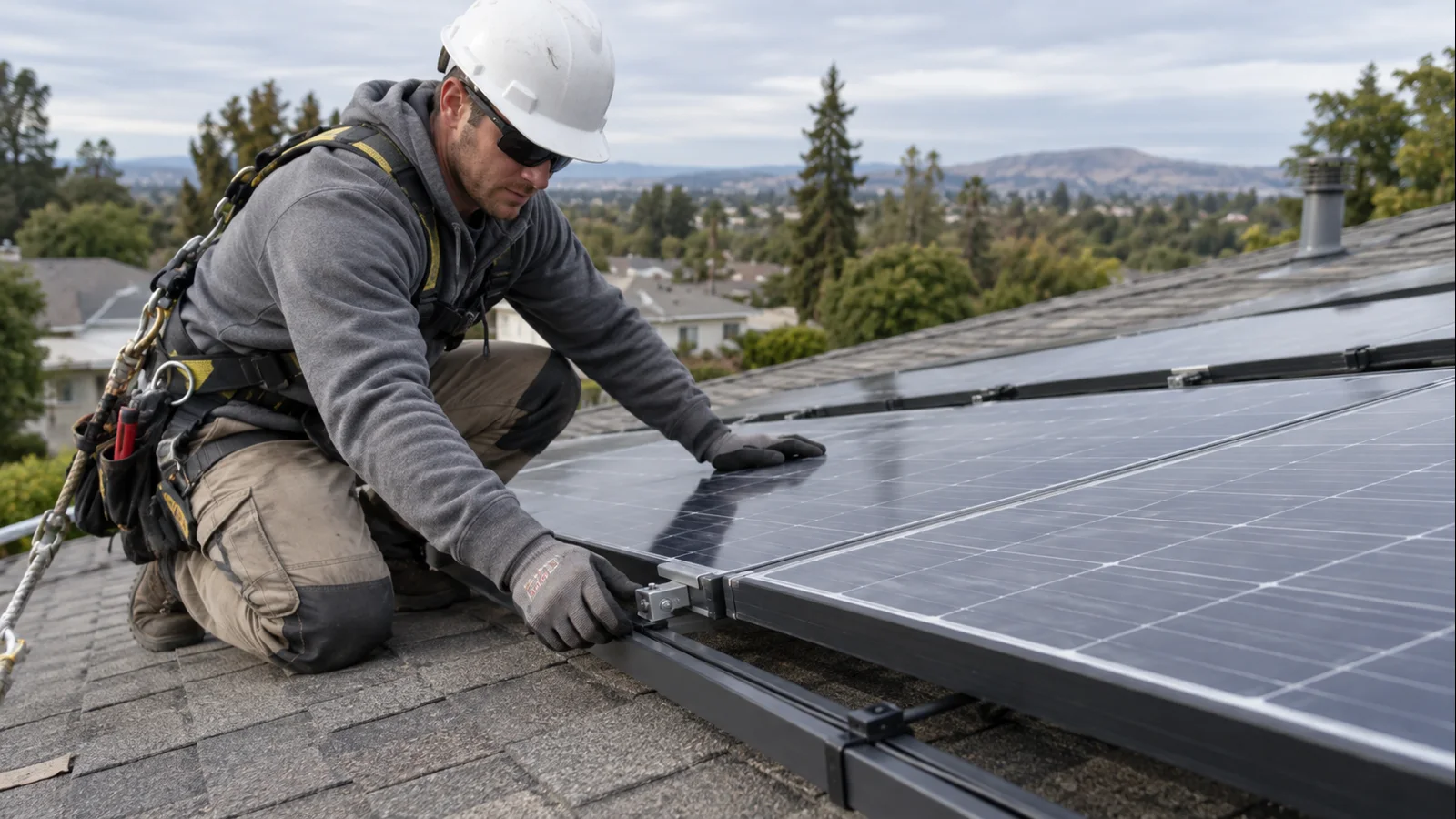
REC Alpha Pure-R specs that matter in 2026
REC still lists the Alpha Pure-R in the U.S. as a 400–430 W module family. The 430 W version reaches 22.3% module efficiency and 20.7 W/ft² power density. Every model uses the same 68.1 × 44.0 × 1.2 in footprint, or 1.93 m², and weighs 47.4 lb.
| Specification | Current value | Why it matters |
|---|---|---|
| Power range | 400, 410, 420, 430 W | Raises DC capacity per module; does not predict annual kWh by itself. |
| Efficiency | 20.7%–22.3% | Valuable when roof area is constrained. |
| Dimensions / weight | 68.1 × 44.0 × 1.2 in; 47.4 lb | Geometry affects fit around vents, setbacks and roof features. |
| Cell / module design | 80 half-cut bifacial HJT cells; black backsheet; four bypass diodes | Supports high efficiency and the module’s electrical behavior. |
| Pmax temperature coefficient | -0.24%/°C | Less-negative values reduce heat-related power loss, all else equal. |
| Performance warranty floor | 98% year 1; 0.25% annual warranted degradation; 92% year 25 | A contractual minimum, not a field-degradation forecast. |
The current U.S. datasheet also lists UL 61730 certification, Fire Type 2, a 35 mm hail rating, 1,000 V maximum system voltage and four-point maximum test loads of +7,000 Pa front / -4,000 Pa rear. Mounting and allowable design loads still must follow REC’s installation instructions; test load is not a roof-design number.
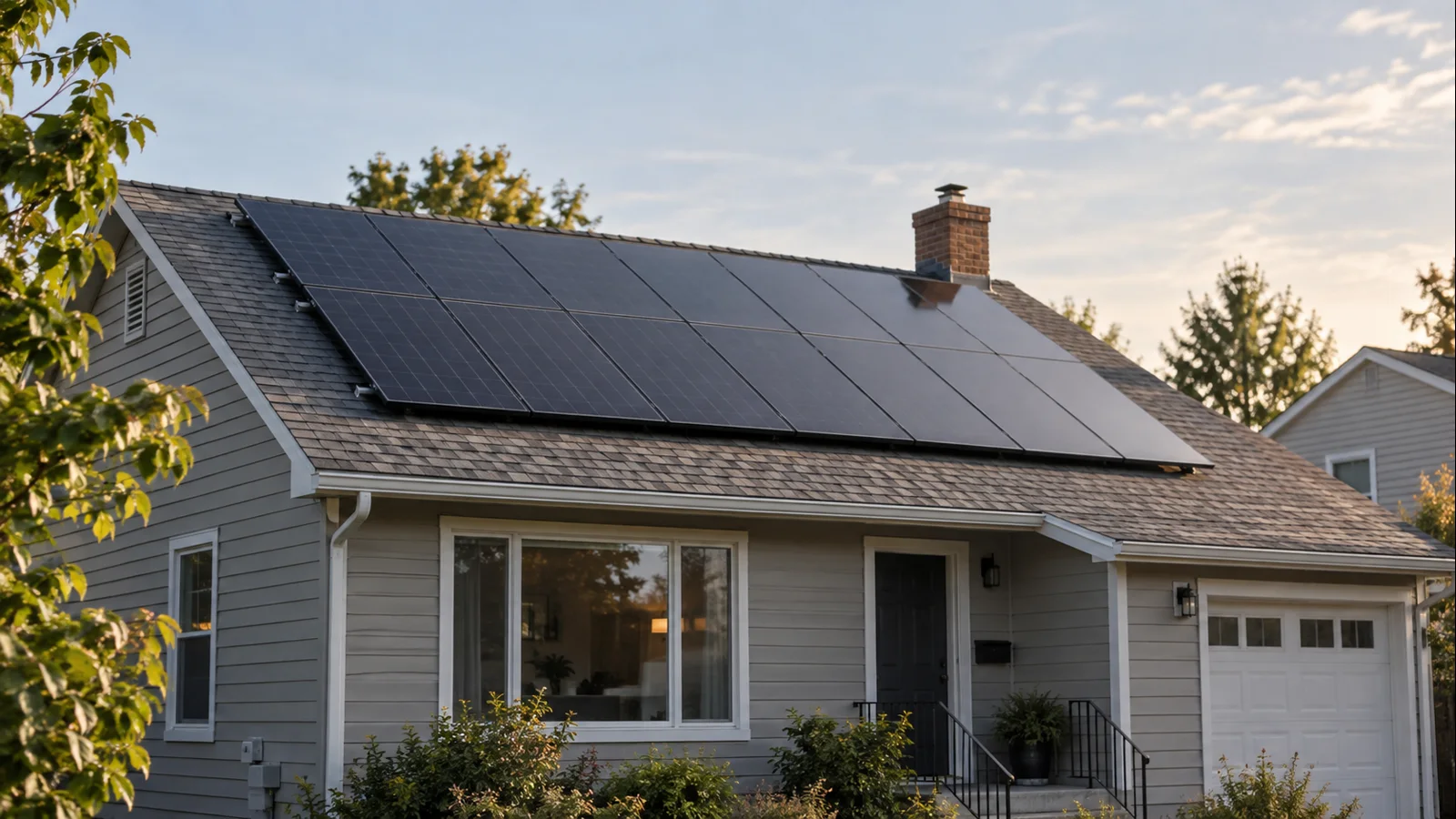
Efficiency is mainly about roof-space value
At 22.3%, the 430 W Pure-R puts more rated DC power into a given module area than a lower-efficiency panel. That can matter when dormers, valleys, vents, setbacks or multiple roof planes limit module count.
It does not mean a 22.3% panel automatically makes a fixed percentage more annual energy than every 20% or 21% panel. Module power is measured in watts (W) under standard test conditions. System energy is measured over time in kilowatt-hours (kWh). Annual kWh depends on solar resource, orientation, tilt, shading, temperature, inverter behavior, downtime and soiling. The U.S. Department of Energy similarly distinguishes laboratory efficiency from real system energy yield.
A lower-efficiency module can therefore equal or beat the annual production of a premium one if the system has more usable area or fewer losses. For long-term context, see AmpedHabitat’s Solar Panel Lifespan guide.
Degradation warranty: strong floor, not a prediction
REC’s warranty schedule is a major Pure-R selling point. The current U.S. datasheet states 98% minimum power in year 1, followed by 0.25% warranted annual degradation, with 92% of nameplate power in year 25.
That is a contractual performance floor under the written warranty conditions. It does not mean each panel will lose exactly 2% in year one and 0.25% every year afterward. Real modules can degrade more slowly, follow a non-linear pattern or develop a separate defect. Likewise, a drop in a home’s annual kWh does not prove panel degradation: weather, new shade, inverter outages, clipping, dirt and electrical faults can all reduce system energy.
Do not assume lower production means the glass simply needs washing. AmpedHabitat’s Solar Panel Cleaning guide explains when soiling is worth investigating and when other causes deserve attention.
Heat behavior is a real advantage, with limits
The Pure-R’s Pmax temperature coefficient is -0.24%/°C, and REC lists nominal module operating temperature at 44 ± 2°C. Like conventional rooftop PV generally, output falls as cell temperature rises above the reference condition. A less-negative coefficient reduces that temperature-related penalty versus a module with a more-negative coefficient, all else equal.
But “better in heat” is not a universal annual-energy percentage. Roof color, mounting clearance, wind, ambient temperature, orientation and inverter sizing all affect real operating conditions.
Shade performance depends on the whole system
REC uses four bypass diodes and promotes the Pure-R’s internal layout for better partial-shade behavior. Useful as that module engineering is, shade remains a system-architecture problem.
With a traditional string inverter, shade or mismatch on one module can influence the string’s operating point. Module-level power electronics can manage panels more independently, but the result still depends on equipment limits and array design. For roofs with chimneys, trees or mixed orientations, AmpedHabitat’s Enphase IQ8 and Shade guide explains why microinverters can reduce mismatch effects without making shade disappear.
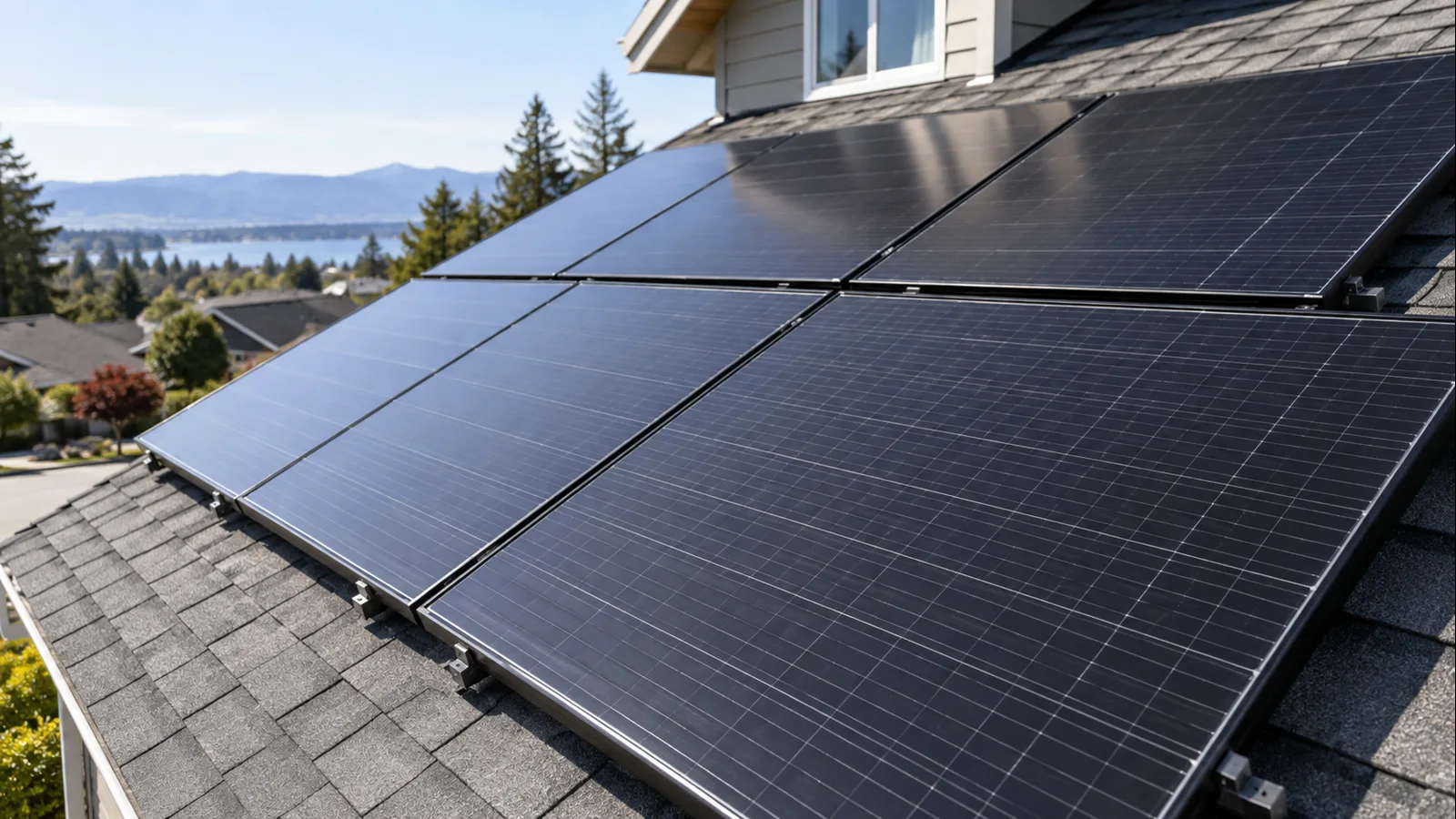
Inverter pairing, clipping and layout need design work
The 430 W Pure-R is not automatically best paired with one inverter class because of wattage alone. Its electrical values include 50.5 V at maximum power and 8.52 A maximum-power current at STC. A designer must check the chosen inverter or microinverter’s DC voltage window, current limits, input-power limits, rapid-shutdown/listing requirements and the complete array design.
Clipping is also a design tradeoff. Rooftop arrays are often sized with more DC module capacity than the inverter’s AC rating. In strong sun, the inverter may cap instantaneous AC output, while the larger DC array can improve production at lower irradiance. The right DC/AC ratio depends on climate, orientation, equipment and economics. Model annual kWh, not just peak watts.
The same principle applies to bill impact. A 430 W module rating is not a savings number. Utility rates, self-consumption, export compensation, household loads and annual system energy determine financial results. AmpedHabitat’s Solar Summer Savings guide shows why bill math should be separated from panel nameplate power.
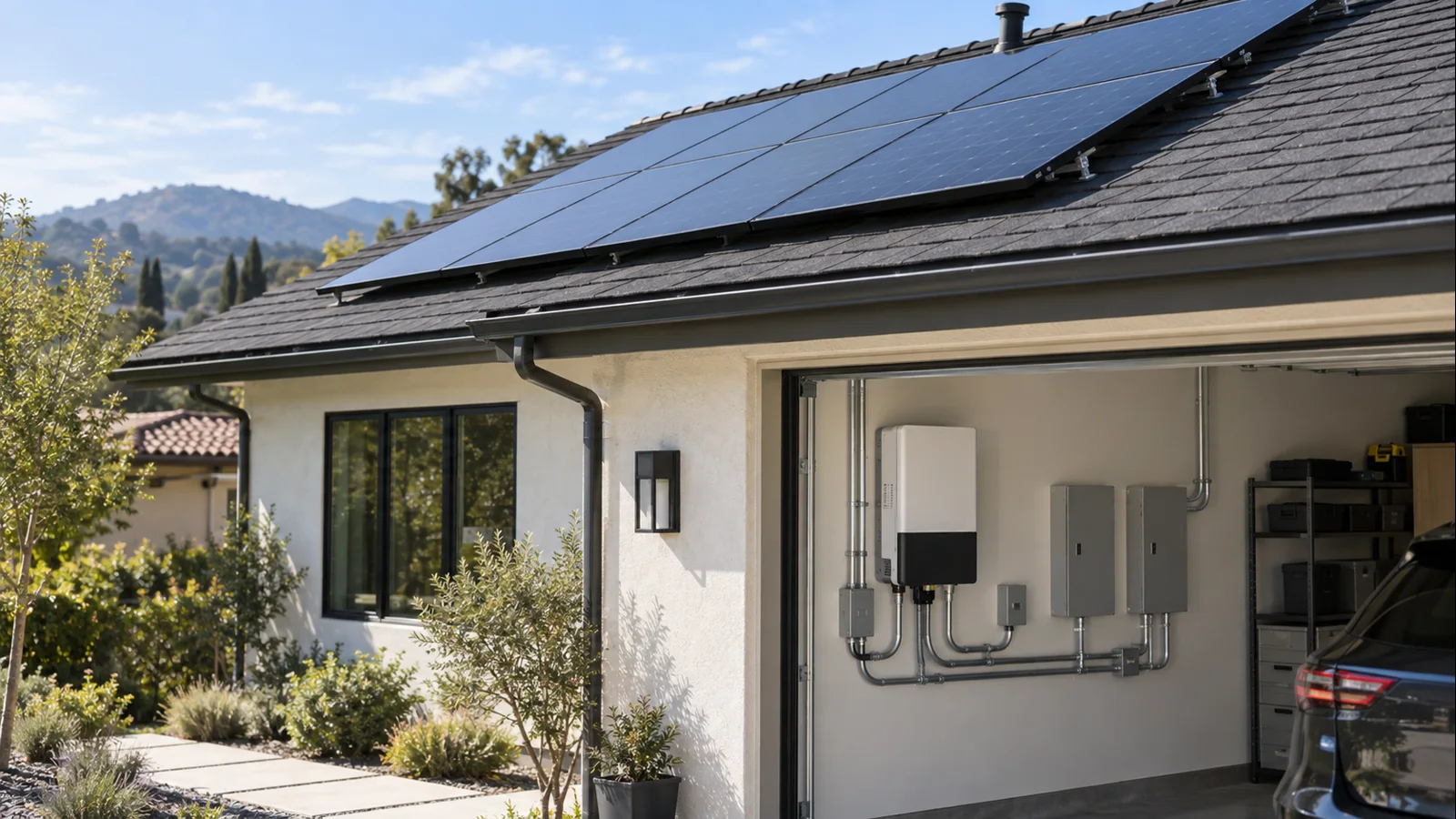
Warranty and installer conditions deserve attention
The standard warranty shown on REC’s current U.S. Pure-R datasheet is 20 years for product coverage and 25 years for the power warranty, with no REC labor warranty. Eligible REC ProTrust systems can extend product coverage to 25 years and add labor coverage. For systems under 25 kW, the datasheet shows 25 years of labor coverage; for 25–500 kW systems it shows 10 years.
ProTrust is conditional. REC states that panels must be installed by an REC Certified Solar Professional and registered by the installer with REC, subject to system-size and other warranty conditions. Before signing, ask which REC warranty applies, who handles registration, what labor is covered and how a claim works if the original installer is no longer available.
Who should pay the premium?
The Alpha Pure-R makes the most sense when
- Your usable roof area is limited and high power density helps reach the target DC system size.
- You value the 92% year-25 performance floor and can obtain ProTrust through an eligible certified installer.
- You want the -0.24%/°C temperature coefficient as one favorable input to the energy model.
- The installer has a clear inverter, shade and roof-layout plan rather than selling on efficiency alone.
A lower-cost panel may be the better buy when
- Your roof has ample unshaded space and several reputable modules can meet the same system-size target.
- The REC premium increases project cost without creating more usable DC capacity or warranty value for your situation.
- The quote uses premium-panel marketing to distract from weak racking, inverter, workmanship or service terms.
Whether a premium panel pays for itself depends on the rate it offsets. Run your own numbers in the solar savings calculator, which uses EIA residential rates for all 51 states.
Verdict
The REC Alpha Pure-R is a credible premium residential module in 2026, especially for roof-constrained designs. Its compact 400–430 W range, up to 22.3% efficiency, -0.24%/°C temperature coefficient and 92% year-25 warranted power floor are genuine strengths. The key question is whether those strengths improve your system enough to justify the premium.
Choose it when the roof plan, inverter design and warranty path all benefit from the module. Do not choose it because 430 W sounds like more annual energy in every situation. A strong proposal translates module specs into a credible layout, modeled kWh production, compatible power electronics and written long-term support.
Frequently asked questions
How efficient is the REC Alpha Pure-R?
The current U.S. family ranges from 20.7% at 400 W to 22.3% at 430 W. Higher efficiency mainly increases rated DC power per unit of roof area; it does not guarantee a fixed annual-kWh advantage.
What is the REC Alpha Pure-R degradation rate?
REC’s warranty schedule allows 0.25% warranted annual degradation after year 1, with at least 92% of nameplate power warranted in year 25. That is a warranty floor under stated conditions, not a prediction of actual measured degradation.
Is the REC Alpha Pure-R good for shade?
Its four-bypass-diode design and internal layout are intended to improve partial-shade behavior, but string configuration, microinverters or optimizers, roof geometry and the timing of shade determine the real energy result.
Does a 430 W REC panel produce 430 W all day?
No. The 430 W rating is measured under standard test conditions. Real-time output changes with irradiance, cell temperature, angle, shade, inverter limits and other losses. Daily and annual production should be discussed in kWh.
Is REC ProTrust automatic?
No. REC states that ProTrust eligibility requires installation by an REC Certified Solar Professional and registration by the installer, subject to system-size and additional warranty conditions. Confirm eligibility and registration responsibility in writing.
Sources and 2026 freshness note
Reviewed for September 2026 against REC’s current U.S. Alpha Pure-R product page and U.S. Alpha Pure-R datasheet, plus U.S. Department of Energy guidance on PV system design and energy yield and solar inverters. Specifications and warranty terms can change; verify the exact module model, datasheet revision and warranty documents attached to the installer’s proposal.