

Quick answer: Solar panels do not reach a universal expiration date at 25 years. Most are designed to operate for decades, while output can decline gradually and individual modules can fail earlier. Replace panels when measured performance, physical condition, roof work, system compatibility, safety, or economics justify it—not because a warranty anniversary arrived.
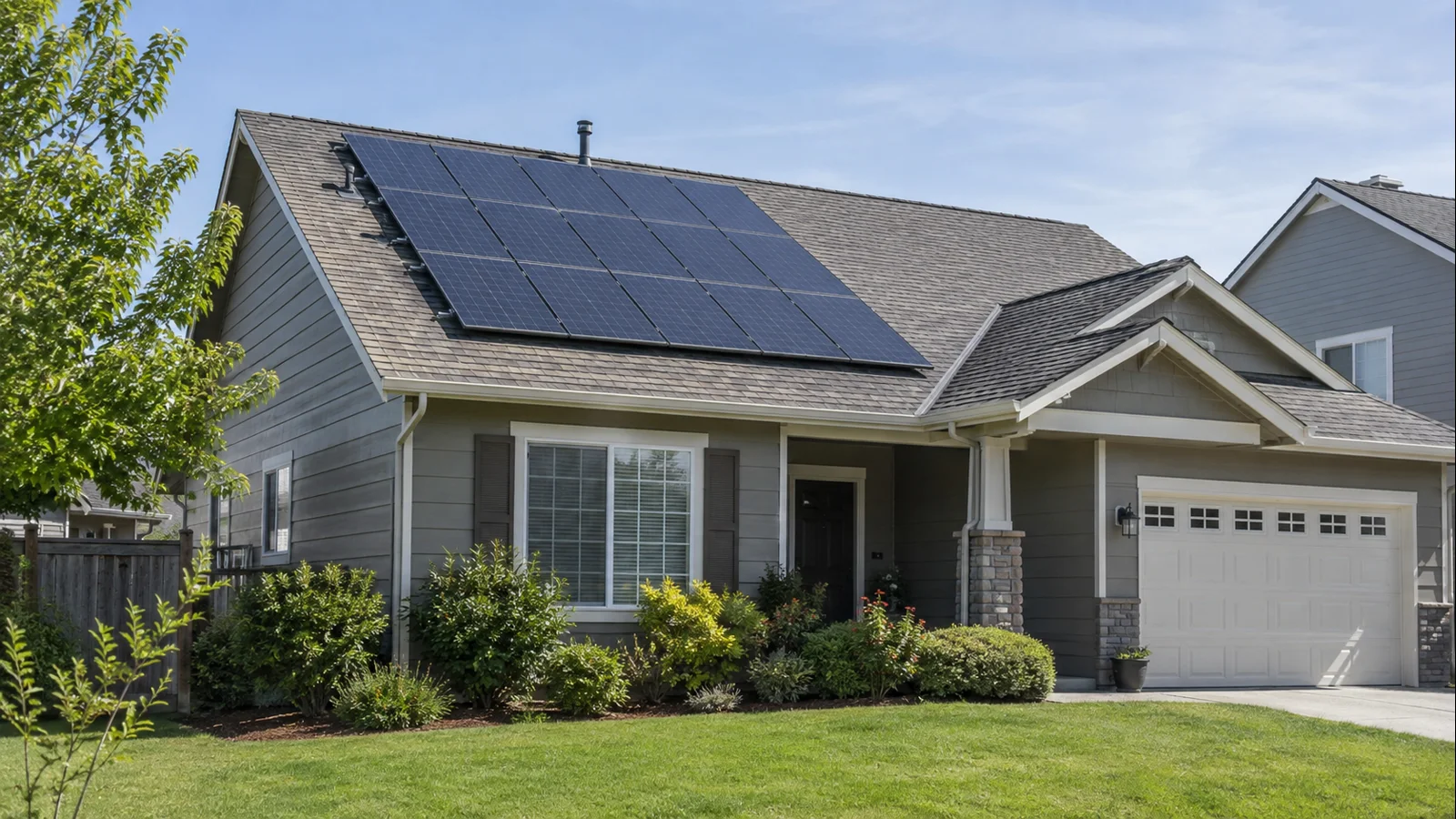
Solar panel lifespan is not the same thing as a warranty term
For a homeowner, “How long do solar panels last?” is really four different questions: How quickly does a module lose power? When does a component actually fail? How long does the manufacturer promise specific coverage? And how long does the whole rooftop system remain useful?
NREL reliability research describes photovoltaic modules as equipment expected to keep generating through decades of outdoor exposure, and discusses the challenge of making modules perform predictably for roughly 30 to 40 years and beyond. That is a durability target, not a guarantee for every panel.
A panel can still be safe and productive after a 25-year warranty ends. Conversely, a covered panel can develop a defect well before year 25. The calendar matters for warranty rights, but it is a poor standalone replacement trigger.
Degradation is gradual power loss; failure is a fault
Module degradation means a panel’s maximum power capability changes over time. Failure is different: a cracked laminate, failed junction box, damaged bypass diode, insulation problem, severe corrosion, or another defect can create a discrete performance or safety issue.
The strongest reason to avoid a universal degradation claim is field evidence. In the 2024 NREL PV Lifetime Project annual report, measured degradation varied materially among commercial module types. Jinko and Trina samples had median annualized rates roughly in the -0.35% to -0.55% range, much of it concentrated early in life; Qcells samples were around -0.3% to -0.4% per year; Mission Solar, LG, and LONGi samples were better than -0.25% per year in that report. An outlier Sunpreme technology was losing around 2% per year and was nearly 8% down in total at that point.
Those are results for specific products and measurement periods, not a lookup table for every roof. The key conclusion is the variation: technology, design, exposure, early-life effects such as LID or LeTID, and failure mechanisms can produce different profiles.
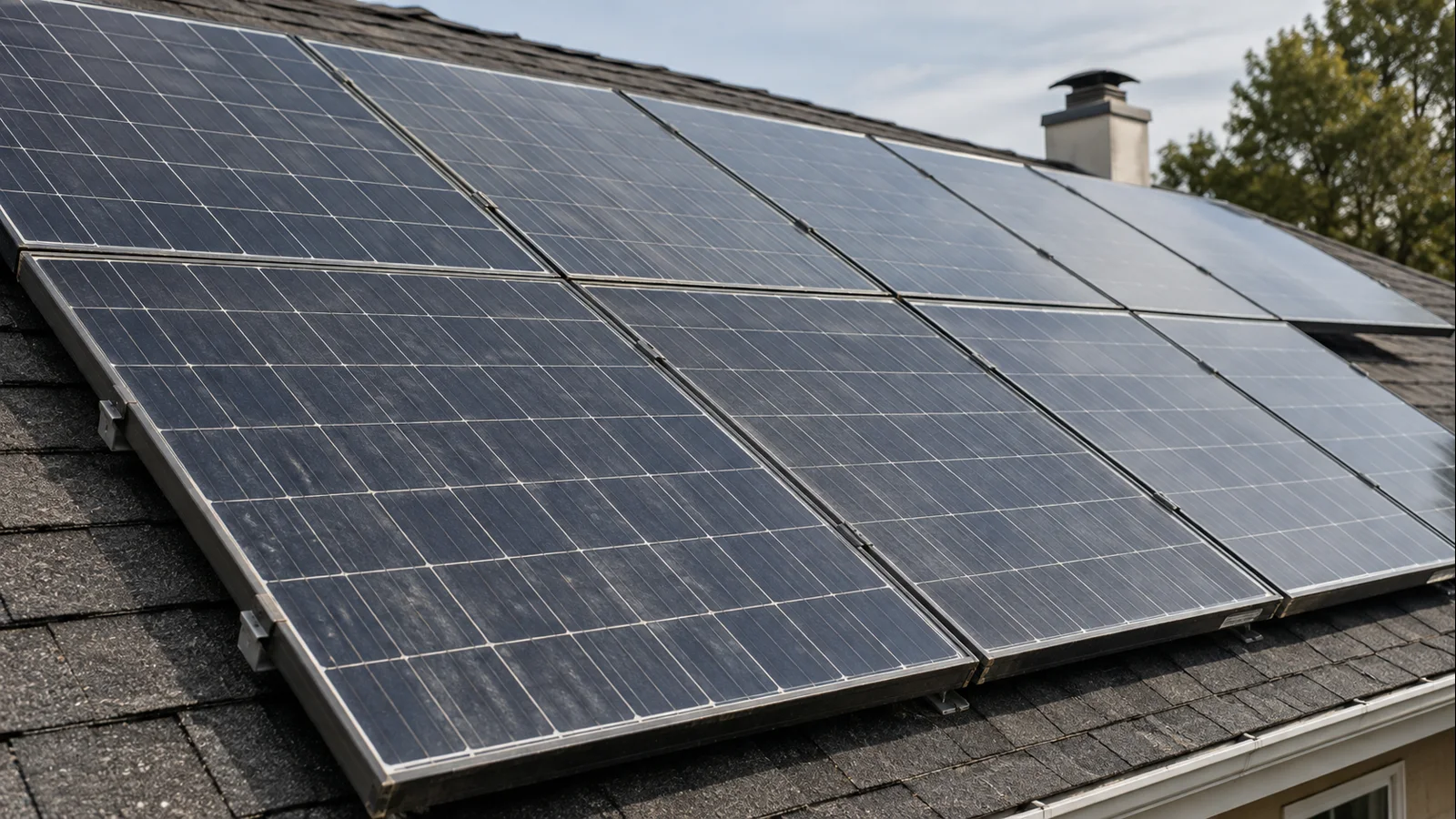
Do not confuse module aging with whole-system energy loss
A rooftop solar system can produce fewer kilowatt-hours even when the modules have not materially aged. Annual energy is affected by weather, new tree growth or construction shade, soiling, snow, inverter clipping, utility or equipment outages, wiring faults, connector problems, optimizer or microinverter faults, and monitoring or communications errors.
NREL’s own PV Lifetime report gives a useful example: one monitored system was offline for months because an inverter failed. That was real lost system energy, but it was not evidence that the solar modules had suddenly degraded.
A system’s AC energy history is not a direct laboratory measurement of module maximum power. The U.S. Department of Energy’s PV operations and maintenance guidance recommends comparing actual performance with expected production using solar resource and temperature information, while checking operational indicators and errors.
Seasonal bill savings can also move independently of panel condition because utility rates, household consumption, exports, and weather change. For the billing side of the equation, see AmpedHabitat’s summer solar savings guide.
What solar warranties actually cover
Warranty documents should be read as contracts, not lifespan predictions. Coverage, exclusions, transfer rules, registration requirements, remedies, shipping, labor, and installer responsibilities can differ substantially.
| Term | What it usually addresses | What homeowners should verify |
|---|---|---|
| Product warranty | Defects in the module or manufacturing, subject to the written terms. | Length, exclusions, transferability, claim process, and remedy. |
| Performance / power warranty | A minimum warranted power level over time. | The exact degradation schedule, test basis, claim threshold, and remedy. |
| Labor / workmanship coverage | Labor tied to replacement work or installer workmanship, depending on who issued it. | Whether it comes from the manufacturer, installer, or a special program; removal/reinstallation terms. |
| Useful service life | How long the installed equipment remains safe, compatible, and economically useful. | Actual condition and performance; this is not automatically equal to any warranty period. |
REC provides a concrete current example. The REC Alpha Pure-R datasheet lists a 25-year power warranty, 98% warranted power in year 1, 0.25% warranted annual degradation, and at least 92% power in year 25. But the same document shows that product and labor coverage depend on whether the installation qualifies for REC ProTrust, including installer certification, registration, and system-size conditions. REC’s standard product warranty shown for this model is 20 years, while eligible ProTrust installations can receive different coverage.
Those percentages are contractual floors, not forecasts of your actual output. A module performing above the warranty floor is not guaranteed to follow that exact curve, and a household’s annual kWh can move for reasons unrelated to the module warranty. AmpedHabitat’s REC Alpha Pure-R review provides more product-specific context.
How to diagnose suspected solar panel aging
Start with evidence before assuming “the panels are old.” A useful homeowner diagnostic sequence is:
- Normalize for season and weather. Compare longer periods and use year-over-year energy only when irradiance and temperature are reasonably comparable.
- Check inverter and monitoring alerts. Look for outages, communication gaps, optimizer or microinverter faults, and abnormal string or panel-level behavior.
- Look for new shade. Tree growth, new structures, or rooftop equipment can reduce production without permanent module degradation.
- Check soiling and physical condition. Persistent deposits, cracked glass, damaged backsheets, loose-looking hardware, or storm damage deserve attention. Do not access the roof or touch electrical equipment casually. AmpedHabitat’s solar panel cleaning guide explains how to separate likely soiling from other losses.
- Have electrical faults investigated. Connector, wiring, junction-box, inverter, and module-level electronics problems can mimic aging and may require qualified service.
- Compare similar-condition performance over time. If normalized decline persists after other causes are ruled out, a service provider can determine whether module testing or a warranty claim is justified.
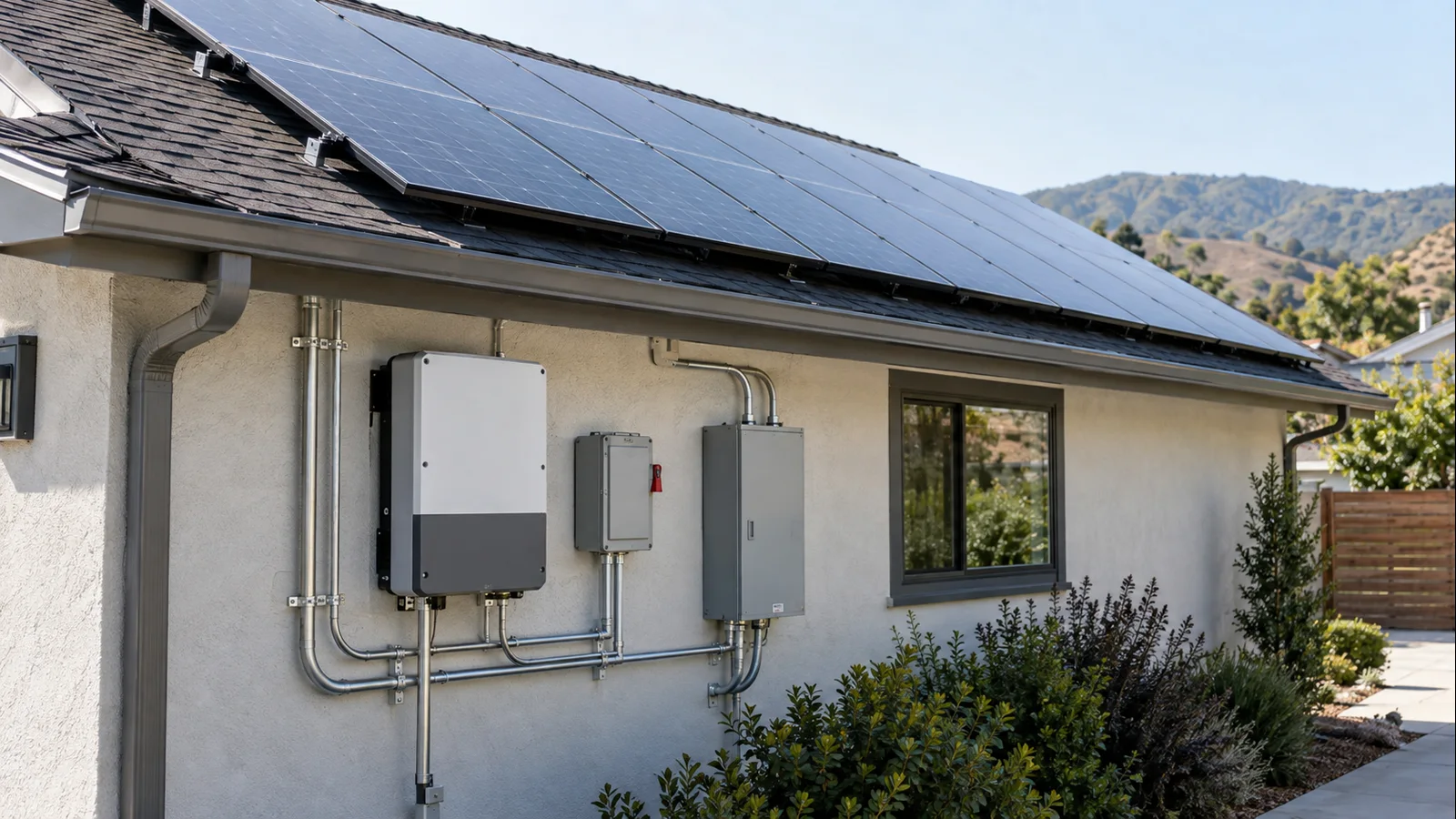
When replacement actually makes sense
Replacing functioning panels simply because they are older is often hard to justify. The Department of Energy’s rooftop solar replacement guidance generally favors keeping a functioning system in service as long as practical.
Replacement becomes more reasonable with documented underperformance that cannot be economically repaired, unsafe damage, recurring faults, unavailable parts, or roof work that already requires array removal. A redesign can also make sense on a constrained roof, but the calculation should include removal, equipment, labor, permitting, interconnection, and any utility-tariff change—not just higher module wattage.
Degradation also compounds against the money the array earns. The solar savings calculator applies an annual degradation rate across 25 years so you can see how much of the lifetime return it actually removes.
Re-roofing, partial replacement, and repowering need design review
A roof nearing replacement should be part of the solar lifespan plan. Removing and reinstalling an array adds labor and creates an opportunity to inspect attachments, flashing, wiring, and equipment condition. It does not automatically mean every older module should be discarded.
Partial replacement is more complicated than matching panel size. New and old modules may differ in voltage, current, dimensions, connectors, fire classification, and mounting. In a string-inverter system, mismatch can affect string and MPPT operation; with microinverters or optimizers, the new module must remain within approved electrical limits.
Higher-wattage does not mean “drop-in compatible.” A repower may interact with adopted code, rapid-shutdown equipment, listing requirements, and local jurisdiction rules. UL’s 2026 NEC overview notes continuing PV and rapid-shutdown standards evolution. Mixing module or electronics generations therefore deserves professional design review.
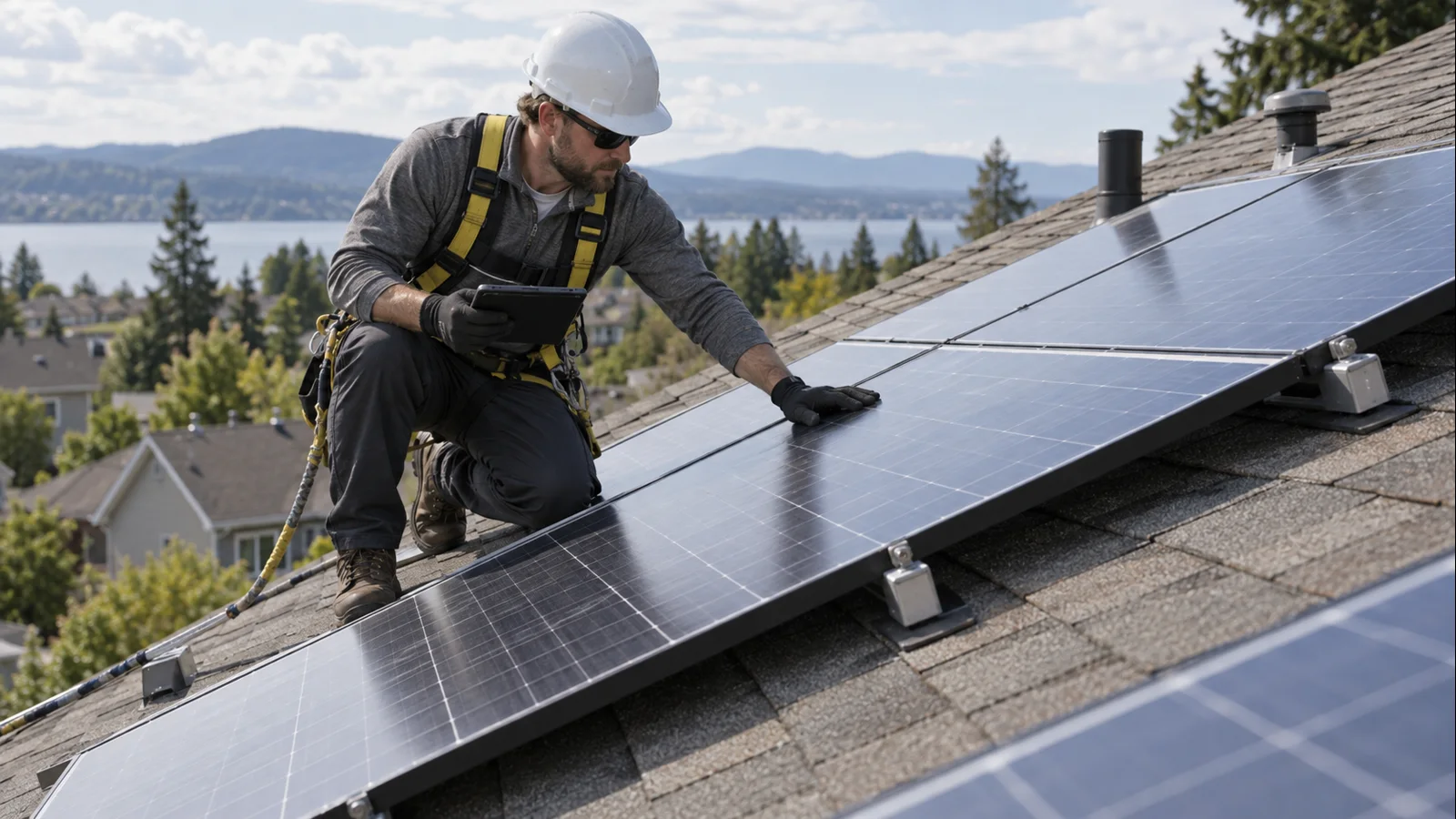
If you are comparing modern panel families during a planned redesign, AmpedHabitat’s LONGi Hi-MO 6 review can help frame current specifications, but replacement compatibility still depends on the existing system.
Frequently asked questions
What is a typical useful service life for solar panels?
The most defensible framing is “decades,” not one guaranteed number. NREL reliability work discusses modules operating through roughly 30 to 40 years of outdoor exposure, while measured degradation and failures vary by product and environment. Useful life ends when condition, performance, safety, roof needs, compatibility, or economics make continued operation unattractive.
Do solar panels stop working when the 25-year warranty expires?
No. A warranty expiration ends or changes contractual coverage; it does not switch the module off. A panel can continue generating after the warranty period if it remains safe and functional.
How can I tell panel degradation from another solar problem?
Do not infer degradation from one low month. Compare similar seasons and weather, check monitoring and inverter alerts, inspect for new shade and soiling from a safe location, look for physical damage, and investigate electrical or module-level electronics faults. Persistent normalized decline after those checks is a better reason to evaluate module aging.
Is replacing old panels with higher-wattage panels straightforward?
Not necessarily. A physically similar module can have different voltage, current, connector, mounting, optimizer/microinverter, string-design, fire-rating, or rapid-shutdown requirements. A qualified designer should verify electrical and code compatibility before mixing old and new equipment.
2026 freshness and source note
Reviewed for September 2026 using the NREL PV Lifetime Project 2024 report and reliability guidance, current REC Alpha Pure-R materials, U.S. Department of Energy PV operations and replacement guidance, and UL’s 2026 NEC context. The same DOE project’s 2026-published follow-up continues to show model- and technology-dependent degradation rather than one universal rate. Check the exact manufacturer warranty and locally adopted code before repair or repowering.