

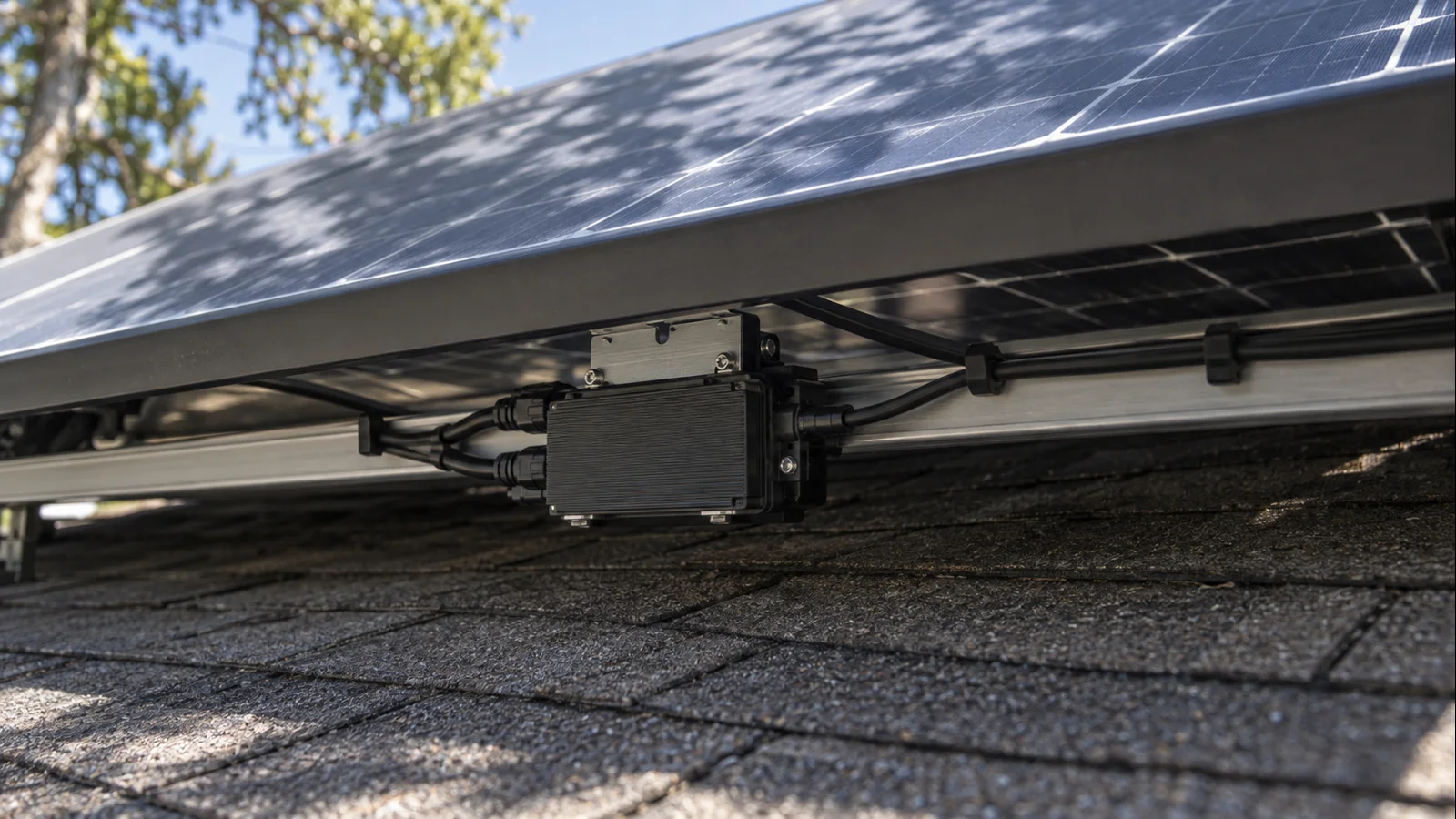
Enphase IQ8 microinverters can limit how far a shading problem spreads through an array, but they cannot recover sunlight that never reaches a module. Each IQ microinverter serves one solar module and performs module-level maximum power point tracking (MPPT). A shaded panel can therefore operate at its own reduced power point while unrelated, unshaded panels keep operating independently. The shaded module itself still produces less.
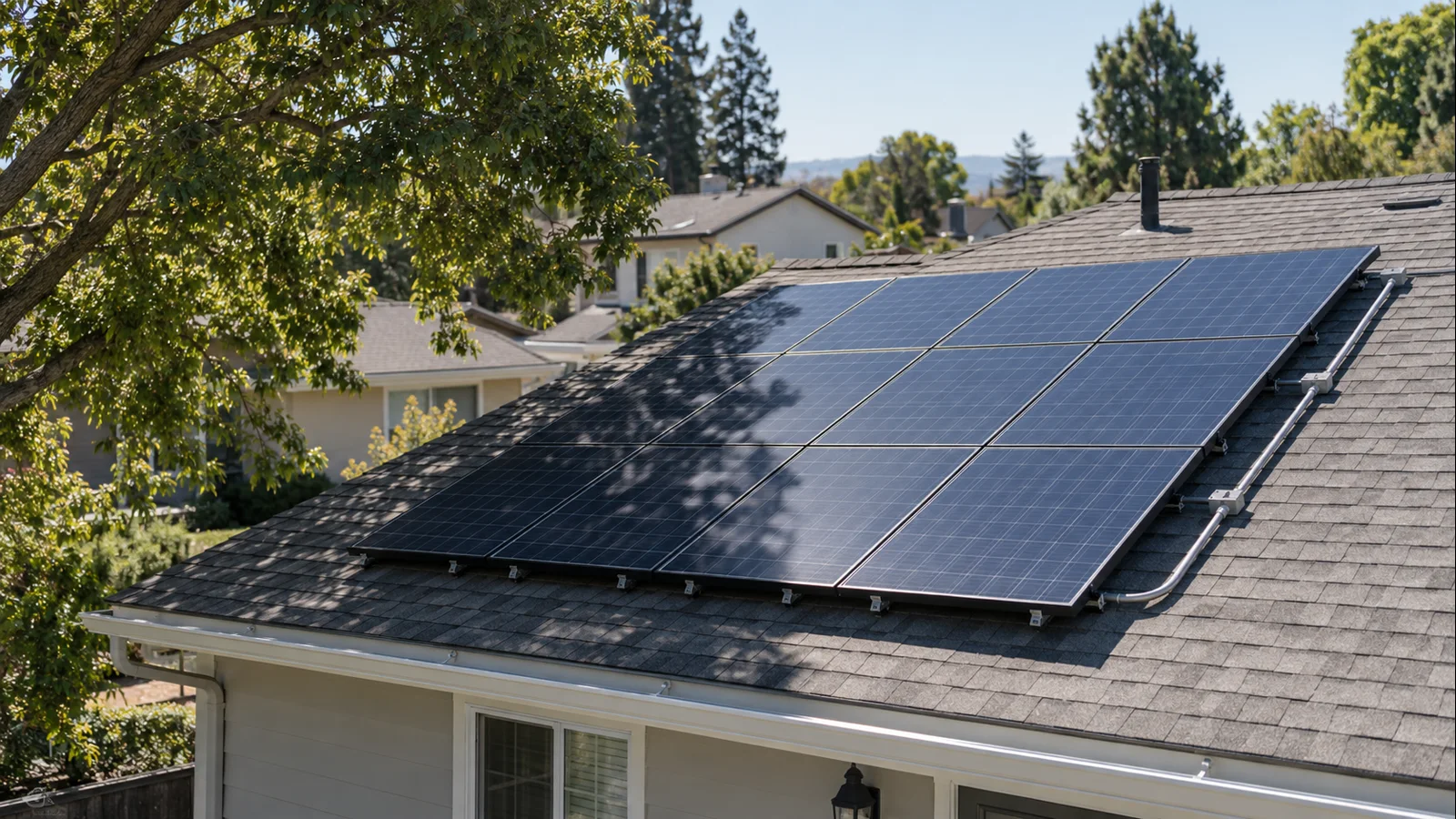
That is the useful way to understand IQ8 in shade. It changes the electrical relationship between modules; it does not remove the shadow. Real energy loss still depends on shade pattern, module behavior, the exact IQ8 model, and the system design.
What IQ8 does when one panel is shaded
Enphase’s IQ8 documentation describes one microinverter connected to one PV module, with individual MPPT for that module. MPPT is the control process that seeks the voltage and current combination where the attached module can deliver the most available DC power under current conditions.
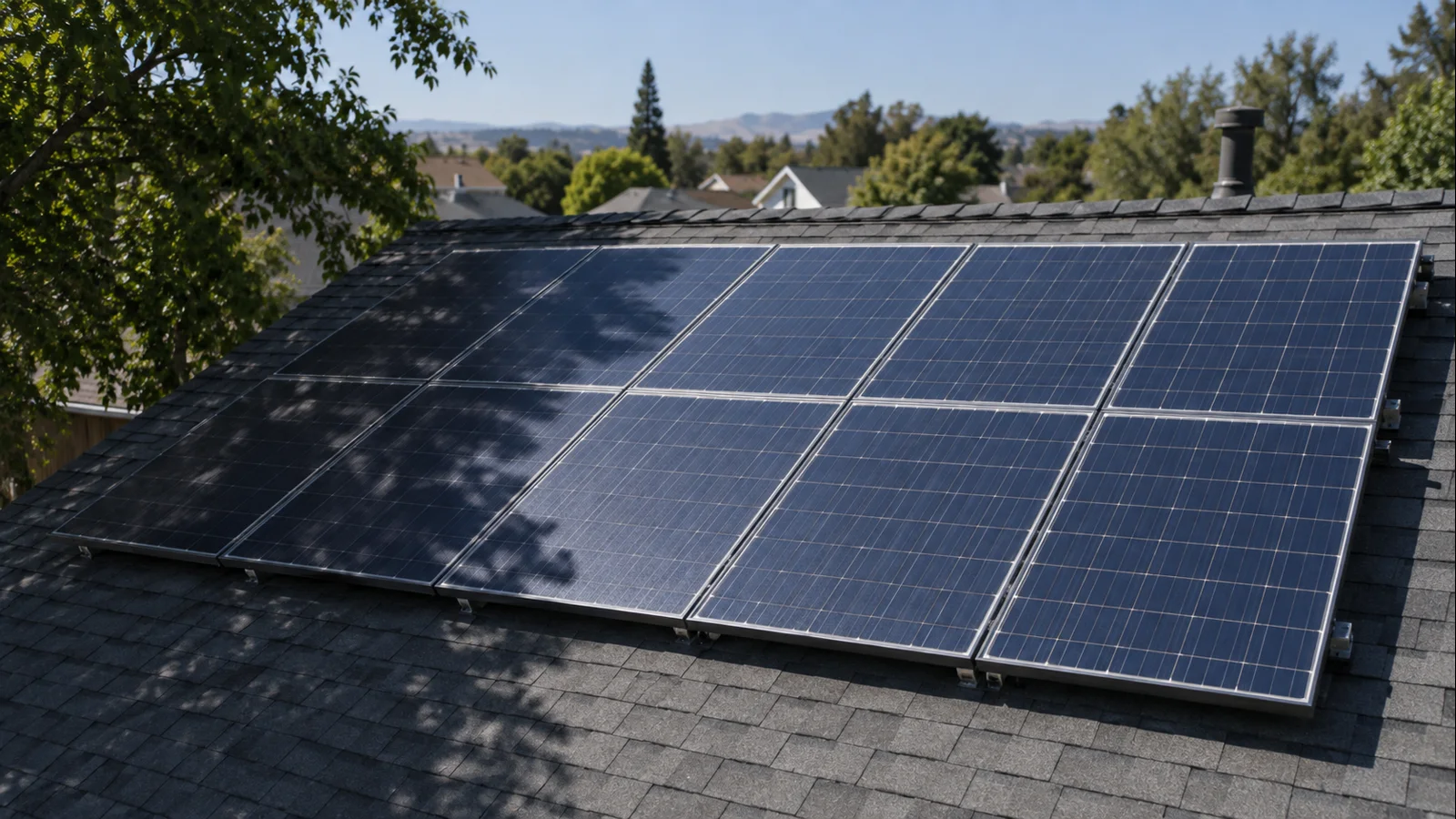
If a chimney shadow crosses one module while neighboring modules remain in sun, the affected IQ8 tracks that module separately. The other microinverters are not forced to operate at the shaded module’s current or voltage. This is the core shade-related advantage of the architecture.
A conventional series string without module-level power electronics behaves differently because multiple modules are electrically tied together before a central or string inverter performs MPPT. A mismatched or shaded module can influence the string’s operating point. The U.S. Department of Energy likewise notes that microinverters let individual panels operate independently, which is useful where some modules may be shaded.
But the shaded IQ8-connected module does not stay at full output. Lower irradiance means less solar power is available. The microinverter can optimize what is available; it cannot create missing irradiance.
Why partial shade is not a simple percentage loss
Shade losses are not generally proportional to the visible percentage of a panel covered. PV modules contain bypass diodes that can route current around groups of cells when shading drives a cell group far enough from normal operation. That protects the module and changes its voltage and power curve.
NREL research on partially shaded PV shows why the details matter: bypass-diode activation, the cells or substrings affected, and the electrical layout can create nonlinear power changes. With IQ8, those module-level effects remain associated with that module-plus-microinverter pair instead of automatically becoming one shared operating constraint for unrelated modules.
Actual shade performance depends on the shadow’s size and movement, module bypass-diode and cell layout, irradiance and temperature, roof geometry, module electrical characteristics, the selected microinverter’s MPPT/input range and AC limit, and the overall array design. Panel and inverter pairing therefore need to be evaluated together. For module context, see AmpedHabitat’s REC Alpha Pure-R review.
IQ8 vs. string architectures under shade
| Architecture | When one module is shaded | Important qualification |
|---|---|---|
| IQ8 microinverters | Each module has its own microinverter and MPPT, so the shaded module can operate independently from unshaded modules. | The shaded module still loses available power; results depend on module and inverter operating limits. |
| Conventional series string without module-level power electronics | Mismatch from a shaded module can affect the operating point and production of the string. | Modern string inverters may have multiple MPPT inputs, and string layout strongly affects the size of the impact. |
| String inverter with DC optimizers | Module-level electronics can reduce mismatch propagation and may add module-level monitoring or control. | Optimizer systems are not all identical; shade response and voltage requirements depend on the specific platform. |
This is not a blanket ranking. A well-designed optimizer/string system can also manage mismatch effectively, while a poor roof layout remains poor regardless of electronics. Compare the actual products, electrical requirements, service model, roof complexity, and modeled annual energy.
Shading and clipping are different
Shading reduces the DC power available from a module because less useful sunlight reaches its cells. Clipping occurs when the module could supply more DC power than the microinverter can convert at that moment because the inverter has reached its AC output ceiling.
Enphase’s current North America data sheets are a reminder that “IQ8” is a family, not one universal specification. IQ8, IQ8+, IQ8M, IQ8A, IQ8HC, IQ8X, and other variants use different AC output limits, MPPT voltage ranges, current limits, and compatibility requirements. The current IQ8/IQ8+ sheet, for example, lists different MPPT ranges and different maximum continuous AC outputs for those two models.
So a clear-sky midday power plateau can be clipping even when no shade is present. Its annual significance depends on climate, orientation, module rating, temperature, and the exact DC-to-AC pairing. For related production-versus-bill context, see How Much Do Solar Panels Save in Summer?.
Why a shade study still matters with microinverters
Microinverters localize mismatch; they do not make a heavily shaded roof equivalent to an open-sky roof. Before installation, the designer should still evaluate year-round sun access, trees, chimneys, dormers, vents, neighboring structures, and seasonal shadow movement.
A shade study can show whether to omit a poor module position, move modules to another roof plane, change spacing, or revise the layout. Avoiding chronic shade is usually better than relying on power electronics to manage it after installation.
Tree growth and new obstructions matter too. A system with good sun access at commissioning can develop morning or afternoon losses years later as branches extend, vegetation fills in, or rooftop/neighboring construction changes the shade pattern. Selective trimming may help where appropriate; sometimes a layout change during roof work or future module replacement makes more sense.
How to distinguish normal shade from a possible fault
Enphase’s current homeowner app guidance provides panel-level production detail in the Array view. That makes patterns more useful than one isolated low reading.
A module that falls behind neighboring modules at about the same time on clear days, then recovers as the sun moves, is consistent with repeatable shading. Seasonal changes in the timing of the dip can also track changing sun angles or foliage.
A module that is unexpectedly low all day, suddenly changes behavior without a new shadow, stops reporting, or triggers a production/reporting alert deserves a different diagnosis. Enphase notes that “Microinverter Not Reporting” can reflect a communications problem rather than a failed microinverter, so monitoring data should be considered with system status and installer diagnostics.
Soiling can also create uneven panel-level output. If dirt, pollen, bird debris, or weather is a plausible cause, compare the pattern before assuming an electrical failure. AmpedHabitat’s solar panel cleaning guide explains when cleaning is likely to help.
What homeowners should ask an installer
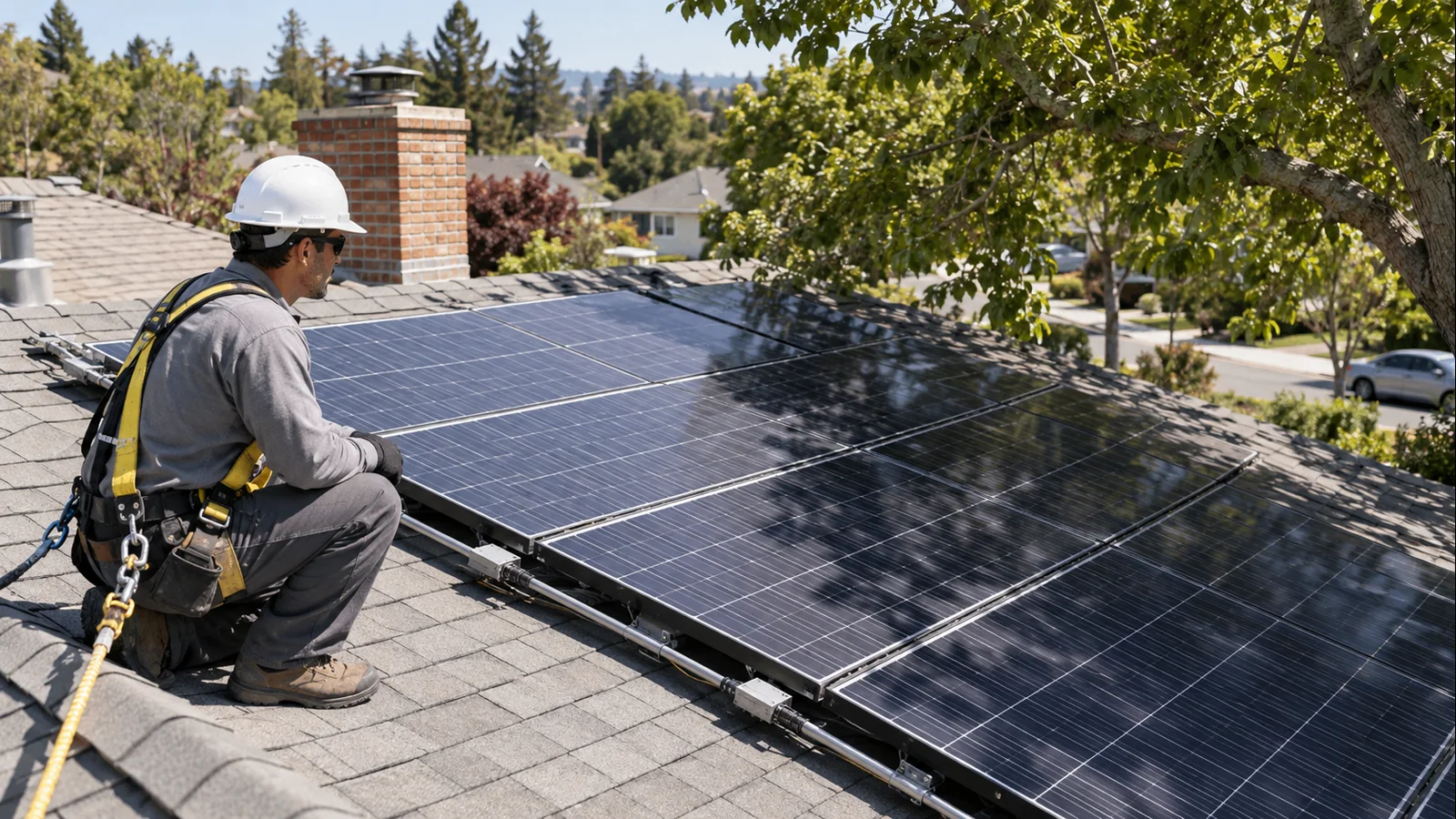
Ask for the shade analysis and annual-energy model, then ask which exact IQ8 model is being paired with which exact module. The answer should cover electrical compatibility, the microinverter’s input/MPPT range, its AC output rating, and the assumptions used for shade and clipping.
Also ask whether any proposed module location is so shaded that it should simply be omitted. Module-level MPPT can reduce collateral mismatch losses, but extra hardware in a chronically poor solar location can still be a weak economic choice.
Think beyond commissioning as well. Module degradation, roof condition, vegetation, new obstructions, and equipment service can change system performance years later. For long-term context, see Solar Panel Lifespan: Degradation, Warranties & Replacement.
FAQ
Does Enphase IQ8 work in shade?
Yes. An IQ8-connected module can continue operating under partial shade if its electrical conditions remain within the microinverter’s operating requirements. Its individual MPPT seeks the best available operating point, but output still falls when shade reduces available solar energy.
Will one shaded panel affect the whole Enphase array?
Not in the same direct series-string way as a conventional string without module-level power electronics. Each Enphase microinverter tracks one module independently, so one underperforming module is less likely to drag unrelated unshaded modules to the same operating constraint.
Do microinverters fix tree shade?
No. Microinverters manage electrical mismatch; they do not remove the shadow. Persistent tree shade still reduces irradiance and energy production. A shade study, selective trimming where appropriate, or different module placement can be more valuable than electronics alone.
Can Enphase monitoring identify a shaded module?
It can help. Panel-level production can reveal repeated time-of-day dips on one or several modules. Monitoring alone does not prove shade, because soiling, communications problems, module faults, wiring issues, or microinverter issues can produce similar symptoms.
Bottom line
IQ8’s shade advantage is best understood as isolation of module mismatch, not elimination of shade loss. Individual module MPPT lets unshaded modules keep operating independently while a shaded module works with the sunlight it actually receives. The result still depends on shade geometry, bypass-diode behavior, module characteristics, the specific IQ8 variant, inverter power limits, and good array design.
Freshness/source note: Reviewed September 10, 2026 against Enphase’s current Microinverter Documentation Center, the North America IQ8/IQ8+ data sheet, and current Enphase homeowner monitoring guidance. DOE and NREL resources were used for independent shading, string, and bypass-diode context. Verify the exact microinverter/module pairing because manufacturer specifications can change.