

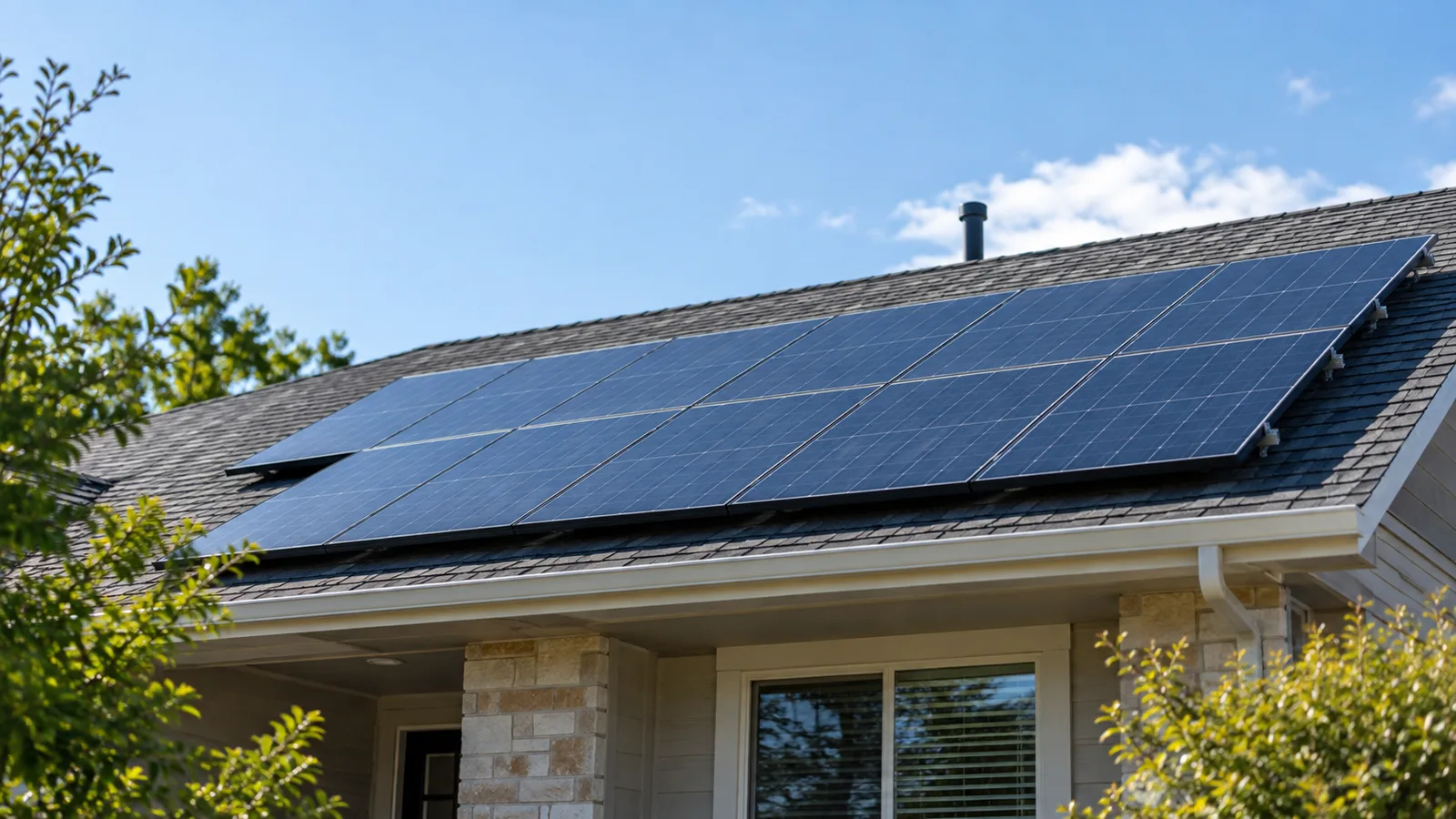
Sometimes, but not on a universal schedule. Many rooftop solar arrays get useful natural cleaning from rain, while others accumulate dust, pollen, ash, bird droppings or other deposits that persist and reduce production. The best trigger is not a calendar: inspect safely from the ground, look for a persistent unexplained production change, rule out weather, shade and seasonal effects, then follow the exact module manufacturer’s cleaning and warranty instructions.
Do solar panels actually need cleaning?
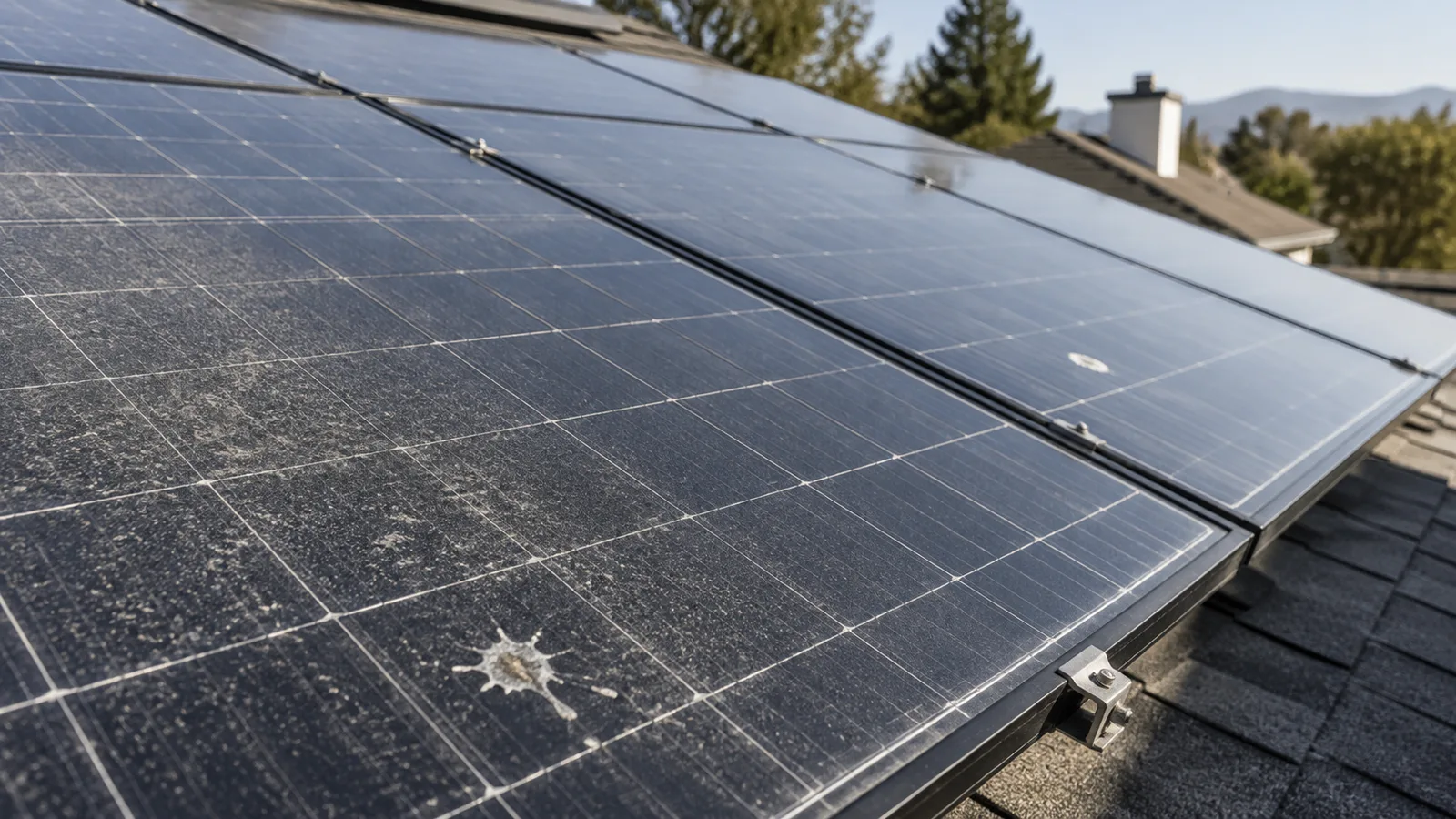
Solar panels can lose output when material on the glass blocks sunlight, but the size of that loss is highly site-specific. The National Renewable Energy Laboratory (NREL) notes that soiling depends on local climate and conditions, and has reported annual energy losses from soiling as high as about 7% in parts of the United States. That is an upper-end observation, not a national residential average and not a reason to schedule automatic annual cleaning. NREL’s soiling research also explains that rain and wind can remove some dust, while other particles can become cemented to the glass and harder to wash away.
NREL also maintains a Photovoltaic Module Soiling Map based on U.S. field measurements, reinforcing that soiling is local. Agricultural dust, wildfire ash, heavy pollen, construction activity and bird activity can make one roof behave differently from another.
Visible dirt is not the same as measurable solar production loss
A dusty-looking module can still be producing close to expectations, while a less dramatic deposit can sometimes matter more. Appearance is a useful maintenance clue, but it does not quantify lost energy. Solar production also moves with solar irradiance, cloud cover, season, roof orientation, shading, module temperature, snow, equipment availability and inverter behavior. A lower number in the monitoring app is therefore not automatically evidence that the panels need washing.
When diagnosing a system, timing matters. A recurring daily drop may point to shade, while inverter clipping can flatten peak output even on a clean array. Year-over-year comparisons can also be distorted by different weather. Homeowners troubleshooting shade can see AmpedHabitat’s guide to Enphase IQ8 and shade.
When rain is enough—and when it may not be
Routine washing is not automatically necessary just because panels are outdoors. Rain can remove loose dust and other material, especially where modules are installed at an angle that sheds water. But “it rains here” is not proof that an array stays clean.
NREL demonstrated that clearly in a 2023 pollen study of five utility-scale solar sites in North Carolina. During peak pollen season, performance losses reached as much as 15% at the studied sites, and rainfall did not fully restore pre-pollen performance. Mechanical wet-brush cleaning improved performance. Those results are useful because they show that rain sometimes leaves persistent bio-soiling behind, but they should not be generalized into a 10%–15% expectation for U.S. residential roofs.
Localized contamination can justify action even when whole-array cleaning would not. Persistent bird droppings, wildfire ash, heavy pollen or dry-period dust are examples. The question is whether the deposit persists and likely causes enough lost energy to justify safe cleaning.
A better 2026 decision process than “clean every year”
- Look from the ground first. Use a safe viewing angle, binoculars or a camera zoom if needed. Do not climb onto a roof merely to inspect dirt.
- Check monitoring for a persistent change. Look for a pattern across multiple comparable days or a longer normalized trend, not one disappointing afternoon.
- Rule out other causes. Consider clouds, smoke, seasonal sun angle, new shade, snow, heat, inverter clipping, an outage, communications errors or an equipment fault.
- Check the manufacturer’s manual and warranty terms. Water quality, permitted tools, detergents, pressure limits and cleaning procedures can differ by module maker.
- Choose the safest cleaning method. If the array cannot be reached safely from the ground under the manufacturer’s instructions, use a qualified professional rather than treating roof access as routine maintenance.
- Verify the result over time. Compare post-cleaning performance with an appropriate baseline or installer diagnostics instead of assuming any same-day increase came from cleaning.

How to tell whether cleaning is economically worth it
The useful calculation is simple in concept: expected recovered annual kWh × the local value of that electricity, compared with the cost of cleaning. But the difficult part is estimating the recovered kWh honestly. A single before-and-after day can mislead because irradiance, cloud timing, module temperature, shade and clipping can all change between the two periods.
Prefer a persistent trend in system monitoring, weather-normalized data if available, installer diagnostics, or a professional assessment when the suspected loss is material. Panel-level or string-level data can also help identify whether the problem is localized or array-wide, depending on the system architecture. Do not assume that visible dust automatically creates enough lost energy to repay a cleaning visit.
The value of recovered electricity depends on the homeowner’s rate structure and how solar energy is used or credited. Use a realistic local value per kWh rather than a national estimate. Cleaning prices also vary with roof height, array size, access and local labor.
How to clean solar panels without damaging them
Follow the exact manufacturer documentation for the installed modules; a method allowed by one brand may be restricted by another. As a current example, REC says cleaning need varies with location, rainfall, pollution and installation angle, and recommends cleaning when dirt is clearly visible on the glass. AmpedHabitat’s REC Alpha Pure-R overview provides related module context.
REC’s installation manual and cleaning guide say its panels should be cleaned when cool, using water at ambient temperature. The cleaning guide warns against high-pressure hoses, pressure or steam cleaners, abrasive or metallic tools, and putting body weight or other pressure on the modules. REC also notes that damaged panels can present a serious shock hazard, especially when wet. Its instructions permit specific cleaning agents and tools under defined conditions, but those details should not be copied to another brand without checking that brand’s manual and warranty.
Roof and ladder safety matters more than a few extra kWh
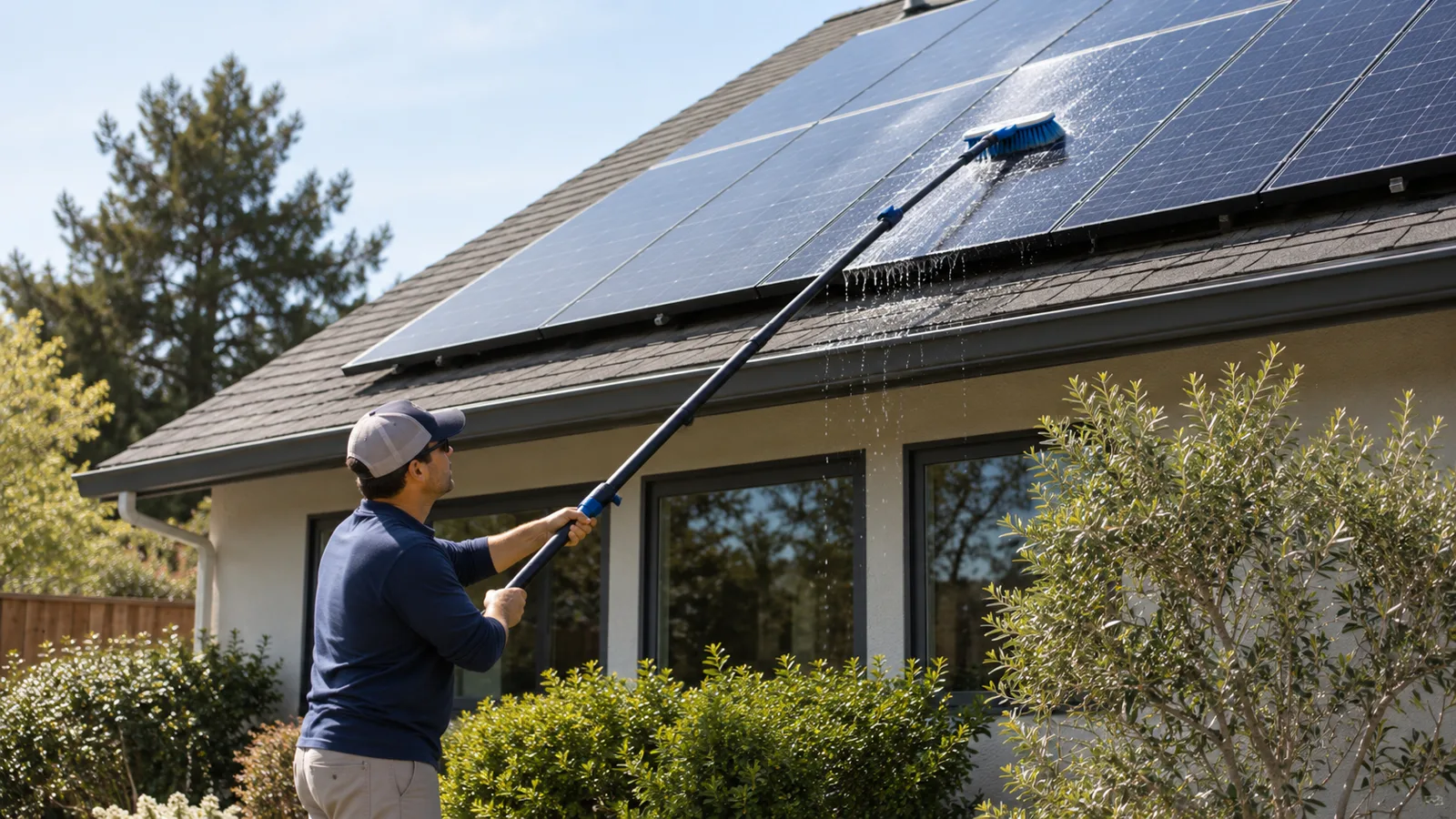
For a rooftop array, the conservative homeowner recommendation is not to access the roof solely for cleaning. The U.S. Consumer Product Safety Commission warns that ladder falls can cause serious injury and advises stable, level footing, another adult acting as a spotter, and keeping ladders away from power lines and live wires. See the CPSC’s outdoor repairs safety checklist.
If a panel is cracked, wiring looks damaged, a connector appears loose, or there is any uncertainty about electrical condition, do not add water and continue cleaning. Stop and contact the installer, manufacturer or another qualified solar professional.
What not to use on solar panels
- Do not pressure-wash modules unless the exact manufacturer explicitly permits the method and pressure used. REC, for example, prohibits high-pressure cleaning.
- Do not use abrasive pads, blades or harsh scrubbing tools. They can damage glass surfaces or coatings.
- Do not stand, walk, kneel or lean on modules. Mechanical loading can cause visible or hidden damage.
- Do not spray cold water onto hot panels. Follow the manufacturer’s temperature guidance; REC specifies cool modules and ambient-temperature water.
- Do not assume household cleaners are safe. Detergent chemistry, concentration and rinsing requirements are manufacturer-specific.
Does dirt shorten solar panel life?
Ordinary visible dust is mainly a performance issue, not proof of permanent module damage. Avoid cleaning practices that scratch glass, stress the laminate, damage seals or create an electrical hazard. Gradual age-related decline should also not be confused with soiling; see AmpedHabitat’s guide to solar panel lifespan and degradation.
FAQ: solar panel cleaning in 2026
How often should solar panels be cleaned?
There is no universal interval. Start with safe visual inspection, monitoring trends, local soiling conditions and the module manufacturer’s instructions. Some arrays may need little or no manual cleaning for long periods; others can accumulate persistent deposits sooner.
Does rain clean solar panels well enough?
Sometimes. Rain can remove loose dust, but NREL research shows that some contaminants can remain or become difficult to remove. Heavy pollen at the studied North Carolina utility sites is a documented example where rainfall did not fully restore performance.
Can I clean rooftop solar panels myself?
Only when the job can be done safely and in accordance with the module manufacturer’s instructions. Do not climb onto a roof solely to clean panels. If safe ground-level access is not practical, hiring a qualified professional is the safer choice.
How do I know if dirty panels are actually costing me energy?
Look for a persistent unexplained production change after accounting for weather, shade, season, temperature and equipment behavior. Installer diagnostics or normalized monitoring are more reliable than comparing two random days.
Is professional solar panel cleaning worth it?
It can be when persistent soiling is causing recoverable energy loss or when access makes DIY cleaning unsafe. Compare expected recovered annual kWh times the local value of electricity with the cleaning cost; there is no universal price or percentage threshold.
Freshness/source note: Updated September 2026 using current NREL soiling resources, NREL’s North Carolina pollen study, REC module cleaning guidance and U.S. CPSC ladder-safety guidance. Manufacturer instructions and warranty terms for the exact installed module take precedence over generic cleaning advice.