

Quick answer: JA Solar’s DeepBlue 4.0 remains a credible value-oriented n-type rooftop option in 2026, but the exact model matters. For U.S. homeowners, the compact JAM54D41/LB family is the relevant reference: 430–455 W, up to 22.8% efficiency, double-glass bifacial construction and a model-specific Pmax temperature coefficient of -0.29%/°C. Buy it for a strong system quote, not because “n-type” guarantees more annual energy.
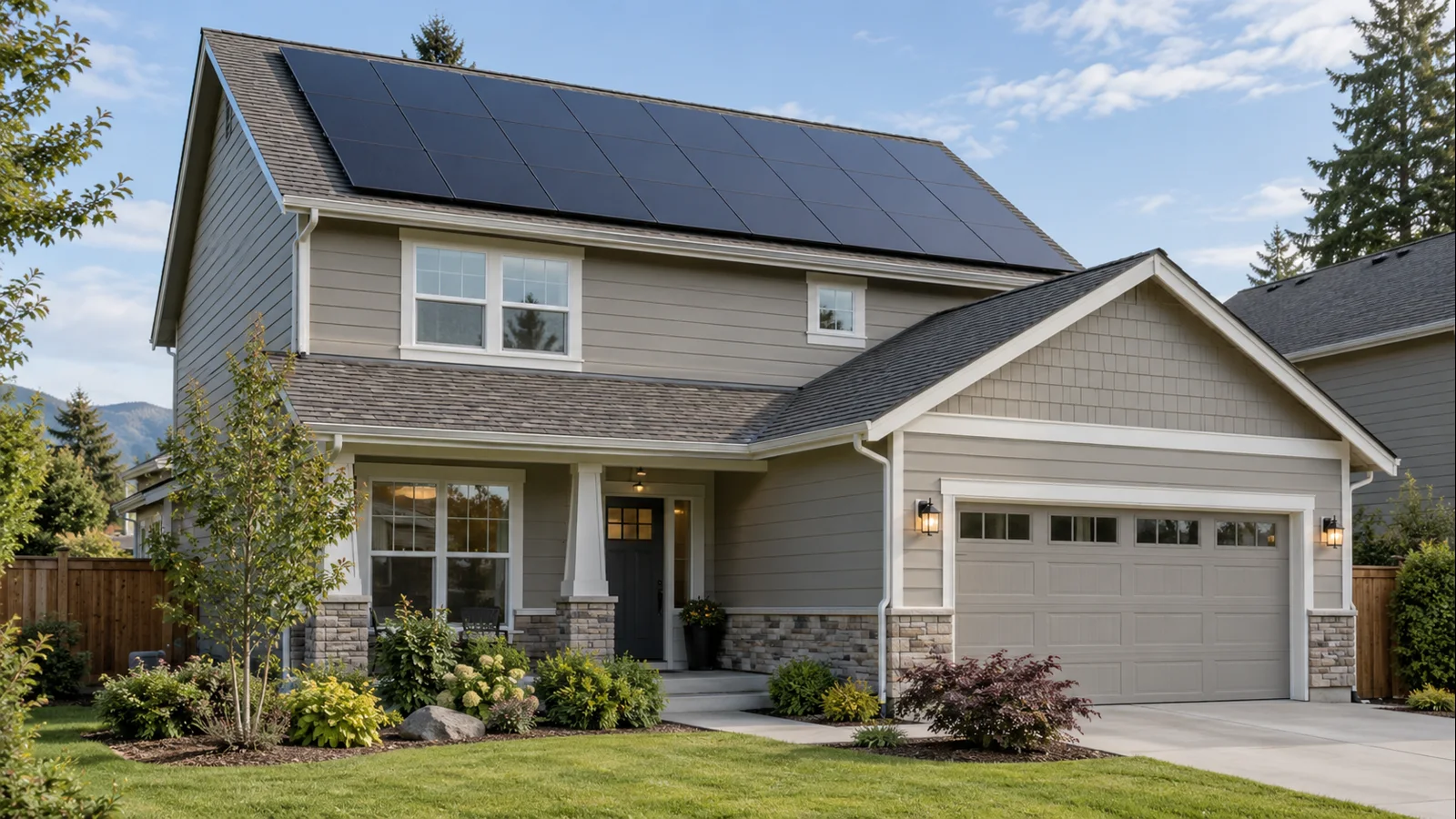
JA Solar DeepBlue 4.0 in 2026: what is actually current?
DeepBlue 4.0 is no longer JA Solar’s newest platform; DeepBlue 5.0 is the newer flagship. Still, JA Solar’s current datasheet library continues to carry DeepBlue 4.0 documentation. A 2026 quote is therefore not automatically stale, but it should identify the full model code rather than sell “DeepBlue 4.0” as one universal panel.
This review focuses on JAM54D41/LB, a compact DeepBlue 4.0 Pro n-type double-glass bifacial family rated from 430 W through 455 W. JA’s technical white paper identifies the 54-cell-format design as suitable for European and American rooftop projects. Other DeepBlue 4.0 products use different dimensions, wattages, glass constructions and warranty schedules, so their numbers should not be mixed into this review.
Verified JAM54D41/LB specifications
| Specification | JAM54D41/LB value | Why it matters |
|---|---|---|
| Rated power | 430, 435, 440, 445, 450 or 455 W | DC nameplate capacity per module; not annual energy production. |
| Module efficiency | 21.5%–22.8% | Higher values put more rated watts into the same footprint. |
| Dimensions | 1762 × 1134 × 30 mm | About 69.4 × 44.6 × 1.2 in; roof geometry determines how many fit. |
| Weight | 22 kg | Relevant to handling, racking and structural review. |
| Cell / module design | 108 half-cells, n-type, 16-busbar, double-glass bifacial | Defines the exact construction reviewed here. |
| Pmax temperature coefficient | -0.29%/°C | Describes rated-power change with cell temperature. |
| Bifaciality | 80% ±10% | Rear-side response matters only when useful light reaches the back. |
At 455 W, JA lists 22.8% efficiency. That is competitive for a residential-size module when roof area is constrained. But 455 W is an instantaneous standard-test-condition rating, not an annual production number. Annual kWh depend on solar resource, orientation, tilt, shade, temperature, soiling, inverter behavior and system availability.
What n-type TOPCon means in practical terms
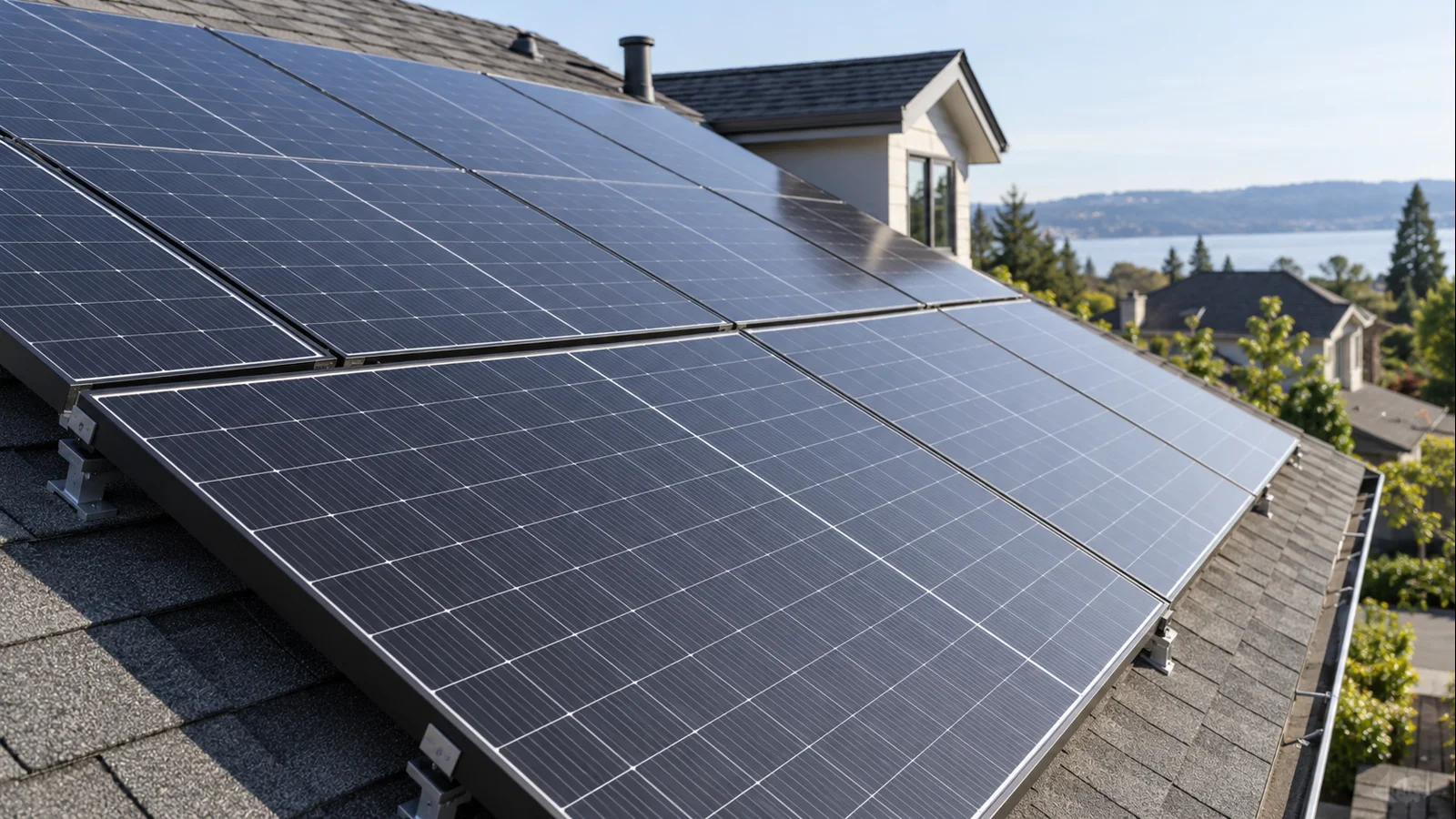
DeepBlue 4.0 uses n-type silicon with TOPCon-generation passivated-contact technology. In practical terms, the architecture can support high efficiency, strong low-light behavior and lower susceptibility to some degradation mechanisms associated with older p-type designs. JA markets this platform under its Bycium/Bycium+ cell technology branding.
That does not make n-type universally superior. N-type modules still degrade, and a well-designed competing system can outperform a poorly designed TOPCon installation. Roof geometry, inverter design, shading, workmanship and long-term service can matter more than the cell acronym.
For premium alternatives, the REC Alpha Pure R review shows a different HJT approach to roof-space efficiency and warranty value, while the LONGi Hi-MO 6 review covers back-contact technology. Compare usable DC watts, modeled annual kWh, warranty support and total installed cost—not acronyms alone.
Temperature coefficient: useful, not a summer-energy shortcut
JA Solar lists a Pmax temperature coefficient of -0.29%/°C for this JAM54D41/LB family. The minus sign means module power decreases as cell temperature rises above the reference condition. A less-negative coefficient can reduce heat-related loss versus a more-negative module, all else equal.
Cell temperature is not outdoor air temperature, and temperature coefficient is only one input to energy yield. Roof color, mounting clearance, wind, irradiance, orientation and inverter sizing also matter. AmpedHabitat’s summer solar bill math guide explains why system kW, produced kWh and utility-bill value must be kept separate.
Roof-space efficiency and bifacial reality
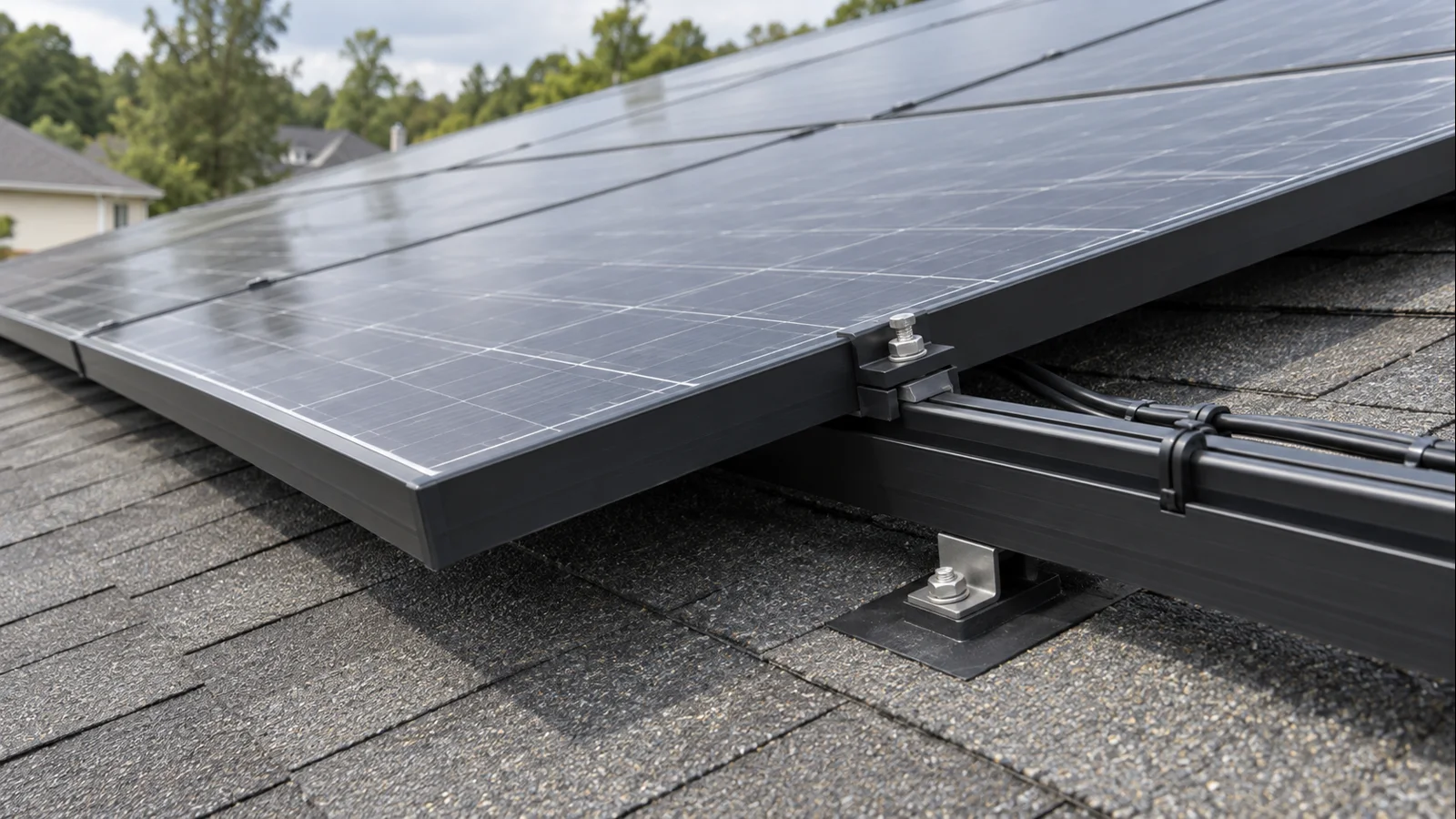
The 54-cell-format DeepBlue 4.0 is useful on residential roofs because its footprint is manageable while higher bins reach 455 W. On roofs broken up by vents, dormers or fire setbacks, that power density can help reach a target DC system size with fewer modules than a lower-wattage panel of similar area.
The LB version is bifacial, but conventional residential roofs often provide limited rear irradiance. A flush or low-clearance asphalt-shingle array is very different from an elevated ground mount or canopy. Do not accept a fixed bifacial production bonus unless the installer’s energy model represents the actual mounting geometry and rear-side light.
Warranty and degradation: verify the exact sales document
JA Solar’s June 2026 global limited-warranty schedule lists JAM54D41-XXX/LB with a 25-year limited product warranty and 30-year limited peak-power warranty, 1% first-year degradation, 0.40% annual decline thereafter and 87.4% remaining power at year 30. Those are warranty limits, not a prediction that every module will degrade on that exact curve.
Market-specific documents can differ. JA has published regional warranty schedules with different product-warranty periods for closely matching model codes. U.S. buyers should therefore ask the installer to attach the warranty that applies to the exact suffix, country of sale and purchase date, and confirm who pays labor, removal, shipping or reinstallation if a claim is approved. For broader context, see AmpedHabitat’s solar panel lifespan and degradation guide.
Installer economics matter more than panel marketing
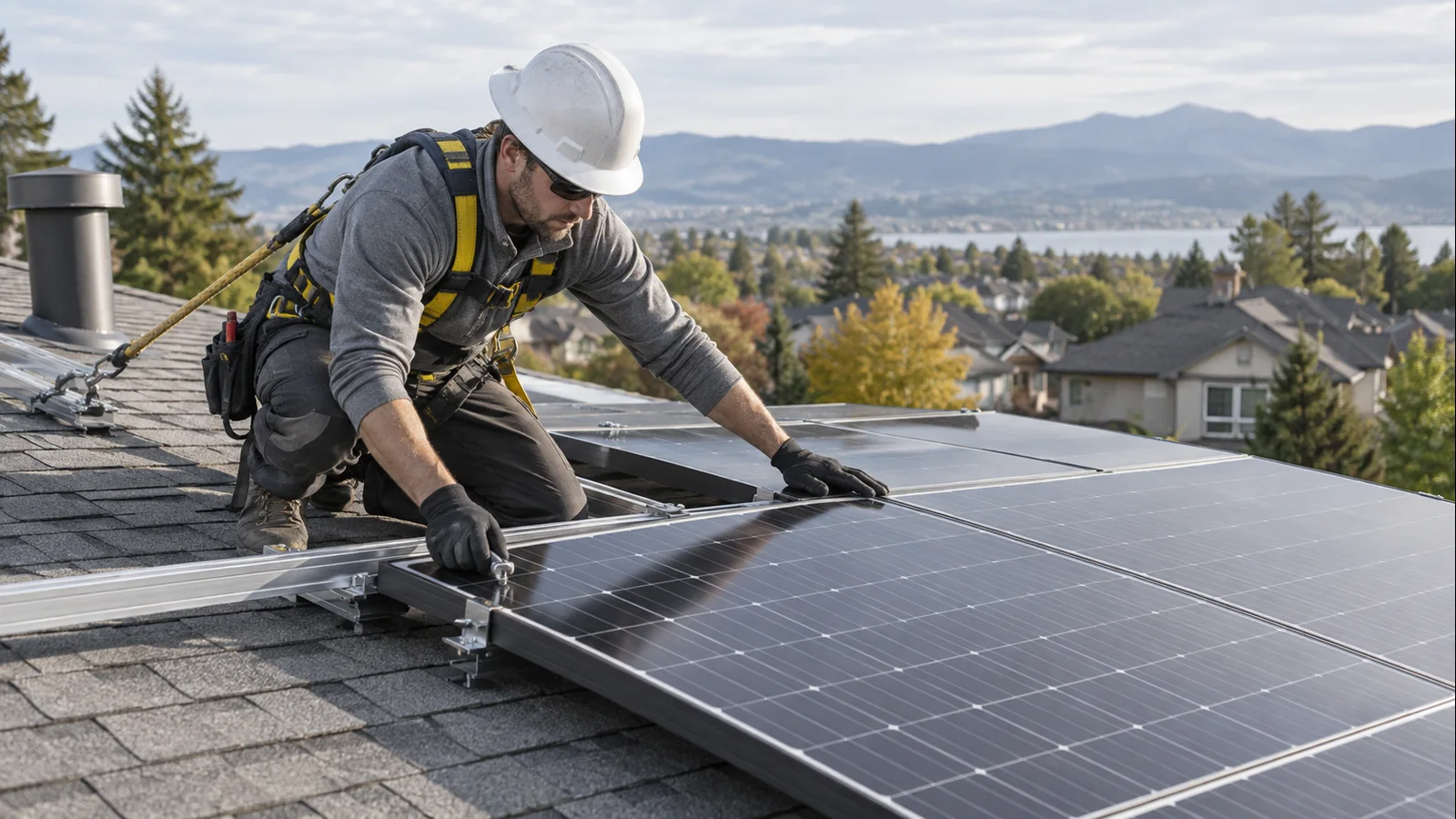
There is no responsible universal installed price per watt for a JA Solar system in the United States. Module cost is only one line item; permitting, roof complexity, racking, electrical work, inverter choice, financing and installer overhead all affect the project price.
JA Solar can therefore be a strong quote without being the highest-efficiency panel available. If the installer can source it reliably, fit the target system size, pair it with compatible power electronics and provide solid service at a competitive total price, the economics may beat a premium-module proposal. A cheaper module is not a bargain if the layout, inverter pairing or installer support is weak.
Questions to ask before signing
- What is the complete module model code, including suffix?
- How many modules fit after setbacks, vents and shade are modeled?
- What DC system size in kW will be installed, and what annual production in kWh is modeled?
- Which inverter or microinverter is paired with the module, and are voltage/current limits checked?
- Is any bifacial gain included, and what rear-irradiance assumption supports it?
- Which JA Solar product and performance warranty documents apply to this U.S. sale?
Who should buy JA Solar DeepBlue 4.0?
It fits best when the quote uses an exact JAM54D41/LB model, the roof benefits from 430–455 W modules in this footprint, and the installer offers strong design and service terms at an attractive total system price. It is a sensible choice for buyers who want established n-type TOPCon technology without automatically paying for a premium-module brand.
Consider skipping it when a newer module fits meaningfully more DC capacity on a constrained roof, the installer cannot provide applicable U.S. warranty paperwork, or a competing system offers better long-term service for similar money. Also skip any proposal that presents “n-type,” “bifacial” or “455 W” as a guaranteed annual-kWh or savings advantage without site-specific modeling.
Verdict
The JA Solar DeepBlue 4.0 JAM54D41/LB remains a credible residential module family in 2026: 430–455 W, up to 22.8% efficiency, n-type double-glass bifacial construction and a -0.29%/°C Pmax temperature coefficient are solid specifications. Its strongest case is value—good roof-space density and mature TOPCon technology inside a well-designed system.
The caveat is documentation. DeepBlue 4.0 spans multiple models and markets, and JA’s warranty terms have evolved. The best quote names the exact module, supplies the applicable warranty, models annual kWh honestly and pairs the panel with a competent installer.
Frequently asked questions
Is JA Solar DeepBlue 4.0 n-type?
Yes. The JAM54D41/LB family reviewed here uses n-type cells and JA’s TOPCon-generation Bycium+ platform. Verify the full model code because other DeepBlue products do not necessarily share identical construction.
How efficient is the JA Solar JAM54D41/LB?
JA’s datasheet lists 21.5% efficiency at 430 W through 22.8% at 455 W for the same footprint. Higher efficiency mainly helps put more rated DC watts on limited roof area.
Does a 455 W panel produce 455 W all day?
No. It is a standard-test-condition nameplate rating. Real output changes with sunlight, cell temperature, shade, soiling and inverter limits. Annual production should be discussed in kWh. NREL’s PVWatts calculator is a useful starting point for location-specific estimates.
Is DeepBlue 4.0 good in hot climates?
The reviewed family’s -0.29%/°C Pmax temperature coefficient is one useful comparison point, but it does not guarantee a fixed hot-climate energy advantage. Actual yield depends on the whole system and site.
What warranty applies to JAM54D41/LB?
JA Solar’s June 2026 global schedule lists JAM54D41-XXX/LB at 25 years for limited product coverage and 30 years for limited peak-power coverage, with 87.4% remaining power at year 30. Because market-specific terms can differ, obtain the warranty tied to the exact U.S. sale before signing.
Sources and 2026 freshness note
Reviewed for September 2026 against JA Solar’s current product-datasheet library, the manufacturer’s JAM54D41/LB datasheet, the DeepBlue 4.0 Pro technical white paper and JA Solar’s June 2026 module limited warranty. Energy-yield framing follows U.S. Department of Energy guidance on PV system design and energy yield. Verify the exact model code and documents attached to the installer’s proposal.