

Quick answer: An EV charger extension cord is not automatically safe because it is thick, “heavy duty,” or rated for high current. First check the EVSE or mobile-connector manual. If the manufacturer prohibits an extension cord, do not use one. For a reach problem, the safest long-term fix is usually a correctly located receptacle, a hardwired EVSE where appropriate, or an EVSE with an integrated cable that reaches without an added connection.
EV charger extension cords: the first distinction that matters
“EV charger extension cord” can describe two very different products, and treating them as interchangeable causes bad advice.
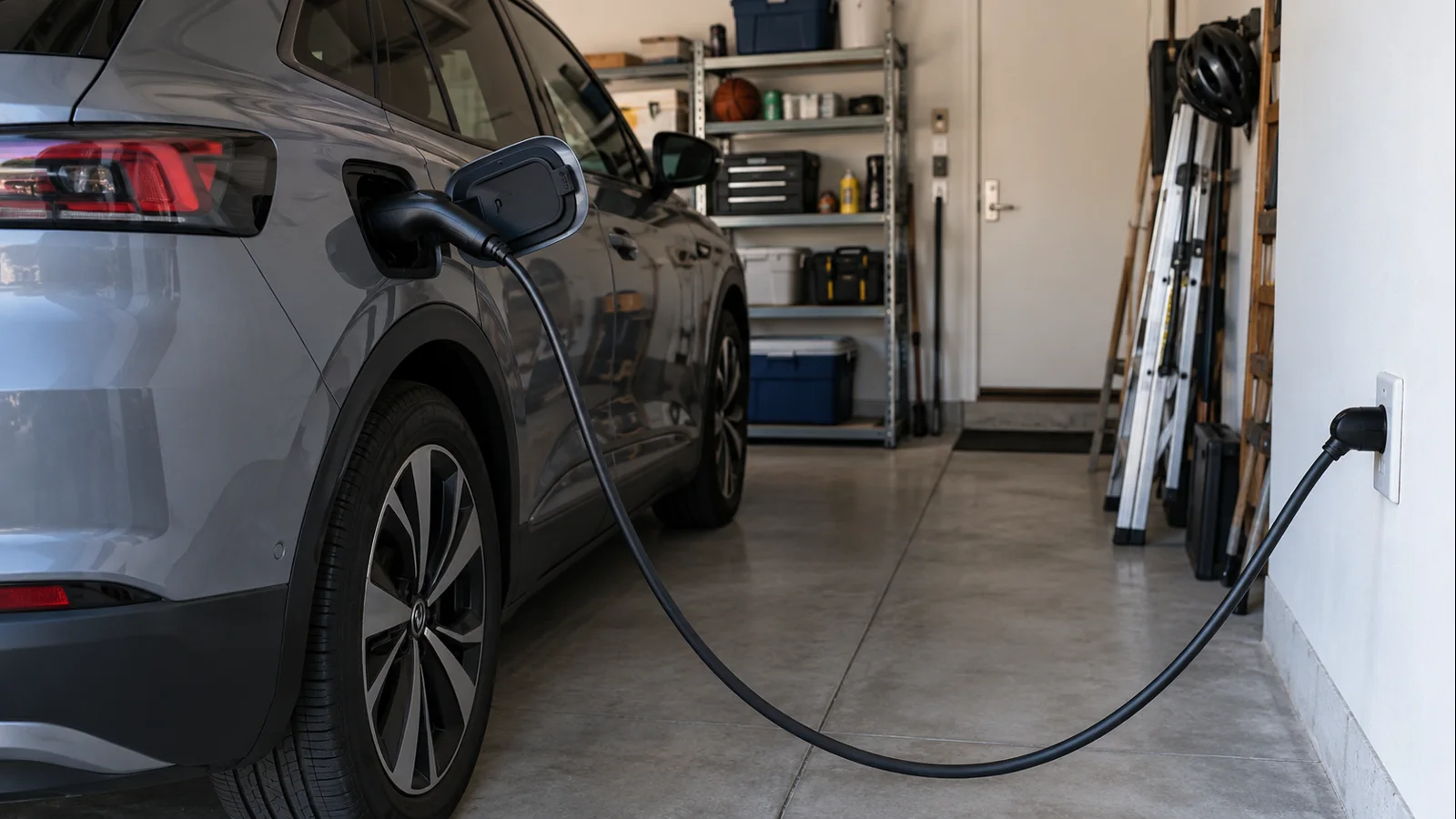
A supply-side AC extension cord goes between the wall receptacle and a portable EVSE or mobile connector. This is the kind of extension Tesla explicitly tells owners not to use with its Gen 2 Mobile Connector. Tesla’s North American manual also warns against multi-outlet adapters, multi-plugs, conversion plugs, and power strips. The same manual says to use a properly grounded outlet and not to use a damaged, loose, or worn receptacle. See the current Tesla Gen 2 Mobile Connector owner’s manual and Tesla’s charging product-guide hub.
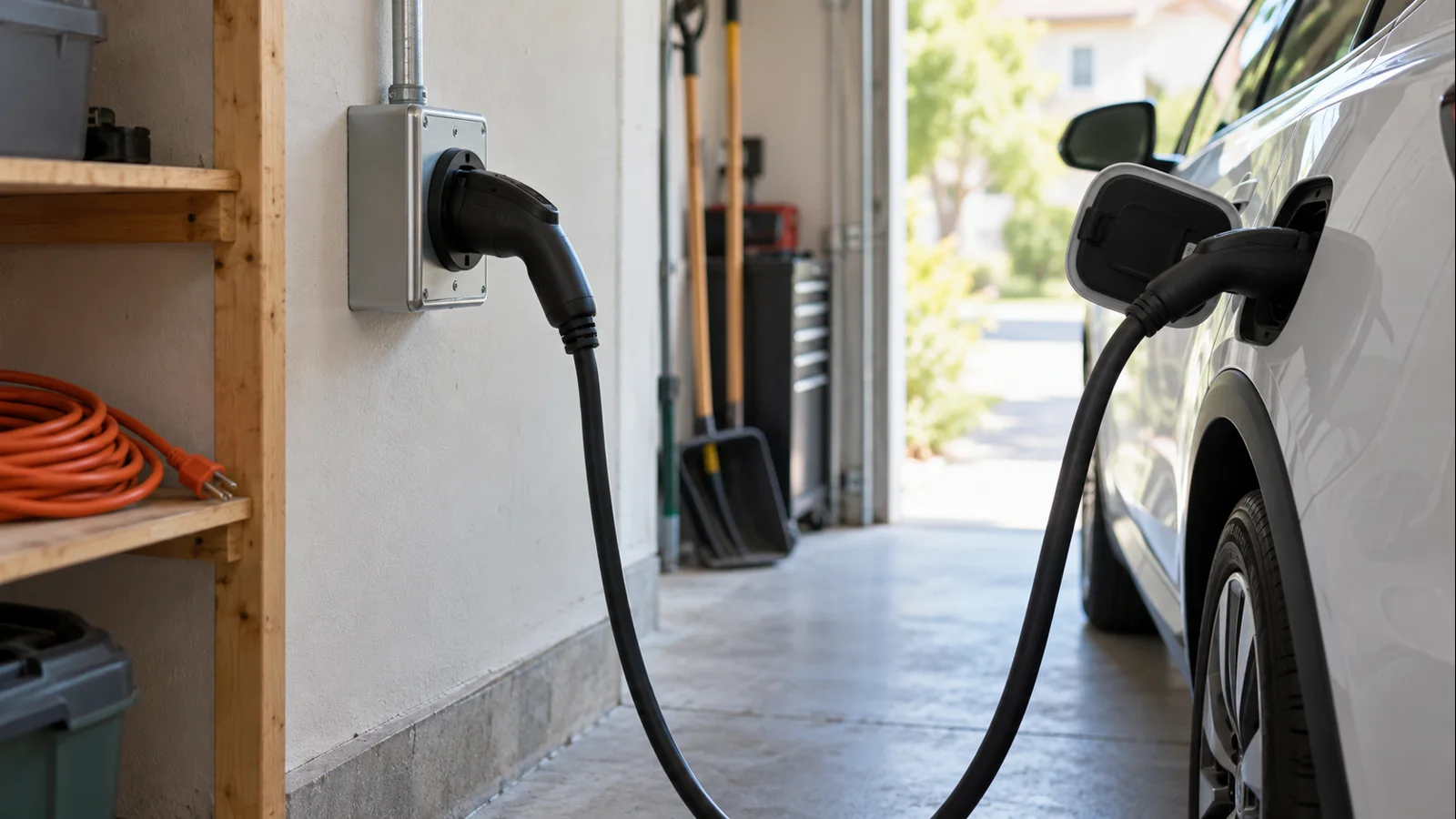
A vehicle-side J1772 or NACS-style extension goes between the EVSE’s charging connector and the vehicle inlet. That is not an ordinary AC appliance cord. It adds another EV charging connector/coupler assembly on the controlled side of the EVSE. Connector fit alone is not enough: intended use, complete-assembly listing or certification, environmental rating, current rating, and manufacturer instructions all matter.
Why EV charging is unusually demanding on cords and connections
EV charging can hold substantial current for hours. That makes marginal electrical connections more important than they may appear during a short appliance load. At each plug, receptacle, coupler, and terminal, some electrical resistance exists. Heating at a resistive connection rises rapidly with current, which is why a worn receptacle or poor contact can become a serious problem during a long charging session.
An added extension also adds more failure points. The risks are not limited to conductor size. They include contact resistance at plug blades or couplers, receptacle wear, loose fit, connector temperature, insufficient strain relief, abrasion, crushing, repeated flexing, moisture intrusion, and physical damage.
Coiling can also matter because a cord carrying a sustained load may have less opportunity to shed heat when bundled tightly. Outdoor use adds rain, standing water, dirt, sunlight, and temperature extremes. Never defeat GFCI protection, grounding, temperature protection, or any safety device to keep a charging session running.
Temperature sensing does not make an added cord automatically safe
Some mobile charging equipment monitors temperature at specific points and can reduce current when it detects excessive heat. Tesla’s Gen 2 manual, for example, documents current reduction for high temperature detected at the vehicle connector, input plug, controller, and wall plug. An added upstream extension can introduce contacts outside the EVSE’s directly monitored connection; temperature protection is not a substitute for following the manual.
If charging is unexpectedly slow, do not “solve” the problem by increasing current or bypassing protection. Use the diagnostic steps in Level 2 Charger Charging Slowly? to separate vehicle limits, EVSE settings, circuit limits, and thermal issues.
Why “10 AWG,” “240V,” or “heavy duty” is not a safety rule
There is no single wire gauge, cord length, or marketplace label that makes an extension universally acceptable for EV charging. Conductor gauge affects resistance and ampacity, but so do cord construction, length, termination quality, connector design, ambient conditions, and the actual current the EVSE draws. Most importantly, conductor size cannot override a manufacturer prohibition.
The same logic applies to a “240V extension cord.” A cord can have a voltage and current rating yet still be the wrong product for a particular mobile EVSE, receptacle, environment, or manufacturer-approved configuration. A generic UL or ETL mark should not be read as blanket permission to connect it to any EV charger. OSHA’s interpretation of listed equipment emphasizes using equipment in accordance with the instructions and limitations associated with its listing, while UL Solutions’ EV charging standards overview separately identifies standards for EVSE and EV plugs, receptacles, and couplers.
If you are choosing a mobile unit in the first place, compare approved connection options, adjustable-current behavior, and manufacturer documentation in our Best Portable EV Chargers guide rather than planning around an aftermarket cord.
Problem / safer fix
| Problem | Safer fix |
|---|---|
| Portable EVSE cannot reach a nearby receptacle | Check the manufacturer manual first. If extensions are prohibited, install or relocate a suitable receptacle closer to the parking position, or use another approved charging setup. |
| 240V outlet is on the wrong wall of the garage | Have a licensed electrician evaluate relocating the receptacle or installing a new dedicated circuit where the EVSE can connect directly. |
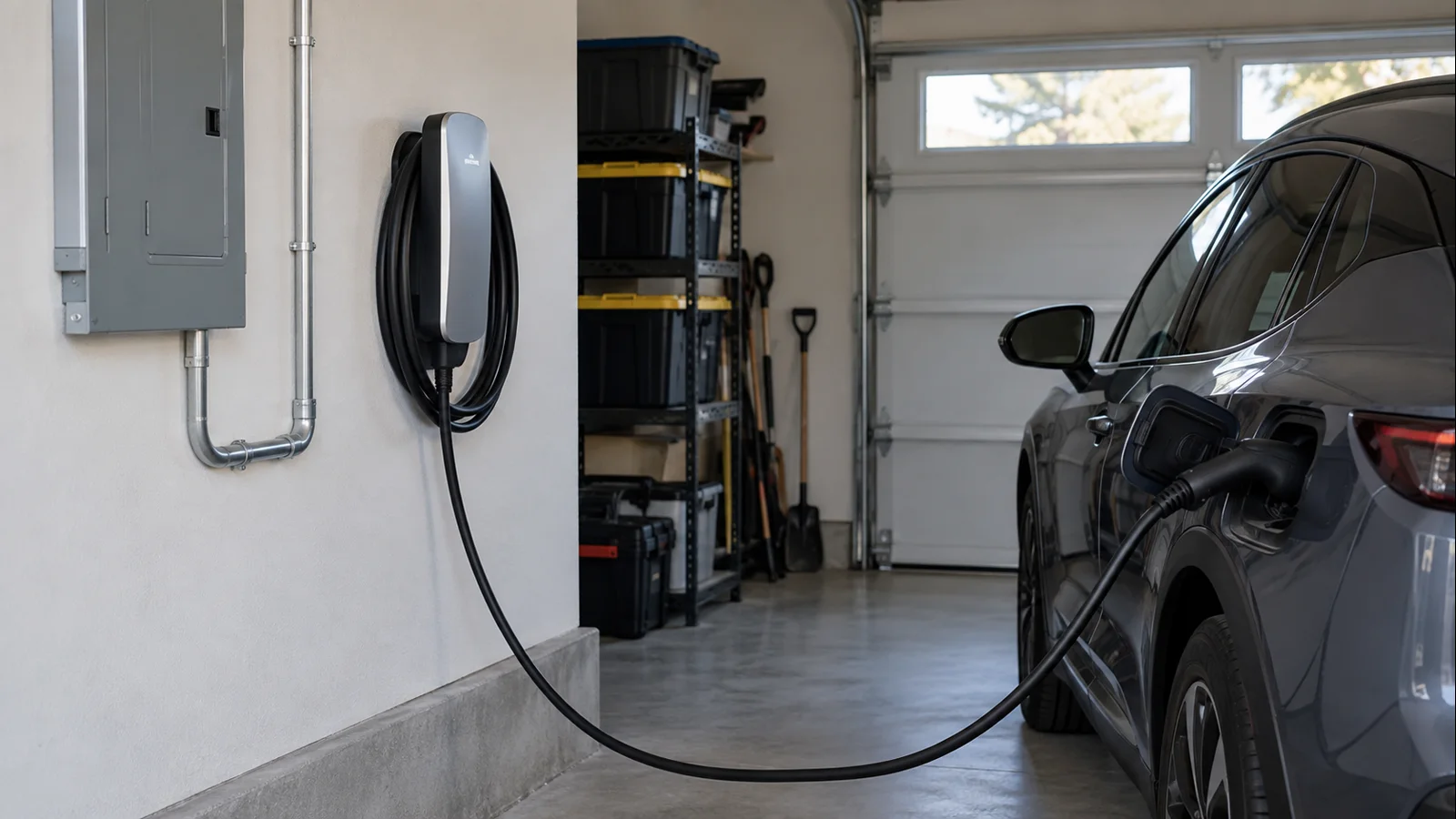
| Wall EVSE cable is too short | Reposition the EVSE or choose a listed EVSE with an integrated charging cable long enough for the normal parking position. |
| Need more power and more reach | Do not use an extension as a substitute for circuit work. Evaluate a properly sized hardwired EVSE or a correctly located receptacle and circuit. |
| Plug, receptacle, or connector becomes hot, discolored, loose, or smells unusual | Stop charging and have the receptacle, circuit, EVSE, and connections evaluated. Do not keep charging by lowering current and assuming the defect is fixed. |
Permanent reach problems deserve a permanent charging solution
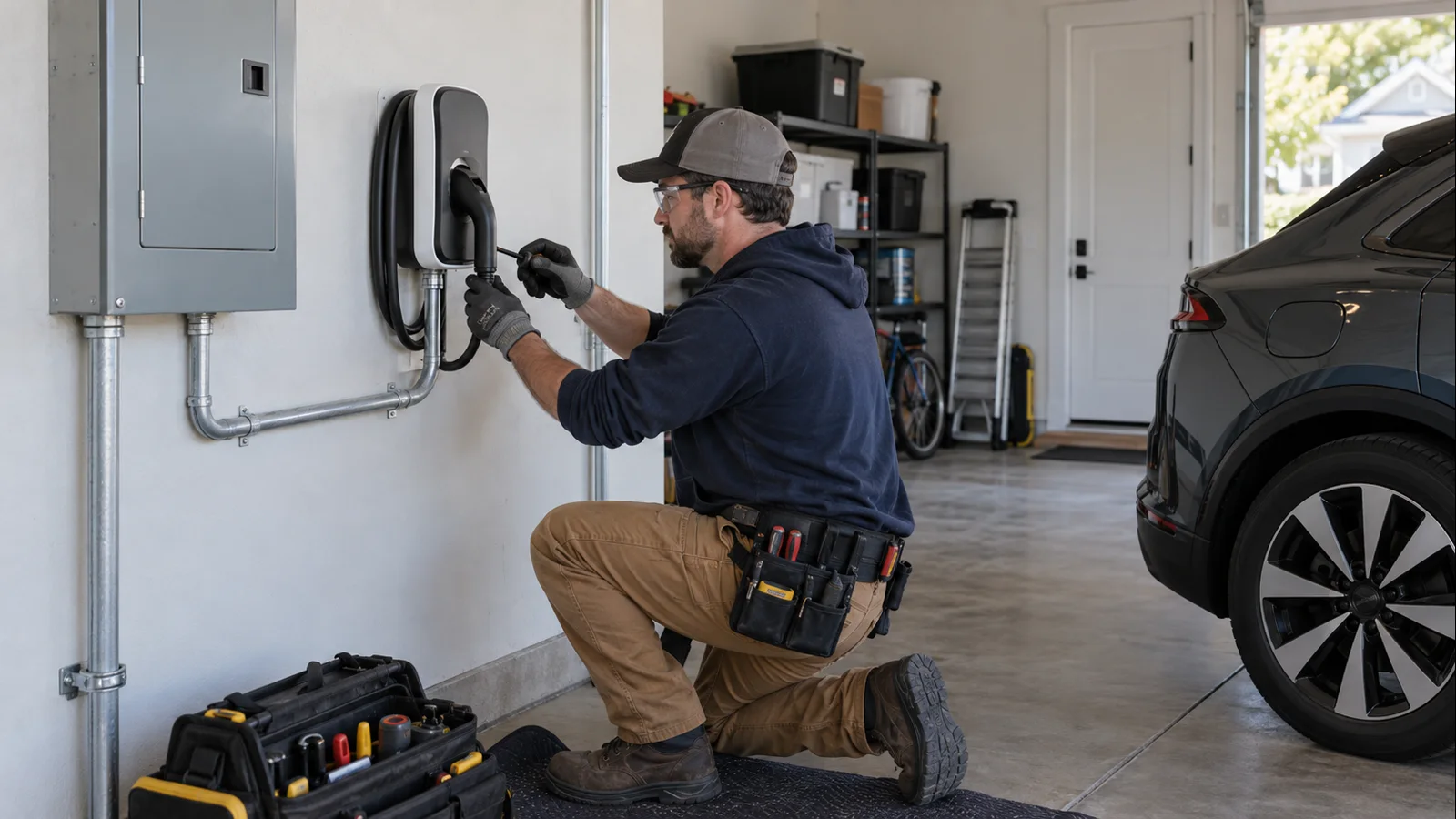
If the cable misses the charge port by a few feet every night, that is a layout problem, not a cord-shopping problem. The best repair is usually to move the electrical connection or the EVSE, choose equipment with adequate integrated reach, or change where the vehicle parks. For a new or relocated 240V receptacle, a licensed electrician should evaluate the circuit, panel capacity, receptacle, grounding, protection, and local code. Our 240V Outlet for EV Charging guide explains why the receptacle and circuit are part of the charging system rather than just a convenient socket.
Hardwiring can also remove the receptacle-and-plug interface entirely when the EVSE and installation support it. ChargePoint’s current Home Flex installation FAQ describes both plug-in and hardwired configurations and says charging amperage must match the circuit, panel capacity, and vehicle requirements. Its Home Flex safety instructions stress following installation instructions, grounding, and applicable electrical and safety codes. That is an example of manufacturer-specific guidance, not permission to add an aftermarket extension to every ChargePoint product.
For owners comparing a fixed home station with a portable setup, our ChargePoint Home Flex review covers installation tradeoffs. Tesla owners can also use the Tesla Model Y charging guide for home-charging context, but the mobile connector’s own manual remains the controlling source for how that device may be connected.
When to stop charging immediately
Stop the session if you see melting, scorching, discoloration, cracked insulation, exposed conductors, a loose receptacle or plug, arcing, smoke, or an unusual burning-plastic odor. Also stop if the EVSE reports a ground fault or persistent thermal fault, or if a connector becomes abnormally hot. Do not tape over damage, prop a plug into a loose receptacle, bypass protection, or keep retrying a visibly compromised connection.
Heat or discoloration at a receptacle deserves electrician evaluation because the problem may be in the receptacle contacts, branch-circuit termination, conductor, breaker, or another connection—not just the EVSE plug. If water has entered a connection or the equipment is damaged, follow the manufacturer’s shutdown instructions and do not handle energized wet equipment.
Frequently asked questions
Can I use an ordinary extension cord for EV charging?
Not as a general rule. Check the portable EVSE or mobile-connector manual. If it prohibits extension cords, do not use one, regardless of gauge or “heavy duty” labeling. An ordinary household cord also adds connections and may not be intended for sustained EV charging or the environment where it will be used.
Is a 240V extension cord safe for a portable EV charger?
A 240V rating by itself does not establish that the cord is approved for your EVSE. The complete cord assembly, connectors, environment, current, listing or certification, and manufacturer instructions must all align. If the EVSE manufacturer says no extension cord, the answer is no.
What about a J1772 or NACS vehicle-side extension?
That is a different category from a wall-outlet extension because it sits between the EVSE connector and the vehicle. Do not assume that physical connector compatibility means the extension is approved. Verify the complete assembly’s intended EV-charging use and credible listing/certification, plus the EVSE and vehicle manufacturers’ instructions. If documentation is unclear, avoid it.
What signs mean I should stop charging?
Stop for melting, scorch marks, discoloration, loose contacts, damaged insulation, exposed conductors, smoke, arcing, burning odor, abnormal connector heat, repeated ground-fault indications, or persistent thermal faults. Have the affected equipment and circuit inspected before resuming charging.
What is the best fix when the charging cable does not reach?
For a recurring home-charging problem, fix the layout: relocate or install the receptacle correctly, reposition or hardwire the EVSE where appropriate, choose a listed EVSE with a sufficiently long integrated cable, or change the normal parking position. A licensed electrician should evaluate new 240V circuit or receptacle work.
2026 freshness and source note
Reviewed September 2026 against Tesla’s current charging product-guide hub and Gen 2 Mobile Connector North America manual, ChargePoint’s current Home Flex installation FAQ and safety instructions, and UL Solutions’ EV charging certification overview. Product manuals, connector offerings, and local electrical-code requirements can change; always check the exact EVSE and vehicle documentation for the equipment you own.