

Quick answer: In late 2026, the major federal residential home-energy tax credits under Sections 25C and 25D are no longer available for new qualifying property placed in service after December 31, 2025, and Section 30C no longer applies to EV charging property placed in service after June 30, 2026. Prior eligible installations may still be claimable, and unused eligible 25D credit can still carry forward. Separate rebates and state, Tribal or utility programs may still exist.
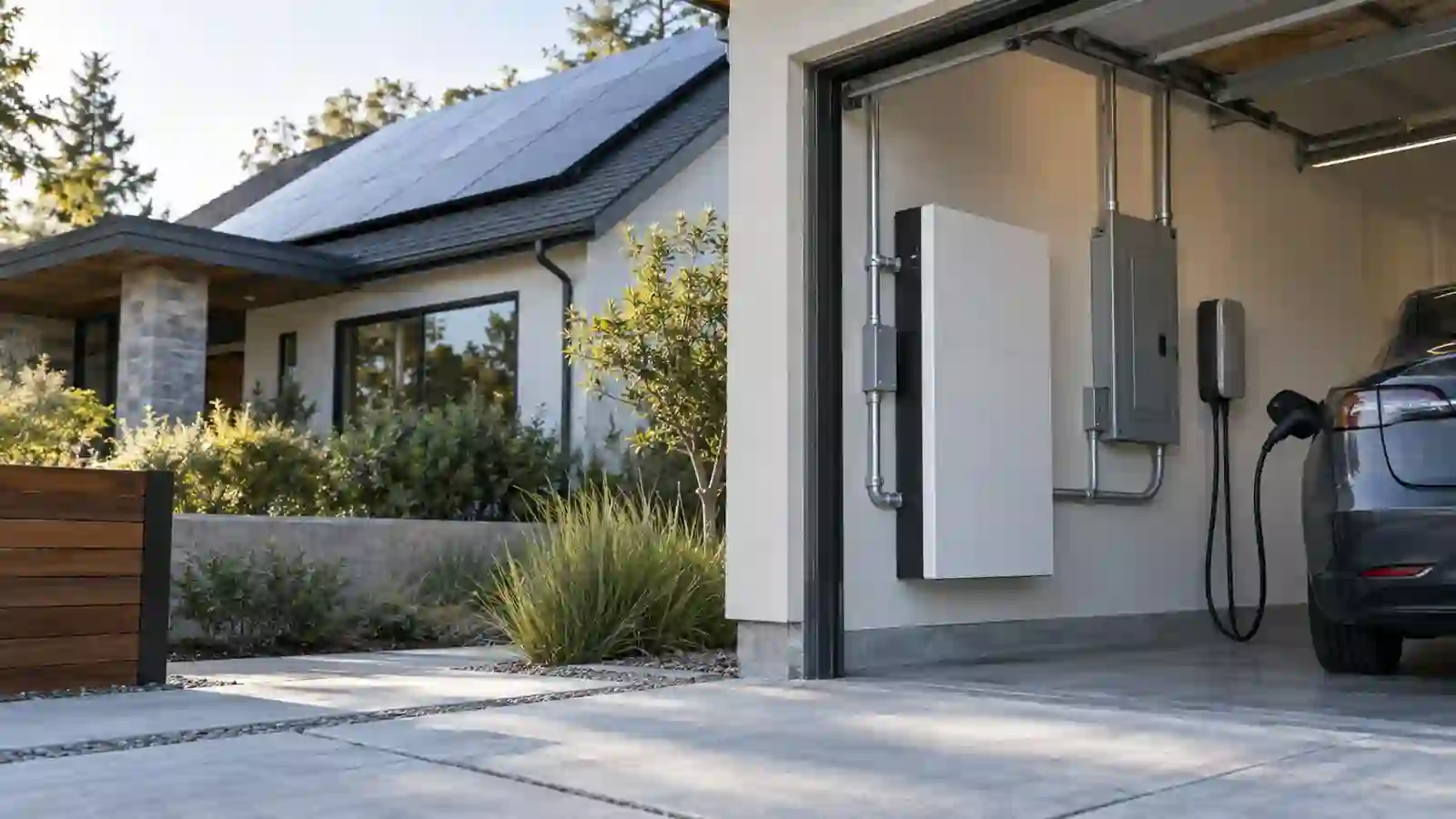
The date that matters is not simply when money changed hands. For these federal credits, the IRS generally looks to when qualifying property was installed or placed in service. That distinction matters for homeowners who prepaid for a project before a deadline but completed installation later.
This guide covers the three federal residential provisions homeowners most often encounter: 25C, 25D and 30C. It also separates tax credits from rebates and other incentives that can still exist in 2026.
2026 federal home-energy tax credit deadlines

| Code section | Credit | Typical residential property | Final timing rule | Claim form |
|---|---|---|---|---|
| 25C | Energy Efficient Home Improvement Credit | Qualified heat pumps, heat-pump water heaters, insulation, certain windows and doors, electrical improvements and home energy audits under prior rules | Not allowed for property placed in service after December 31, 2025 | Form 5695 |
| 25D | Residential Clean Energy Credit | Qualified solar, wind, geothermal, fuel cells and battery storage; batteries had to be at least 3 kWh | Not available for property placed in service after December 31, 2025 | Form 5695 |
| 30C | Alternative Fuel Vehicle Refueling Property Credit | Qualified home EV charging equipment and certain directly attributable installation property | Not allowed for property placed in service after June 30, 2026 | Form 8911 |
The IRS says Public Law 119-21 changed the termination dates for these provisions. Current IRS guidance states that 25C is not allowed for property placed in service after December 31, 2025; 25D is not allowed for expenditures after December 31, 2025; and 30C is not allowed for property placed in service after June 30, 2026.
What “placed in service” means
In practical terms, a purchase date, deposit or signed contract is not automatically the date that preserves a home-energy credit. For 25D, the IRS specifically says paying by December 31, 2025 does not preserve the credit if original installation is completed after that date. The expenditure is treated as made when original installation is completed.
For 25C, the IRS says the credit is not allowed for property placed in service after December 31, 2025. For 30C, qualified refueling or charging property had to be placed in service no later than June 30, 2026. A late-2026 buyer therefore should not assume an old credit survives because a contractor accepted payment earlier.
Section 25D: solar, batteries and residential clean energy
The IRS Residential Clean Energy Credit page says Section 25D equaled 30% of qualified clean-energy property costs for eligible installations from 2022 through December 31, 2025. Categories included solar electric property, solar water heating, wind, geothermal heat pumps, fuel cells and battery storage. Qualified battery storage had to provide at least 3 kilowatt-hours (kWh) of energy capacity.
For a homeowner considering new solar or a home battery system in 2026, the key point is simple: a new late-2026 installation does not qualify for 25D.
The end of 25D does not erase valid prior-year amounts. The IRS says 25D is nonrefundable, but unused eligible credit can be carried forward to reduce federal tax liability in future taxable years. A carryforward from an eligible earlier installation is different from claiming a new 2026 project.
Section 25C: efficiency improvements ended after 2025
The IRS Energy Efficient Home Improvement Credit page says Section 25C provided 30% credits for certain qualified expenses under the 2023–2025 rules, subject to category limits. The former structure allowed up to $1,200 per year for many efficiency improvements plus up to $2,000 per year for qualified heat pumps, heat-pump water heaters and certain biomass equipment, for a possible combined annual maximum of $3,200 when all requirements were met.
That historical limit is not a 2026 offer. New qualifying property placed in service after December 31, 2025 does not qualify for 25C.
There is also an important difference from 25D: the IRS 25C timing FAQ says unused 25C credit cannot be carried forward.
Section 30C: the EV charger credit lasted through June 30, 2026
Section 30C had a longer runway. According to the IRS guidance for individuals, eligible residential EV charging property could qualify when placed in service through June 30, 2026. For an individual installing qualifying equipment at a principal residence, the credit was generally 30% of eligible cost, up to $1,000 per charging port or qualifying item under the applicable rules.
Timing was only one requirement. The property also had to be at the taxpayer’s primary residence and located in an eligible census tract. For property placed in service after January 1, 2025, the IRS directs taxpayers to the 2020 census tract identifier and the applicable eligibility list or map.
A charger placed in service from January 1 through June 30, 2026 can potentially be claimed on the 2026 federal return filed in 2027 if all Section 30C requirements were met. A charger first placed in service after June 30, 2026 does not qualify. Homeowners budgeting wiring work can still use AmpedHabitat’s guide to 240V outlet and EV charging installation costs, but should not assume a federal 30C credit after the cutoff.
Can you still claim an older eligible project?

Potentially, yes. Ending a credit for new property is different from eliminating the ability to report an eligible earlier-year expense. A homeowner may still file the relevant return, or when permitted amend a prior return, for qualifying property from an eligible year.
- 25C and 25D: eligible expenses are generally claimed using Form 5695 for the applicable tax year.
- 30C: eligible charging property is claimed using Form 8911 for the year in which the property was placed in service.
- Missed prior-year claim: an amended return may be possible, but normal filing and refund limitation periods apply.
The IRS generally requires a refund claim on an amended return within three years after the original return was filed or two years after the tax was paid, whichever is later. So “the credit existed that year” does not mean every late claim is automatically valid today.
What can still exist after the federal tax-credit cutoffs?

Do not confuse an expired federal tax credit with a rebate or assistance program. A tax credit reduces federal income tax subject to its rules. A rebate is a separate program that may reduce or reimburse eligible project cost. Utility and state incentives have their own eligibility and funding rules.
The U.S. Department of Energy Energy Savings Hub says Home Energy Rebates are administered by participating states, territories and Tribes, which determine what products and projects qualify locally. DOE’s Home Energy Rebates Program includes the Home Owner Managing Energy Savings program and the High-Efficiency Electric Home Rebate program. Availability varies by location; homeowners should confirm their program before buying equipment.
DOE also lists the Weatherization Assistance Program and the Low Income Home Energy Assistance Program as separate pathways that may help eligible households. State, local and utility incentives can also remain available. Net-metering or export compensation may affect solar economics, but it is not a federal tax credit.
How to plan a late-2026 project without outdated assumptions
- Get an itemized cash price before incentives.
- Confirm the expected installation and placed-in-service date, not just the contract date.
- Check current state, Tribal, local and utility programs before ordering equipment.
- For batteries, compare usable energy capacity in kWh with required power output in kW; tax incentives do not determine whether a system is correctly sized.
- For EV charging, compare installation cost with actual electricity cost using AmpedHabitat’s home EV charging cost math.
- For resilience spending, prioritize critical loads; see the power-outage preparation guide.
Frequently asked questions
Is the 30% federal solar tax credit still available for a new installation in late 2026?
No. The IRS says Section 25D is not available for property placed in service after December 31, 2025.
Can I claim a battery installed in 2025 on a return filed later?
Potentially, if the battery and installation satisfied the 25D rules for the eligible year and the claim is filed within the applicable tax rules. Qualified battery storage had to be at least 3 kWh.
What if I had unused 25D credit from an earlier eligible year?
The IRS says unused eligible 25D credit can be carried forward to reduce tax liability in future taxable years.
Can unused 25C credit be carried into 2026?
No. IRS guidance says unused Section 25C credit cannot be carried forward.
Can I claim a home EV charger installed in May 2026?
Potentially. A charger placed in service by June 30, 2026 may qualify for Section 30C if all other requirements were met, including the primary-residence and eligible-census-tract rules. The claim is made using Form 8911.
Are federal Home Energy Rebates the same as these tax credits?
No. Home Energy Rebates and assistance programs are separate from Sections 25C, 25D and 30C, and availability depends on the administering jurisdiction and program rules.
Freshness and tax-information note: Reviewed September 10, 2026 against current IRS guidance for Sections 25C, 25D and 30C and current U.S. Department of Energy program pages. Incentive programs and tax guidance can change. This article provides general information for U.S. homeowners, not individualized tax advice.