

Quick answer: A LONGi Hi-MO 6 quote can still be attractive in 2026, but the model number matters more than the family name. LONGi renamed Hi-MO 6 to Hi-MO X6, and the U.S.-relevant LR5-54HTB Scientist modules reviewed here are 440–450 W HPBC+ panels—not HPBC 2.0. They offer strong roof-space efficiency, a 25-year product warranty, and a 25-year power warranty, but availability now depends on the installer or distributor.
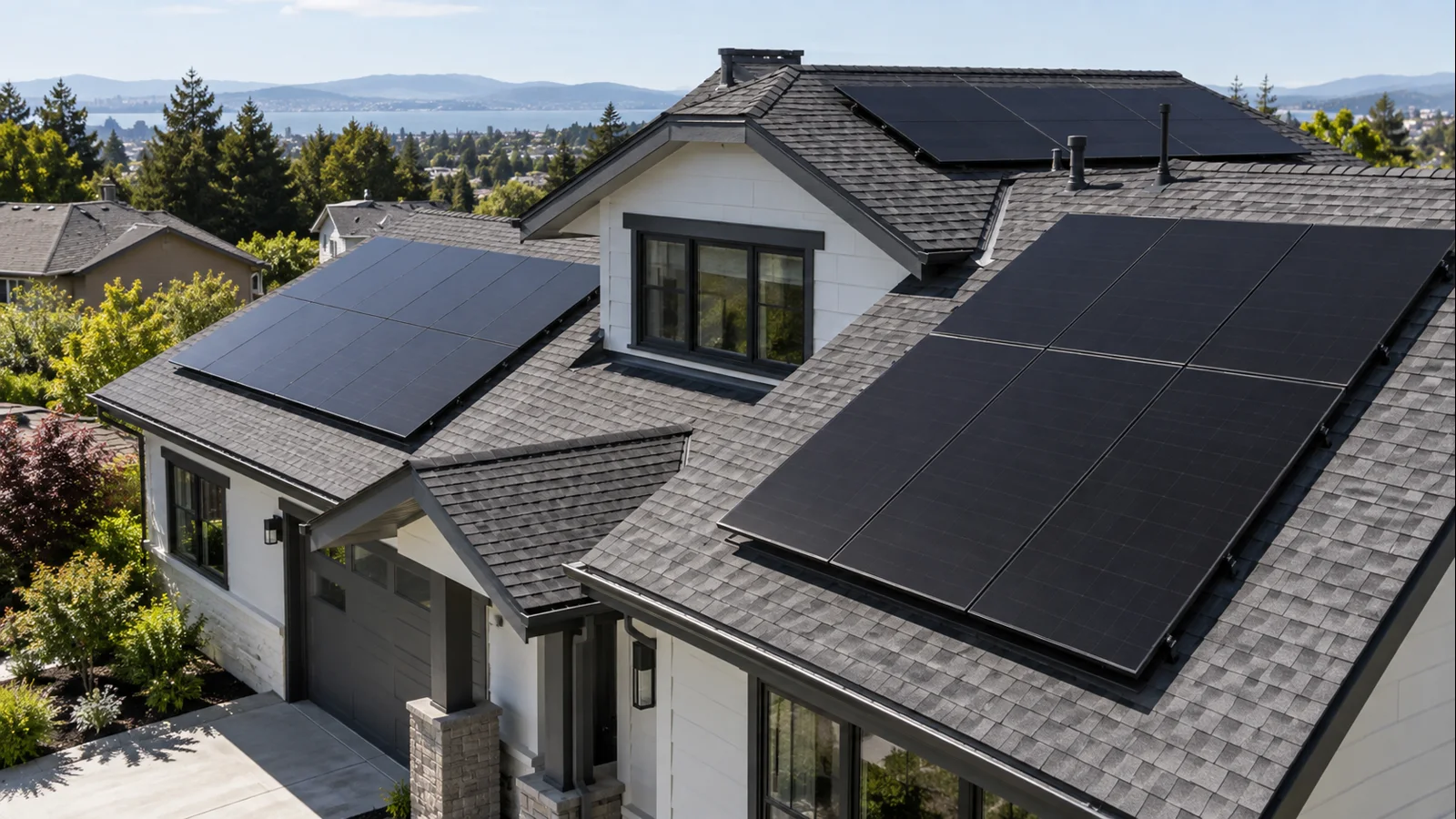
For homeowners, the most important first step is to stop treating “Hi-MO 6” as one fixed specification. LONGi’s own 2023 rebranding notice says the distributed-generation Hi-MO 6 line became Hi-MO X6. LONGi’s current global X6 Scientist page still lists LR5-54HTB among the family’s models, while its hosted Scientist datasheet covers the exact LR5-54HTB-440M, -445M and -450M variants. Those are the variants used for the specification table below.
LONGi Hi-MO 6 / X6 status in the U.S. in late 2026
LONGi remains active in North America, but its public U.S. site does not expose every Hi-MO X6 residential SKU available through every sales channel. The reviewed LR5-54HTB Scientist datasheet is still hosted by LONGi and carries UL 61730 certification language, but U.S. inventory is installer- and distributor-specific. Before signing, match the quote’s exact model number to its datasheet, warranty, certification information and substitution policy.
Verified LR5-54HTB Scientist specifications
The following rows are all from the same LONGi Hi-MO X6 Scientist LR5-54HTB 440–450M series. They should not be mixed with Explorer, Artist, X6 Max, Hi-MO X10 or regional variants.
| Specification | LR5-54HTB-440M | LR5-54HTB-445M | LR5-54HTB-450M |
|---|---|---|---|
| STC nameplate power | 440 W | 445 W | 450 W |
| Module efficiency | 22.5% | 22.8% | 23.0% |
| Dimensions | 1722 × 1134 × 30 mm | 1722 × 1134 × 30 mm | 1722 × 1134 × 30 mm |
| Weight | 20.8 kg | 20.8 kg | 20.8 kg |
| Pmax temperature coefficient | -0.290%/°C | -0.290%/°C | -0.290%/°C |
| NOCT maximum power | 329 W | 333 W | 337 W |
| Front / rear static load | 5400 / 2400 Pa | 5400 / 2400 Pa | 5400 / 2400 Pa |
| Product warranty | 25 years | 25 years | 25 years |
| Power warranty | 25 years; 98.5% after year 1, then no more than 0.40% annual warranted degradation through year 25; 88.9% minimum at year 25 | Same | Same |
Source: LONGi’s LR5-54HTB 440–450M Scientist datasheet and Hi-MO 6 distributed-generation warranty. LONGi’s warranty terms identify LR5-54HTB Scientist as a 25-year product-warranty model and specify the 25-year performance schedule above.
What HPBC actually changes
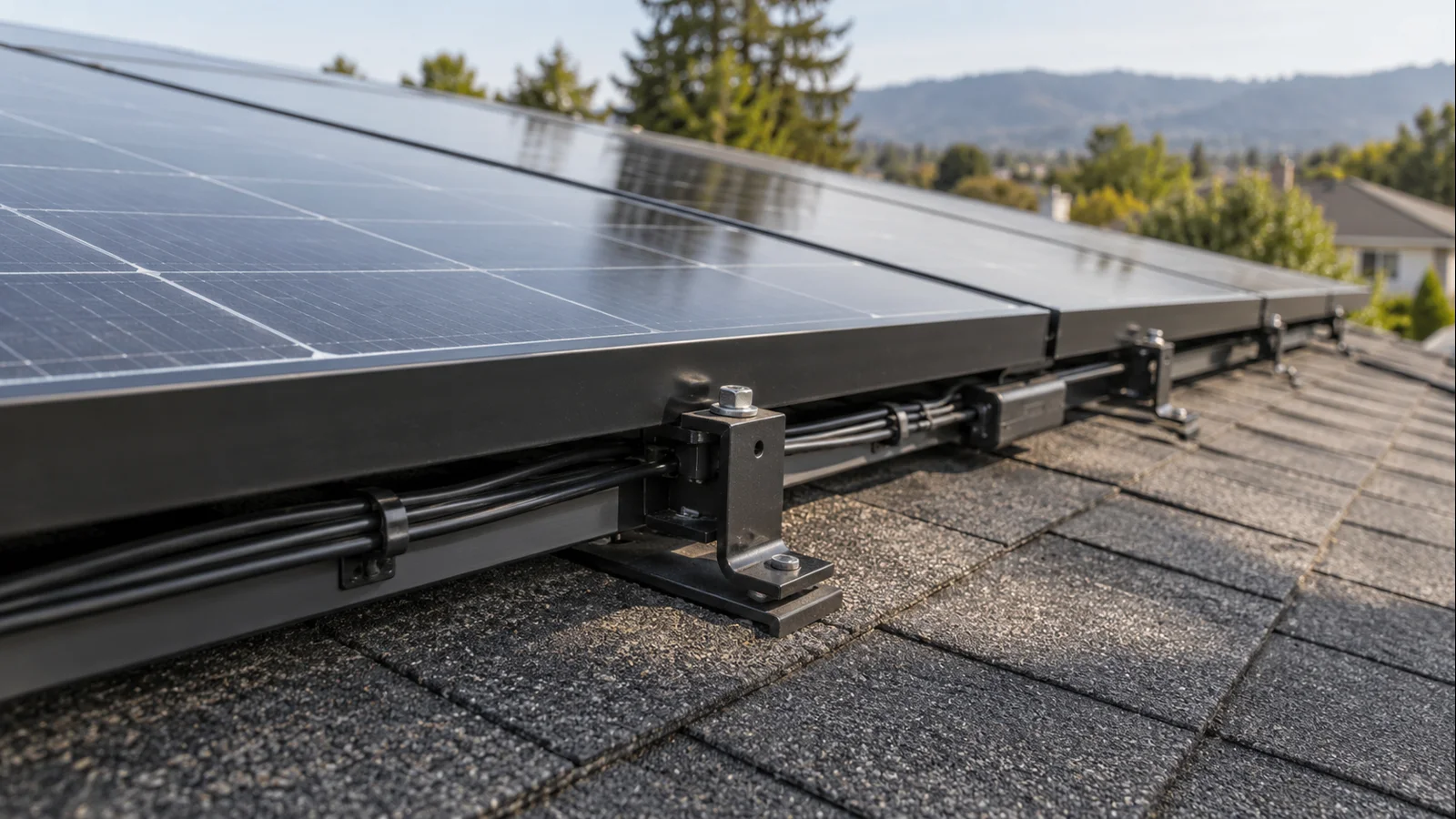
HPBC means Hybrid Passivated Back Contact. In practical terms, LONGi moves the main electrical contacts to the rear of the cell so the front surface has less metal blocking incoming light. The X6 Scientist series uses LONGi’s higher-performance HPBC+ implementation. The result is a clean front appearance and high conversion efficiency in a conventional residential-size module.
That architecture is not “shade proof.” A chimney, tree, dormer or vent can still reduce output, while bypass behavior, string layout and module-level electronics also matter. For complicated roofs, evaluate the whole array design; AmpedHabitat’s Enphase IQ8 shade guide explains why inverter topology changes the result.
HPBC is not HPBC 2.0
This distinction matters in 2026. LONGi’s newer Hi-MO X10 distributed family is the product line the company associates with HPBC 2.0. LONGi describes that generation with additional changes such as TaiRay wafers and 0BB cell interconnection. A quote for LR5-54HTB Hi-MO X6 Scientist should therefore be described as HPBC+ rather than quietly upgraded on paper to HPBC 2.0.
450 watts is not annual energy production
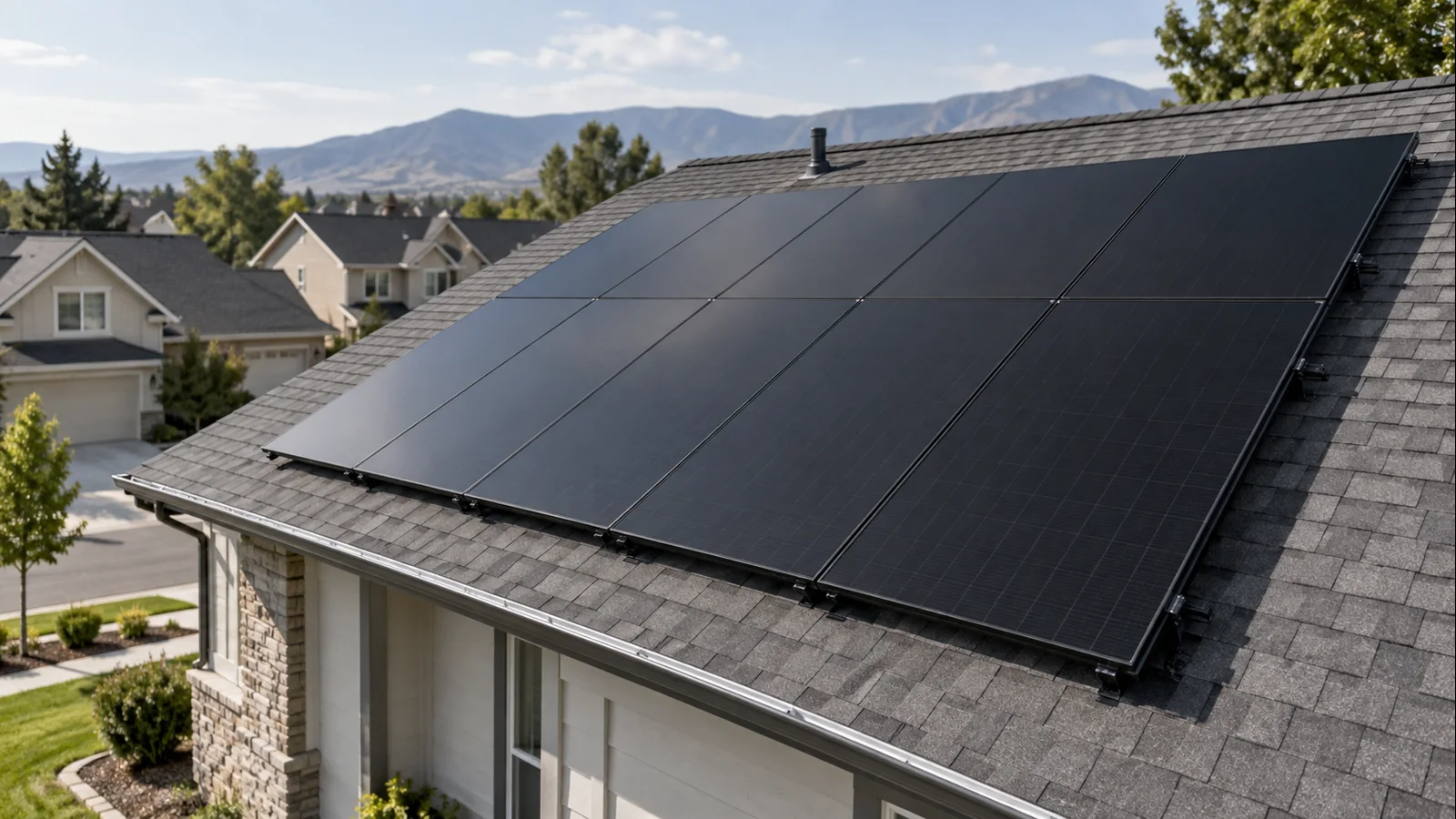
A 450 W module rating is DC power measured at standard test conditions; it is not continuous rooftop output and does not predict annual kilowatt-hours. Annual energy depends on solar resource, roof orientation, temperature, shade, soiling, inverter sizing and clipping, wiring losses and downtime.
This is where the Hi-MO X6 Scientist’s 22.5%–23.0% efficiency is most useful: it can put more nameplate watts into a limited roof area than a lower-efficiency module of similar dimensions. That can matter on small roof planes or where fire setbacks, vents and dormers limit module count. On a large uncomplicated roof, a less expensive panel can still produce equal or greater annual energy simply by using more modules.
Temperature behavior: solid, not magical
The exact LR5-54HTB Scientist series uses a -0.290%/°C Pmax temperature coefficient. That means maximum power is rated to decline by about 0.29% for each degree Celsius that cell temperature rises above the 25°C STC reference, all else equal. This is a respectable specification, but homeowners should compare it against the exact competing model rather than assuming all back-contact modules behave the same in heat.
For a premium comparison, see the REC Alpha Pure R review. The useful question is not which brand has the louder efficiency claim, but which exact panel gives the better mix of roof density, temperature behavior, degradation warranty, installed system design and price on the homeowner’s roof.
Degradation and warranty: what the numbers mean
LONGi’s Hi-MO 6 distributed-generation warranty for LR5-54HTB Scientist sets a 98.5% minimum warranted output after the first year, followed by no more than 0.40% annual warranted degradation for the next 24 years, ending at 88.9% of nominal power in year 25. That is a contractual performance floor, not a forecast that every module will follow the curve exactly.
The same warranty gives LR5-54HTB Scientist a 25-year limited product warranty, subject to installation, use, maintenance, claim, exclusion and transfer terms. LONGi also says removal and reinstallation expenses can fall to the customer under its remedy language, so read both the manufacturer warranty and installer workmanship/labor coverage.
For broader context on why a 25-year warranty is not the same thing as a 25-year service life, see AmpedHabitat’s solar panel lifespan and degradation guide.
Installer quality matters as much as module quality
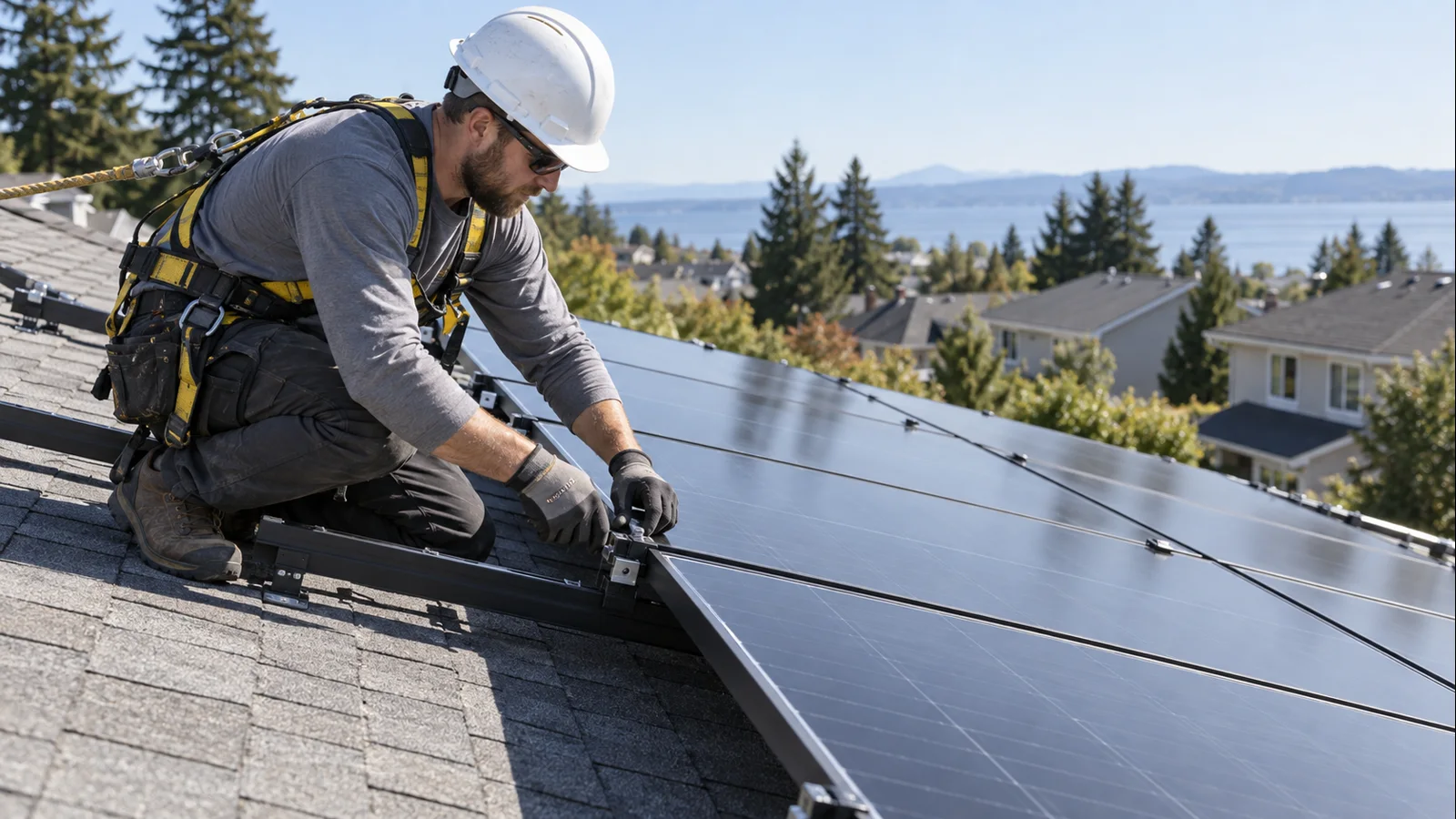
A good module cannot rescue a poor system design. The installer should verify inverter or microinverter compatibility, voltage/current limits, rapid shutdown, connectors, clamp zones, roof loading, fire classification and local code. The datasheet’s 1500 V maximum system rating is a component limit, not a statement that a U.S. home array should operate at 1500 V.
Also ask what happens if the named module becomes unavailable before installation. A contract that permits “equal or better” substitution without defining dimensions, efficiency, warranty, electrical characteristics and aesthetics can turn a carefully evaluated quote into a different system.
Is LONGi bankable enough for a long warranty?
Manufacturer stability matters for a decades-long warranty. In 2026 LONGi reported a 26th consecutive quarterly AAA bankability rating from PV Tech and a Grade A result in Wood Mackenzie’s supplier qualification work. Those are useful scale and financeability signals, not guarantees of an easy future residential claim. Evaluate both LONGi and the installer that will design and service the system.
Who the LONGi Hi-MO X6 Scientist fits
It fits well when roof area is constrained, the quote names an exact LR5-54HTB Scientist model, pricing is competitive, and the installer can document warranty and electrical compatibility. Its 440–450 W range in a 1722 × 1134 mm footprint helps raise DC nameplate capacity without moving to a much larger module format.
Choose something else when the installer cannot identify the exact module, when current X10/HPBC 2.0 or another modern panel is available at a similar system price with better project-specific value, when a competing warranty is more important to you, or when a large roof makes premium watts-per-square-meter unnecessary. The cheapest panel is not automatically the best value, but neither is the highest efficiency number.
Verdict
The LONGi Hi-MO 6/X6 remains technically credible in 2026, but buyers should purchase the model, not the old family name. For the verified LR5-54HTB Scientist 440–450M series, the combination of up to 23.0% module efficiency, compact residential dimensions, HPBC+ architecture, a -0.290%/°C power temperature coefficient and 25-year product/power warranties is competitive. The main caveat is market timing: U.S. channel availability is installer- and distributor-specific, and HPBC 2.0 belongs to newer LONGi generations rather than this X6 Scientist series.
Frequently asked questions
Is LONGi Hi-MO 6 the same as Hi-MO X6?
For LONGi’s distributed product branding, yes: LONGi announced in 2023 that Hi-MO 6 was being upgraded to the Hi-MO X6 brand identity. Exact model numbers still matter because X6 contains multiple variants.
Does Hi-MO X6 Scientist use HPBC 2.0?
No. The LR5-54HTB Scientist reviewed here is an HPBC+ X6 product. LONGi associates HPBC 2.0 with newer distributed products such as Hi-MO X10.
Is 450 W automatically better than a 430 W panel?
No. Nameplate watts describe rated DC power under STC. Annual kWh, roof fit, inverter matching, shade, temperature, warranty, price and installer quality can matter more than a 20 W module-level difference.
Does HPBC eliminate shade losses?
No. Back-contact design can reduce front-side metallization losses, but physical shade still reduces available sunlight. Array layout, bypass behavior and inverter or module-level electronics remain important.
What should I ask for before signing a LONGi quote?
Get the exact module model number, current datasheet, manufacturer warranty, certification details, inverter pairing, array layout, annual-production assumptions, installer workmanship coverage and written substitution terms. If the paperwork says only “LONGi Hi-MO 6,” it is not specific enough for a final equipment decision.