

A panel replacement is not automatically required just because you want Level 2 charging. The right path depends on the charging rate you actually need, the EVSE's configured current, the vehicle's AC limit, available service capacity, and local approval. Options can include lower-current charging or approved load control, while some homes still need panel, service, or utility work.
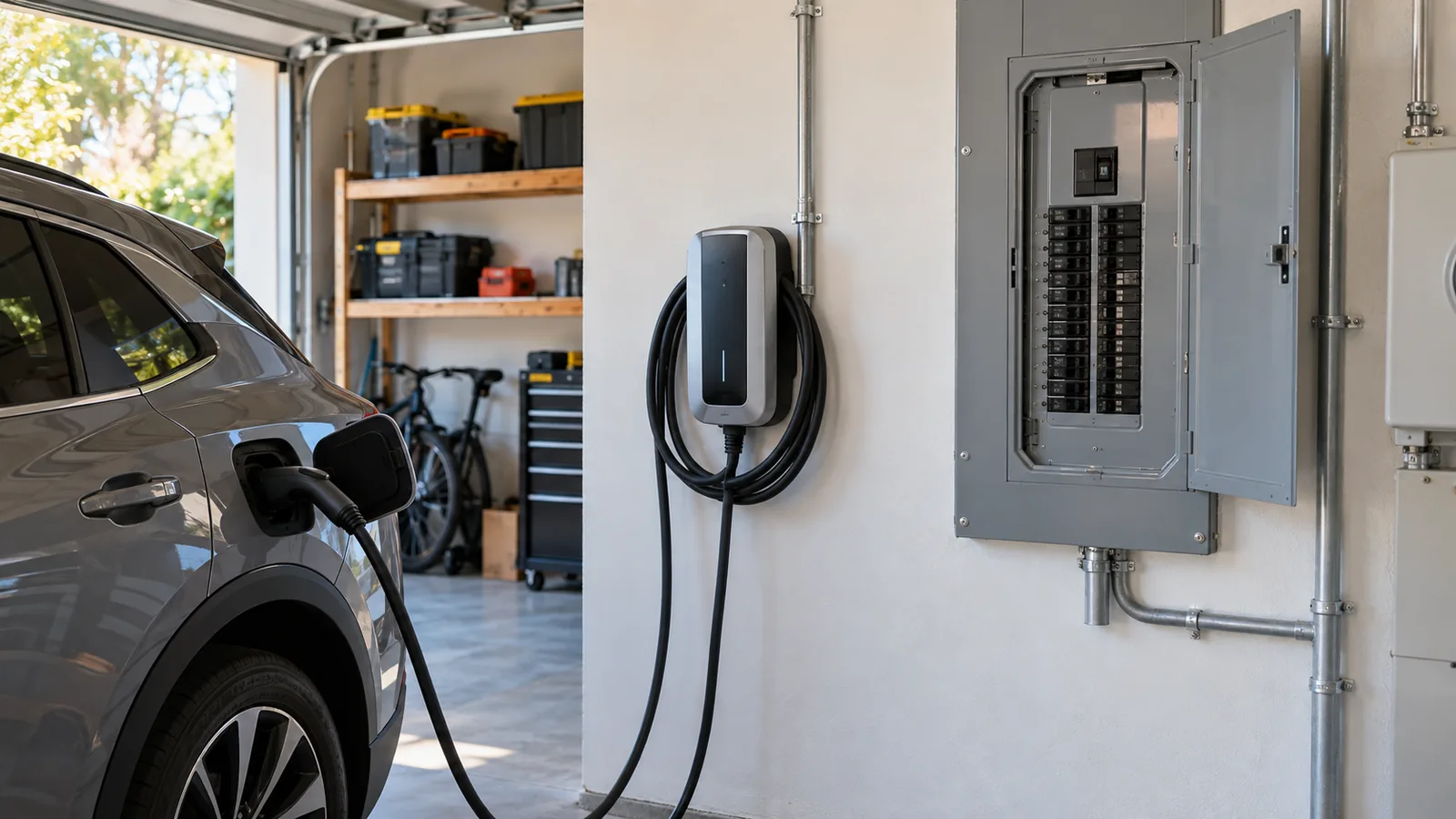
Start with the charging rate you actually need
The useful question is not “Can my house support the biggest Level 2 charger?” It is “What rate replaces my normal daily driving within the time the car is parked?” A high-output EVSE can be commissioned at a lower approved current, and a vehicle with a lower onboard AC-charging limit will not use the EVSE’s full rating anyway.
Keep five things separate: desired charging rate, EVSE configured current, vehicle AC acceptance, branch-circuit rating, and dwelling/service capacity with other loads running. A larger circuit cannot make a vehicle exceed its AC limit. And if overnight parking provides enough recovery time, lower-current Level 2 charging may meet the real need while reducing the new load. For post-installation speed problems, see AmpedHabitat’s Level 2 charging diagnostic guide.
EV load management vs. panel upgrade: the decision paths
“Panel upgrade” is often used too loosely. Replacing a panel, increasing service capacity and requiring upstream utility work are separate scopes. Load management is different again: it controls when or how strongly a load operates so the electrical system stays within defined limits.
| Path | What it changes | What it does not do | When it may fit |
|---|---|---|---|
| Lower EVSE current | Reduces the EV load | Does not increase service capacity | Lower speed still meets driving needs |
| Approved circuit sharing | Coordinates compatible equipment | Does not justify improvised sharing | Listed equipment and design support it |
| EV-specific load management / EMS | Reduces or pauses EV charging as home load rises | Does not make every smart charger an overload-control system | Dynamic charging can stay inside an approved limit |
| Listed PCS | Limits current or power for overload mitigation | Is not just another name for a generic HEMS | Listing, design and local approval support it |
| Panel work | Changes distribution equipment or breaker space | Does not automatically increase service capacity | The panel is unsuitable, damaged or constrained |
| Service-capacity work | Changes available electrical service capacity | Is not the same as replacing the panel enclosure | Existing capacity remains insufficient |
| Utility-side work | Addresses meter or upstream utility requirements | Is not controlled by the panel alone | The utility requires changes or offers another path |
This is a homeowner decision map, not a code determination. Equipment listing, conductor and service ratings, manufacturer instructions, adopted code, permits and the authority having jurisdiction all affect what is allowed at a specific home.
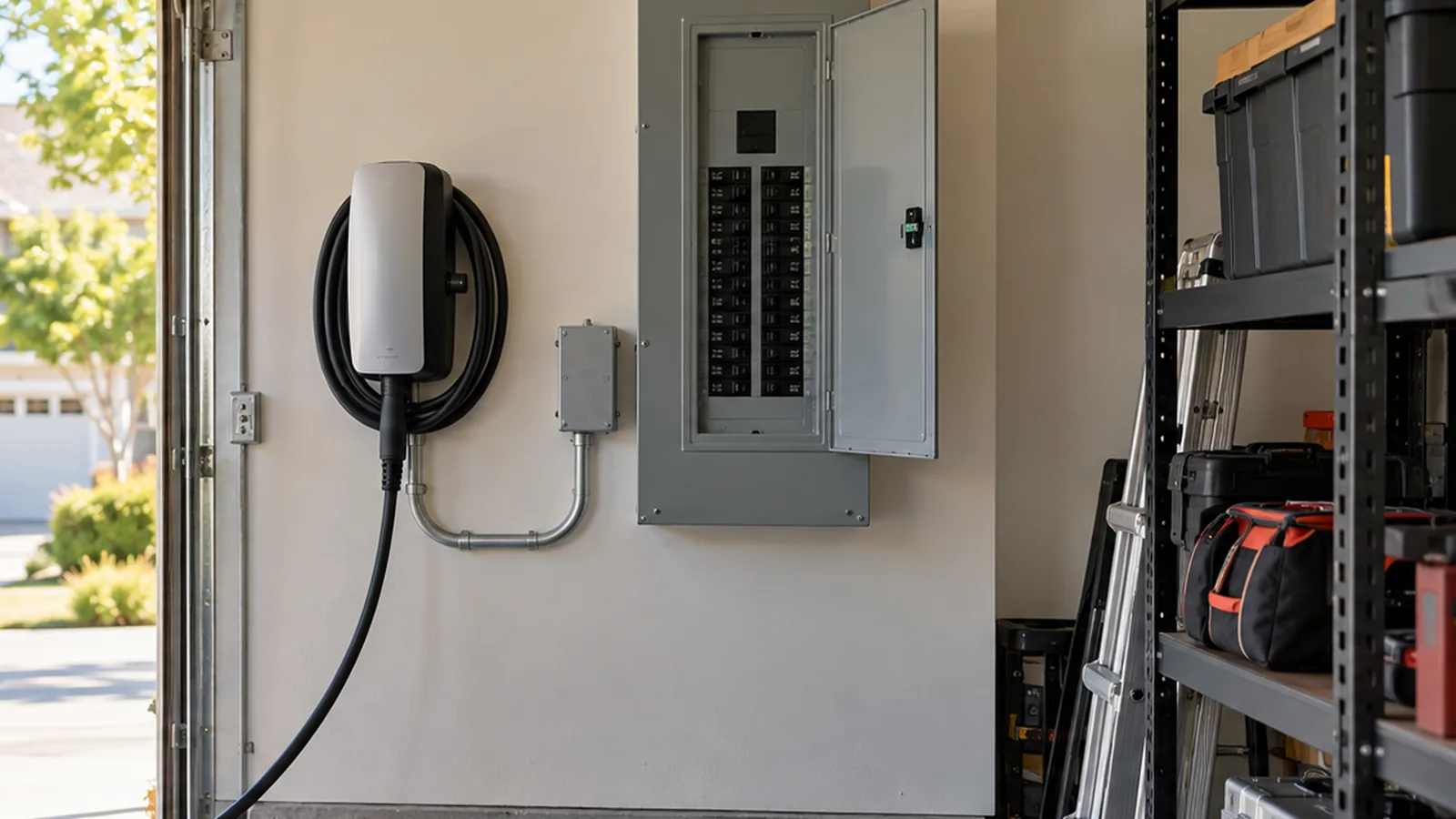
What load management actually does
The U.S. Department of Energy describes managed EV charging as adaptive charging that considers vehicle energy needs and control objectives. DOE lists reducing electrical-equipment upgrades as one potential benefit, but its page is written for federal facilities and fleets. Use it for the concept, not as residential code guidance.
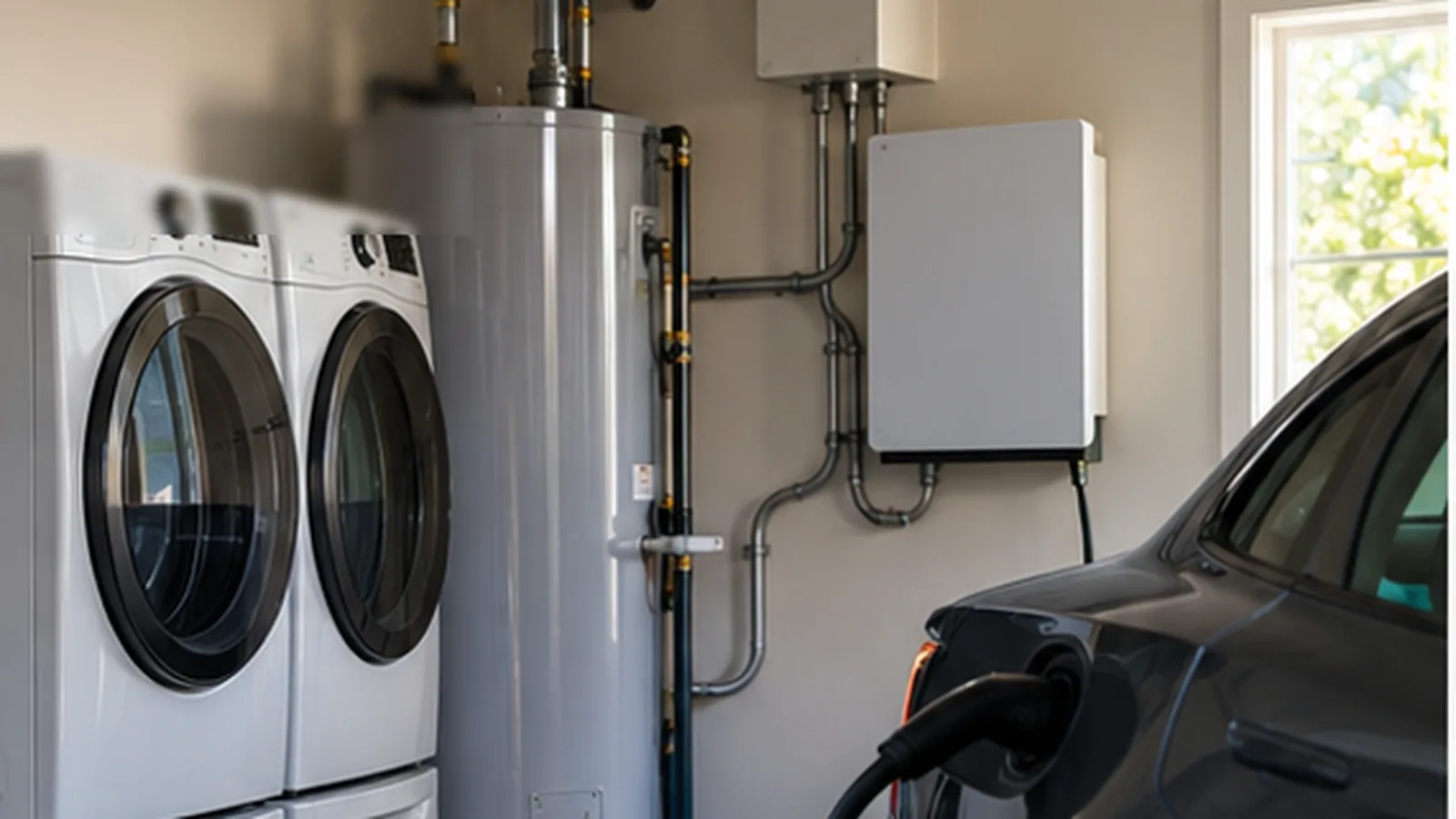
At home, the control objective can be simple: when a range, dryer, water heater, heat pump or other large load pushes demand higher, EV charging can reduce or pause. When headroom returns, charging can increase. The trade-off is variable charging speed rather than maximum output every minute.
A broad HEMS is not automatically the same thing. A HEMS may schedule devices or coordinate solar and batteries without providing an approved overload-control function. AmpedHabitat’s HEMS guide covers that broader control layer.
Why PCS terminology matters
UL Solutions defines a power control system as a control system that electronically limits or controls current or power within defined limits to mitigate overload. UL distinguishes that overload-mitigation function from a generic EMS and identifies UL 3141 as the safety framework developed for PCS applications. UL also notes that the 2026 NEC addresses PCS requirements in Section 130. Exact equipment, listing, architecture and local review still determine whether a specific design is acceptable.
Four homeowner scenarios
1. Overnight parking makes maximum speed unnecessary
If a moderate Level 2 rate replaces typical daily driving before morning, the simplest path may be a lower commissioned EVSE current. That creates more headroom but does not increase service capacity. Compare the rate with your daily energy need and parking window before paying for more electrical capacity. AmpedHabitat’s EV Charging Cost Calculator can quantify wall energy; capacity planning is a separate decision.
2. Large household loads overlap with charging
This is where approved EV-specific load management can help. Compatible control equipment may reduce EV charging during high household demand, then restore output later. The EV becomes a flexible load rather than a fixed maximum load.
3. The panel or service has a physical limitation
Software cannot create breaker spaces, repair damaged equipment or increase conductor ratings. Panel work can still be needed when distribution equipment is unsafe, obsolete, full or incompatible. A service-capacity increase is different: it changes how much electrical capacity is available to the home.
4. The utility offers a specific managed-charging path
PG&E’s current ChargeBoost initiative is a California example. Approved single-family customers receive an advanced-meter swap and use a compatible charger installed by a qualified electrician; PG&E says charging can automatically slow when household demand is high. The page currently names the Emporia Classic Level 2 EV Charger. This is a PG&E-specific program, not a national model or proof that a meter swap replaces panel work elsewhere.
When physical electrical work is still likely
Load control is not a universal substitute for upgrades. Physical work can remain necessary when the approved design still exceeds available capacity, the target charging rate cannot be met within the permitted limit, or existing equipment is unsuitable.
- The panel lacks appropriate space or has condition, compatibility or safety issues.
- Conductors, service equipment or upstream components are undersized for the approved design.
- Future electrification such as heat pumps, electric water heating or a second EV changes the capacity target.
- The utility identifies a meter, service, transformer or neighborhood constraint.
- The proposed load-management or PCS equipment is incompatible with the EVSE, architecture or local approval path.
For circuit routing, hardwiring, receptacles, permits and panel-capacity context, see AmpedHabitat’s 240V outlet for EV charging guide.
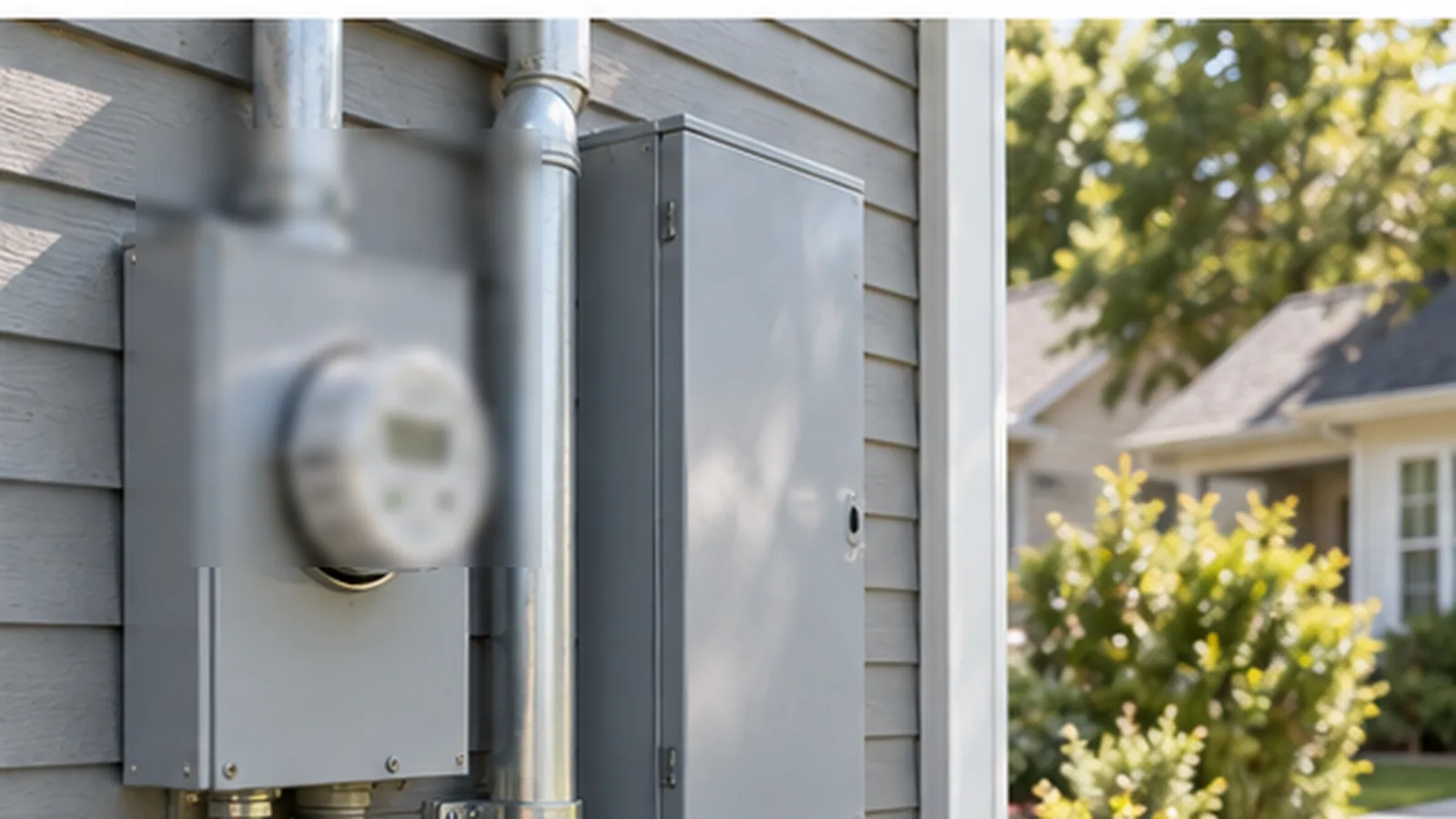
Questions to ask the electrician or installer
- What charging current are you designing for, and why does that rate fit my vehicle and driving?
- What is the vehicle’s maximum AC charging acceptance? Would a smaller circuit deliver the same real speed?
- What load calculation or approved capacity method are you using?
- If load management is proposed, what equipment performs the control, what does it monitor, and what happens if communication fails?
- Is the system an EV-specific EMS, listed PCS, approved circuit-sharing setup or something else?
- Does the quote include panel replacement, service-capacity work, utility work, or more than one scope?
- What permits, inspections and utility approvals are required locally?
FAQ
Do I need a 200-amp service for Level 2 EV charging?
No blanket service size answers that question. The result depends on existing loads, desired EV charging current, vehicle AC limits, the approved capacity method, control equipment and local requirements. Some homes can add useful Level 2 charging without increasing service capacity; others cannot.
Can load management avoid a panel upgrade?
Sometimes, but define “panel upgrade” first. Approved load control may reduce the EV’s coincident demand enough to use existing capacity. It cannot fix damaged or unsuitable equipment, create required physical space, or override utility and jurisdictional requirements.
What does the EV charging “80% rule” mean?
The phrase is commonly used as shorthand for the relationship between continuous EV charging current and branch-circuit sizing. It is not an EV battery charge-limit rule, and it does not mean a home’s service is automatically capped at 80% of nameplate. Follow the applicable design, equipment instructions and locally adopted requirements.
Is a smart charger the same as a load-management system or PCS?
No. A smart charger may offer scheduling, app control or adjustable current without providing the specific overload-control function of an approved load-management system or listed PCS. Verify the exact product, integration, listing and design rather than relying on the word “smart.”
Should I choose the highest charging current my EVSE supports?
Not automatically. Higher current reduces charging time only if the vehicle can accept it and the home can support the installation. If a lower rate replenishes normal daily driving during the parking window, maximum output may add electrical scope without improving the real use case.
Source note: primary technical and utility references were checked in September 2026. Electrical requirements and utility programs vary by equipment, jurisdiction and service territory. A qualified professional and the local authority having jurisdiction should determine the permitted design for a specific home.