

Home energy management systems (HEMS) are the control layer that coordinates how a home monitors, schedules, limits, or shifts electricity use. They can connect loads such as HVAC, EV charging, water heating, batteries, solar, and smart circuits, but capabilities vary widely. A HEMS is most useful when you have controllable loads, time-varying rates, and compatible devices that can respond to commands.

What does HEMS stand for?
HEMS stands for home energy management system. The term covers a broad commercial category, not one fixed hardware package. Some systems mainly show energy data. Others automate selected devices. More advanced setups can coordinate electrical loads, solar, battery storage, EV charging, or utility signals.
That broad category is not the same as the U.S. Environmental Protection Agency's ENERGY STAR Smart Home Energy Management Systems program. The ENERGY STAR SHEMS specification defines a certification program with required features and reporting obligations. It is a useful benchmark, but a product marketed as a HEMS is not automatically ENERGY STAR certified.
HEMS vs. energy monitor vs. smart-home hub vs. smart panel
| Category | Primary job | Main limitation |
|---|---|---|
| Energy monitor | Measure or estimate consumption | Visibility is not control |
| Smart-home hub | Coordinate compatible connected devices | May not optimize around rates, solar, batteries, or electrical limits |
| Smart panel / smart breakers | Measure and sometimes control branch circuits | Circuit control is not automatically whole-home optimization |
| HEMS | Coordinate energy decisions across devices and time | Value depends on integrations, tariffs, and control authority |
The easiest mistake is to treat monitoring as management. A dashboard can show that an EV or HVAC system is using a lot of electricity, but savings require an action: shifting a schedule, limiting a load, changing a thermostat setting, or adjusting battery dispatch. Smart electrical hardware can add deeper circuit control; our Eaton smart breaker review explains that layer separately from the broader HEMS decision.

What can a HEMS control?
Only the devices and functions the platform can actually address. Depending on the system and exact model integrations, that can include thermostats, lighting, plug loads, water heating, EV charging, solar inverters, home batteries, smart circuits, or other flexible loads.
ENERGY STAR's certified SHEMS criteria are a useful benchmark. A certified package includes a connected thermostat, connected lighting, plug-load monitoring/control, and one platform. The criteria also describe occupancy-aware actions, user feedback and control, time-of-use price-schedule control, conditional water-heater integration, and grid-response capability with homeowner permission and override. Those are ENERGY STAR program requirements or capabilities, not universal HEMS requirements.
Thermostats show why compatibility matters. HVAC savings depend on the thermostat, HVAC equipment, occupancy logic, comfort settings, and tariff working together. Our guide to realistic smart-thermostat savings treats thermostat savings as one part of the larger energy picture. If you are checking a specific device, the Ecobee compatibility and feature review is more useful than assuming a HEMS label guarantees integration.
Interoperability is improving, but it is not automatic
The Connectivity Standards Alliance announced Matter 1.4 on November 7, 2024. The release expanded energy-management support beyond earlier energy reporting to cover device types and use cases including solar, batteries, heat pumps, water heaters, EV supply equipment, and device-energy-management modes.
That does not mean every Matter device works with every HEMS or exposes every control. Protocol support, firmware, ecosystem implementation, permissions, and supported features still matter. Verify exact model numbers on both sides before buying.
When can a HEMS actually save money?
A HEMS creates savings only when it can change something economically useful. Stronger cases involve time-of-use rates, demand-response events, flexible loads, solar self-consumption, or battery dispatch. If electricity costs the same all day and major loads cannot shift, automation may improve convenience or visibility without materially reducing the bill.
Illustrative example, not a promise: shifting 3 kWh per day from a $0.30/kWh period to a $0.15/kWh period saves $0.15 per kWh. The math is 3 kWh × $0.15 = $0.45 per day, or about $164 per year before fees, taxes, losses, and behavior changes. The HEMS does not create the price spread; it only helps use it if the tariff and devices allow.
EV charging is a common shiftable load because timing can often move without changing total energy needed. Use the home EV charging cost calculator to see how energy price and charging demand interact. With rooftop solar, generation, self-consumption, export value, and load timing all matter; the solar savings calculator and value guide explains those variables.
Charging schedules are separate from electrical capacity. Our guide to EV load management versus a panel upgrade explains when lower current or approved controls may help and when other electrical work may still be needed.
Do solar or batteries make a HEMS necessary?
No. If your solar inverter, battery, and rate plan already work well through one ecosystem, another control layer may add little. A HEMS becomes more compelling when several systems make decisions independently, such as EV charging, HVAC, battery reserve, and discretionary loads during an expensive peak period.
For batteries, keep energy and power separate. Capacity in kWh tells you how much energy is stored; power in kW tells you how quickly the battery can supply or absorb it. A HEMS can coordinate charge, discharge, or reserve settings only if the battery exposes those controls. It does not increase battery kWh or kW limits.
A HEMS is not a whole-home backup system
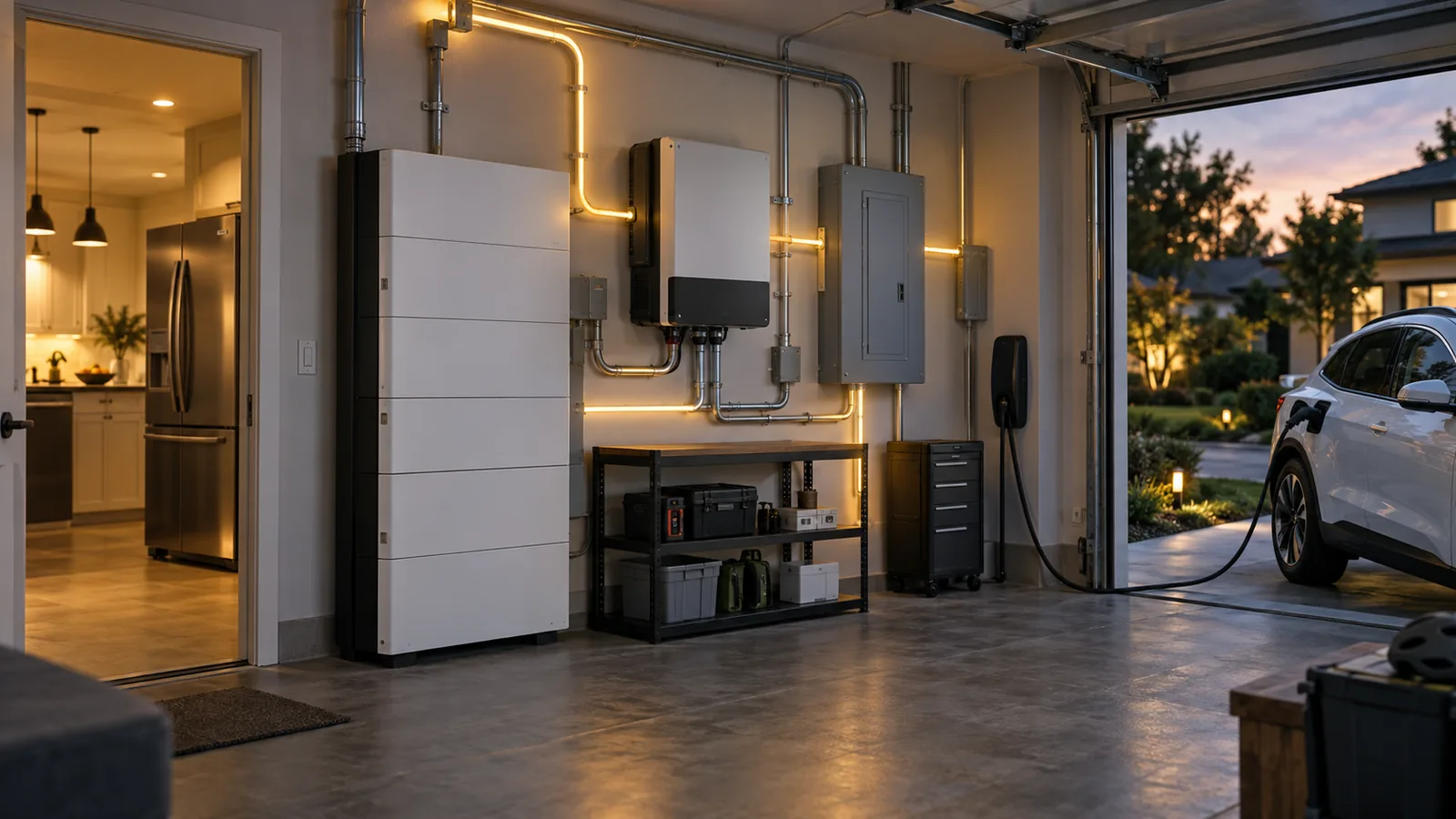
A management platform can prioritize loads or preserve battery reserve, but software alone does not create backup power. Whole-home or partial-home backup requires compatible power electronics, transfer or islanding controls, a suitable electrical architecture, a realistic load profile, and enough battery energy capacity in kWh and power output in kW for the loads you expect to run.
Utility or grid participation is also separate from owning a HEMS. DOE describes virtual power plants as coordinated groups of distributed energy resources such as rooftop solar, behind-the-meter batteries, EVs and chargers, water heaters, controls, and software that support grid flexibility. That DOE VPP context does not mean every HEMS qualifies for a program, that a program exists in your territory, or that a homeowner will earn a specific amount.
What happens if the internet goes down?
Architectures differ. Some decisions can run locally in a controller, panel, thermostat, EVSE, or battery gateway. Other schedules, dashboards, integrations, or optimization logic may depend on a cloud service. Ask whether existing schedules continue, manual control still works, devices fall back to their own logic, and how the system resynchronizes when connectivity returns.
Also ask what happens when devices disagree. If a utility event requests load reduction, the battery wants to preserve backup reserve, the EV needs to be ready by morning, and the thermostat is protecting a comfort limit, the system needs a clear priority order and manual override.
HEMS buying checklist for 2026
- Exact integrations: Which model numbers, firmware versions, and ecosystems are supported?
- Monitor or control: Does the system only show a load, or can it change operation?
- Offline behavior: Which automations continue without internet or cloud access?
- Manual override: Can you override schedules, grid events, and automated decisions immediately?
- Privacy: What energy, occupancy, and device data is collected, retained, or shared?
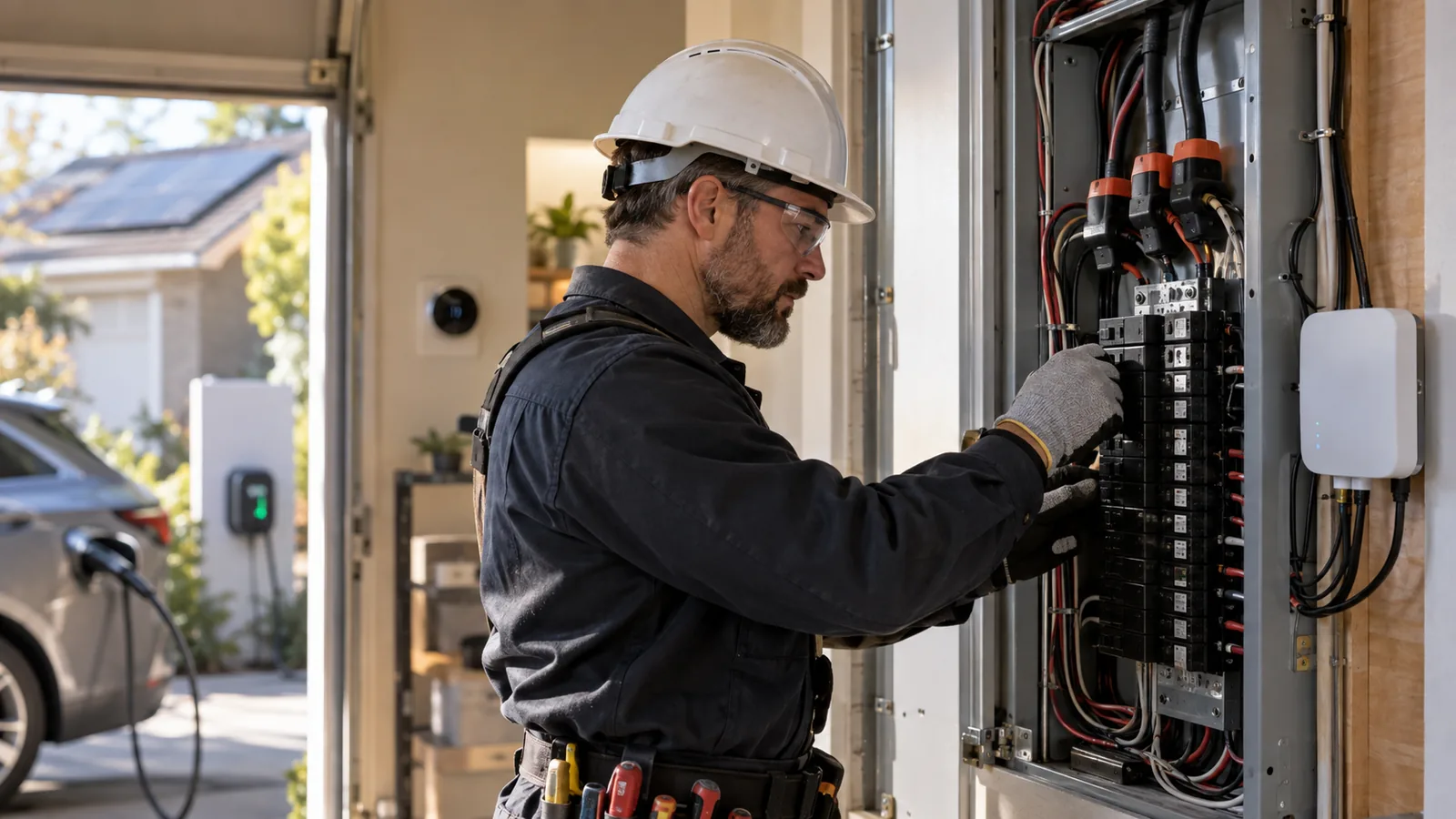
- Electrical requirements: Are new breakers, CTs, contactors, gateways, panel work, or a licensed electrician required?
- Subscription: Which controls, history, or integrations require an ongoing fee?
- Utility terms: What demand-response events can occur, how are they compensated, and how do you opt out?
- Battery reserve: Can you set a minimum reserve, and which command wins during a grid event?
- Conflicts: What happens when the HEMS, appliance app, battery controller, and utility signal disagree?
Who needs a HEMS?
A HEMS is easiest to justify when a home has several controllable energy assets and a reason to coordinate them. Good candidates include homes with time-of-use pricing, an EV, electric HVAC, electric water heating, rooftop solar, battery storage, or smart load controls. The more independent systems you have, the more useful one coherent control layer can become.
You may not need one if you mainly want visibility, have flat electricity pricing, own few controllable loads, or already have one ecosystem that handles the scheduling you need. A monitor, thermostat, EVSE scheduler, battery app, or smart-panel feature may solve the real problem with less complexity.
FAQ
What is the difference between a HEMS, a smart-home hub, an energy monitor, and a smart panel?
An energy monitor primarily measures. A smart-home hub coordinates connected devices. A smart panel adds circuit-level measurement and sometimes control. A HEMS coordinates energy decisions across compatible devices using schedules, prices, generation, storage, or grid signals.
Do I need a HEMS if I already have solar or a battery?
Not necessarily. It is most useful when you need multiple otherwise separate systems to follow one energy strategy.
Can a HEMS save money on a time-of-use tariff?
It can help when it can shift meaningful kWh from expensive periods to cheaper ones without unacceptable comfort or convenience tradeoffs. Savings depend on the tariff, controllable energy, losses, compatibility, and behavior.
Is ENERGY STAR SHEMS certification the same as buying a HEMS?
No. ENERGY STAR SHEMS is a specific EPA certification program for qualifying packages of devices and services. HEMS is the broader market category.
Can a HEMS provide whole-home backup?
No, not by itself. Backup requires compatible power electronics, transfer/islanding controls, sufficient battery kWh, sufficient kW output, and an electrical design that supports the intended loads.