

Enphase IQ Battery 5P is the more modular choice for homeowners who want tight Enphase solar integration, while sonnen ecoLinx is the more automation-focused premium platform with larger capacity options and deeper smart-home integration. Neither is automatically better for backup. Battery energy is measured in kWh; the ability to run or start loads depends on kW/kVA, transfer equipment, load controls, solar or generator configuration, and the installer’s electrical design.
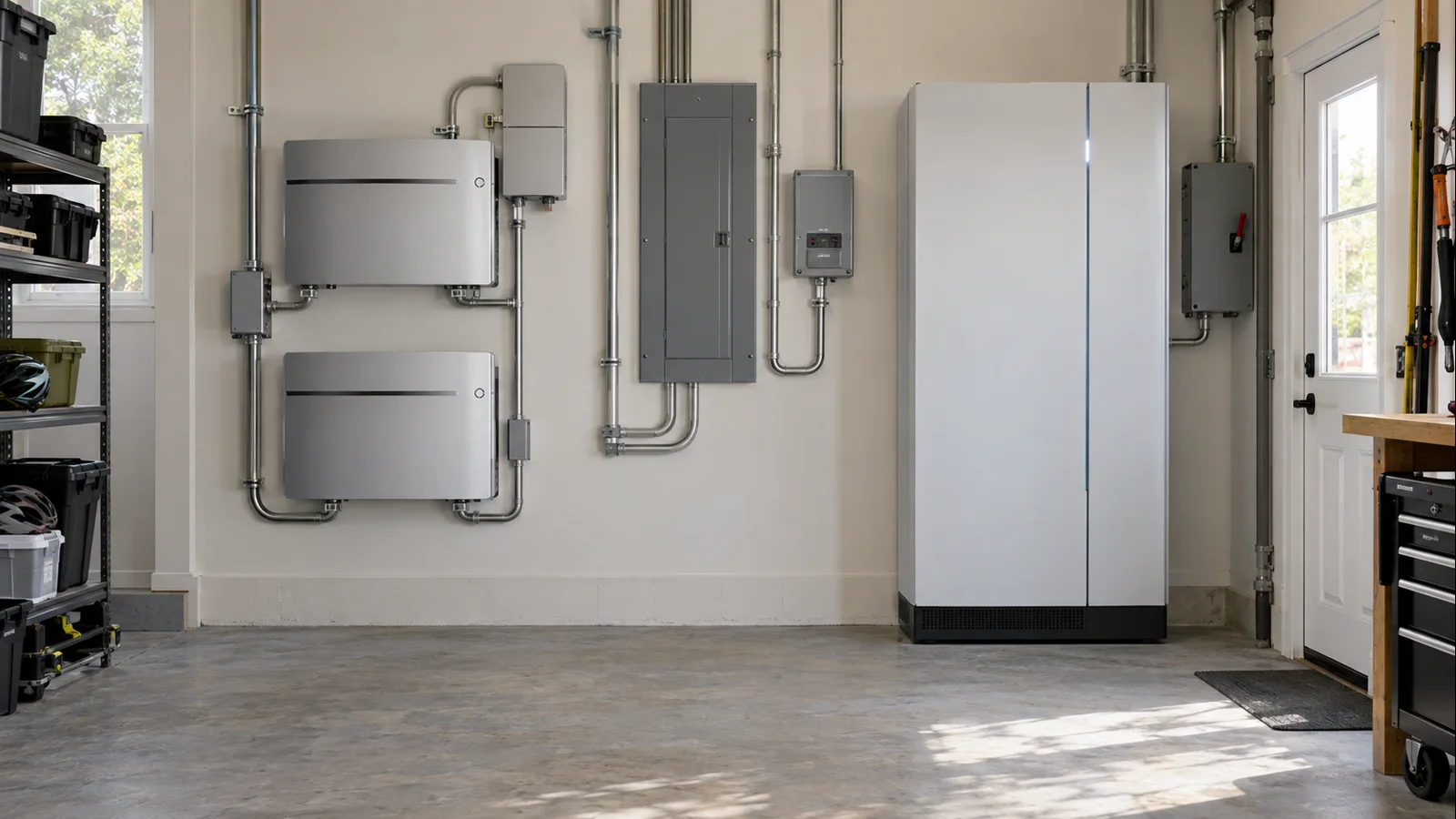
The systems take different approaches. The North American IQ Battery 5P provides 5.0 kWh usable energy capacity and 3.84 kVA continuous output at 240 VAC per unit. sonnen’s current ecoLinx page lists 12–20 kWh systems in 2 kWh increments plus a 30 kWh model. Power must be checked by exact ecoLinx model: the published ecoLinx 30 technical sheet lists 8 kW nominal off-grid output and 7 kW nominal grid-tied output at 25°C.
For a wider shortlist, see AmpedHabitat’s best home batteries for 2026.
Enphase IQ Battery 5P vs sonnen ecoLinx: key differences
| Category | Enphase IQ Battery 5P | sonnen ecoLinx |
|---|---|---|
| Usable energy | 5.0 kWh per 5P | 12, 14, 16, 18, 20 or 30 kWh listed on current ecoLinx page |
| Continuous power | 3.84 kVA per 5P at 240 VAC | Model-specific; ecoLinx 30: 8 kW off-grid / 7 kW grid-tied nominal at 25°C |
| Chemistry | LFP | LFP |
| Architecture | Modular AC-coupled battery with embedded microinverters | AC-coupled intelligent storage; exact cabinet/transfer design varies by model |
| Backup controls | IQ System Controller 3/3G; supported load-control options | Smart configurable backup; ecoLinx 30 sheet lists integrated automatic transfer switch |
| Smart-home focus | Enphase App, profiles, Storm Guard, Enphase load controls | Strong automation focus, including Control4 and Adapt Energy language on current page |
| Warranty headline | Up to 15 years or 6,000 cycles; capacity terms apply | 15 years or 15,000 cycles for covered U.S. ecoLinx systems; conditions apply |
Architecture and scaling
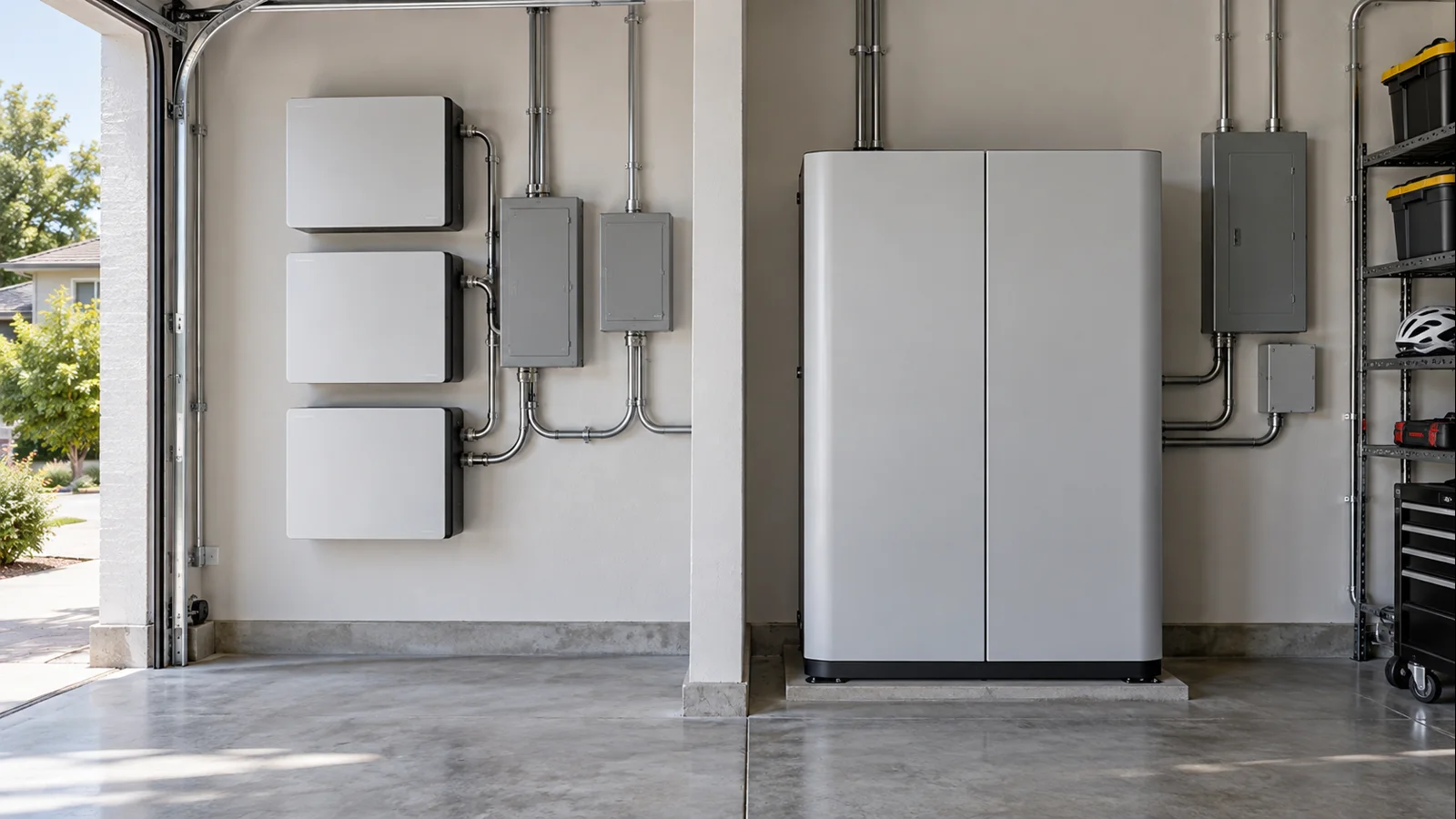
The 5P’s main advantage is granularity. Enphase’s current North America IQ Battery 5P data sheet lists 5.0 kWh usable capacity, 3.84 kVA continuous output at 240 VAC, LFP chemistry and six embedded battery microinverters. Adding battery units lets an installer increase stored energy in 5 kWh steps, but final system output still depends on the approved design and controller limits.
ecoLinx begins with larger capacity choices. sonnen’s current ecoLinx page lists 12 through 20 kWh in 2 kWh increments plus a 30 kWh version. Do not copy the 30 kWh model’s power specifications onto smaller systems. The ecoLinx 30 sheet supports 8 kW nominal off-grid and 7 kW nominal grid-tied output at 25°C; other configurations need their own current technical documentation.
Backup: size the loads, not just the battery
Capacity alone cannot tell you whether a home can be backed up. A 20 or 30 kWh battery may store substantial energy, yet simultaneous HVAC, well-pump, range or EV-charging loads can exceed the system’s continuous or starting capability.
For Enphase, the IQ System Controller 3/3G is the transfer and microgrid component in supported U.S. backup configurations. Enphase says it detects an outage, isolates the home from the grid and supplies configured backup loads from battery and available solar. The IQ Load Controller can shed selected non-essential circuits in supported designs, while the 3G version supports select standby-generator integrations.
sonnen positions ecoLinx around smart configurable backup and energy automation. The ecoLinx 30 sheet specifically lists an integrated automatic transfer switch and 200 A transfer-switch rating. The current ecoLinx page also warns that some automation features require additional equipment. For smaller ecoLinx sizes, have the installer identify the exact transfer, load-management and generator configuration rather than assuming it matches the 30 kWh model.
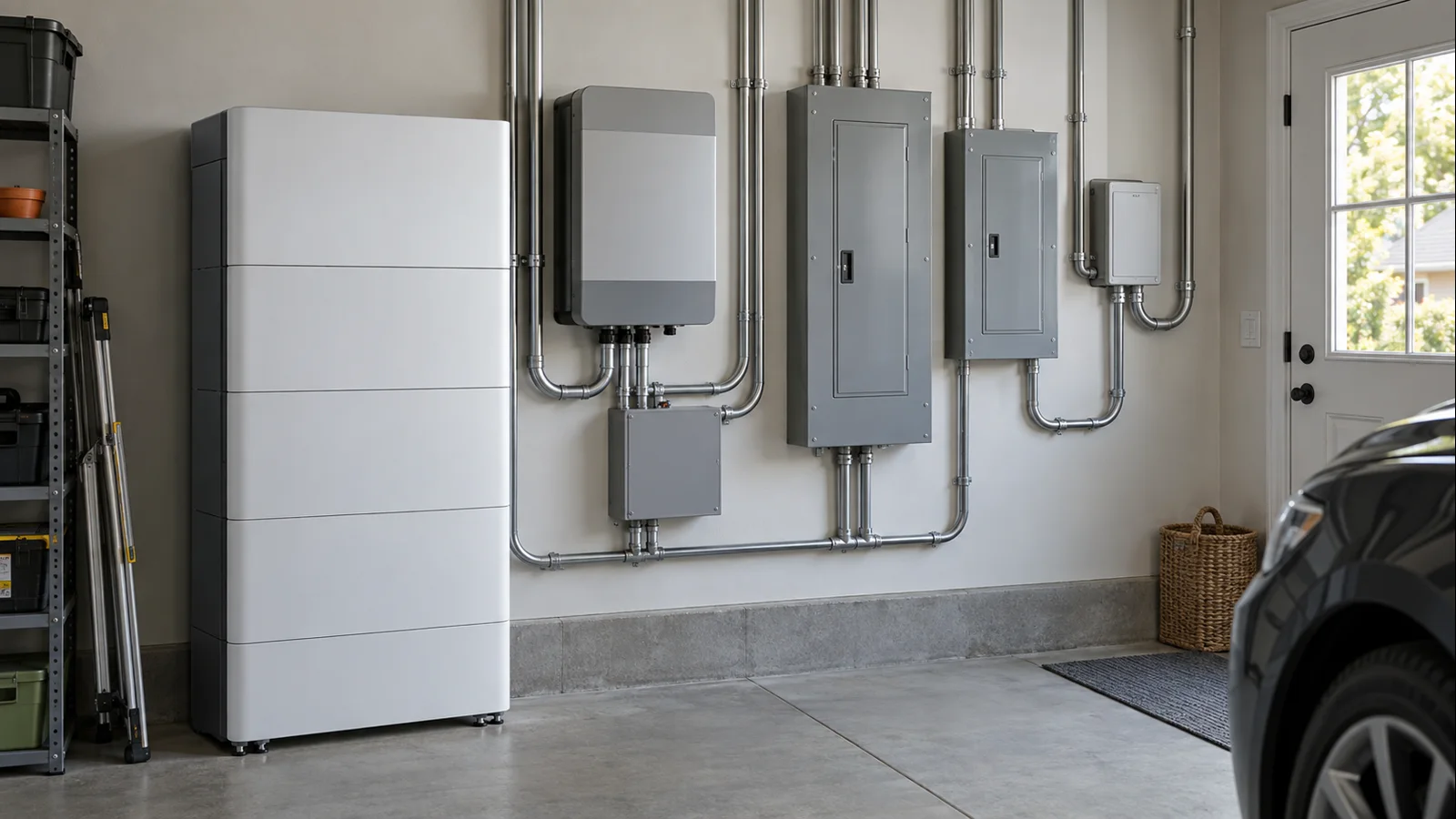
Before comparing quotes, list essential circuits, large motor loads, loads that can be shed, and whether solar or a generator will recharge the system during a long outage. AmpedHabitat’s power-outage preparation guide is useful because resilience is a load-planning problem as much as a battery-capacity problem.
Solar fit and daily energy management
IQ Battery 5P fits most naturally with Enphase solar. Its AC-coupled architecture, IQ Gateway, system-controller options and Enphase App provide one ecosystem for solar production, battery state, reserve settings and operating profiles. Enphase documents Self-Consumption and time-of-use modes, plus Storm Guard behavior that can increase reserve ahead of severe weather.
ecoLinx is also AC-coupled, and sonnen says solar is not required. Its current page says the system can use solar and, depending on configuration, charge from the grid or a generator. That makes ecoLinx especially relevant when the project is built around whole-home energy management rather than one solar brand. For more context on shifting daytime production into later household use, see AmpedHabitat’s solar and summer electricity-use analysis.
Smart-home integration, monitoring and VPPs
ecoLinx’s clearest differentiator is smart-home integration. sonnen’s live page describes Energy Automation with home-automation platforms and names Control4 and Adapt Energy. With compatible equipment, sonnen describes demand control, weather-aware reserve changes and configurable circuit behavior during an outage.
Enphase is more energy-system-centric. The Enphase App shows solar, home and battery activity and provides backup-reserve and profile controls, while supported IQ Load Controller designs can prioritize circuits. Both ecosystems can participate in some grid-services or virtual-power-plant programs, but availability varies by utility, state, hardware and enrollment rules. VPP compensation should never be treated as guaranteed savings.
Warranty and long-term ownership
Enphase’s current 5P data sheet summarizes the battery warranty as greater than 60% capacity, up to 15 years or 6,000 cycles, whichever occurs first, with restrictions. The current warranty contains detailed eligibility, registration, use and capacity-retention conditions, so verify the applicable terms in Enphase’s storage documentation center.
sonnen’s current U.S. warranty says covered ecoLinx 1.0-or-higher systems installed after March 1, 2018 end at the earlier of 15,000 battery-module cycles or 180 months after installation by an authorized installer. It also includes conditions involving authorized installation, registration, original location/configuration, internet connectivity and claims. ecoLinx therefore has the higher published cycle count, but the complete terms and local service path matter more than the headline alone.
Physical installation and service
A single 5P measures about 38.6 by 21.7 by 7.4 inches and can be wall- or pedestal-mounted. Multiple units need more wall or floor area, clearances, branch-circuit planning and conduit.
The ecoLinx 30 is cabinet-scale: its sheet lists approximately 52 by 61 by 19 inches and about 1,253 pounds, plus a NEMA 12 enclosure and forced-air cooling. Those figures are for the 30 kWh model only. In either case, panel work, transfer equipment, code clearances and installation location can materially change project complexity.
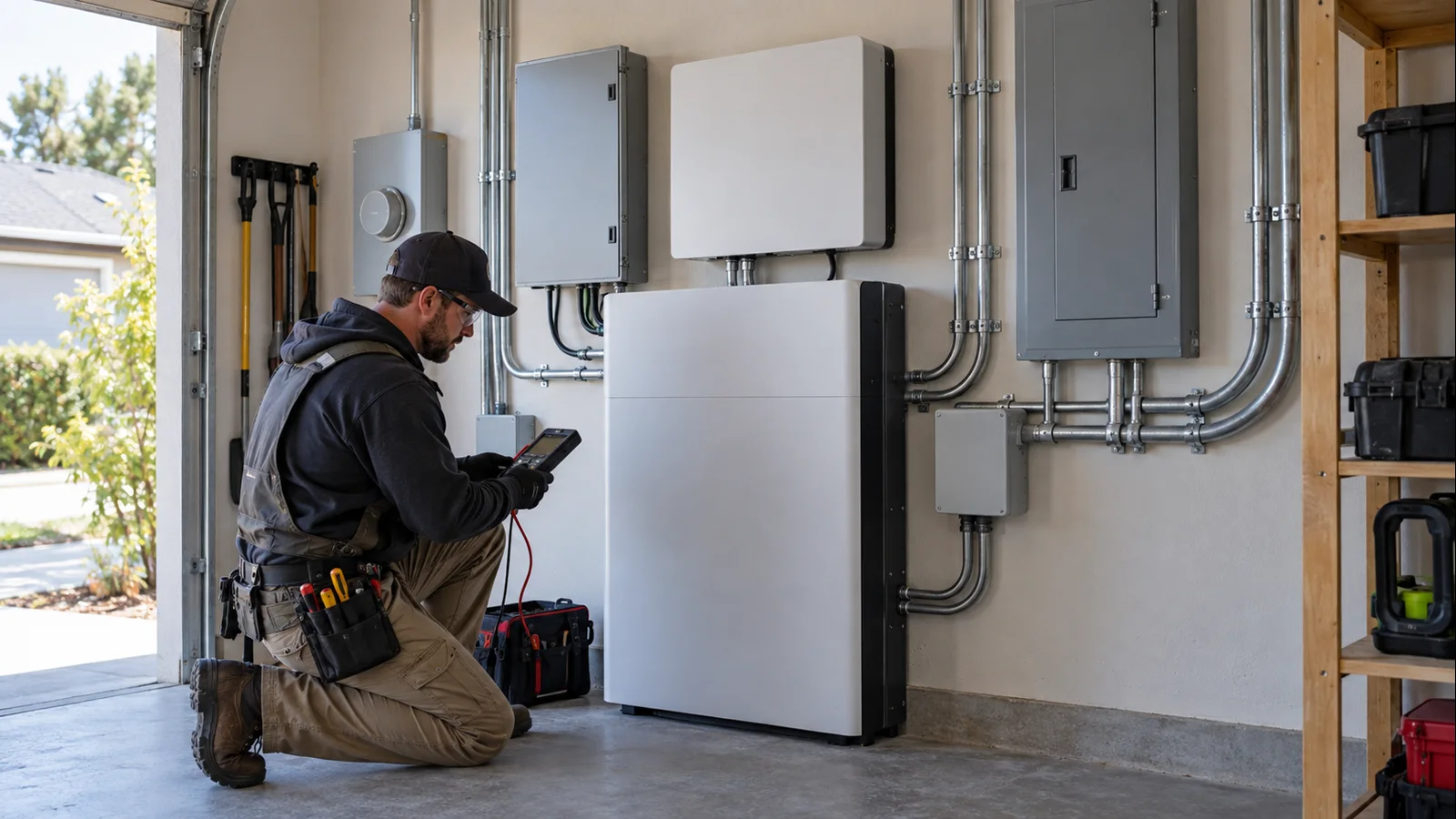
Ask each bidder who will commission the system, provide remote diagnostics, obtain warranty-labor authorization and handle replacement work if the original installer disappears. sonnen’s warranty in particular places substantial importance on authorized/certified installation and service procedures.
2026 incentives: do not use the old federal credit
Do not subtract the former federal Residential Clean Energy Credit from a new 2026 battery quote. The IRS states that Section 25D is not available for expenditures made after December 31, 2025. State, utility and VPP incentives may still exist under separate local rules. See AmpedHabitat’s current federal home-energy tax-credit status and the IRS Residential Clean Energy Credit page.
Which one makes more sense?
IQ Battery 5P fits best when modular 5 kWh scaling, Enphase solar integration, one app/ecosystem and flexible backup-load design are priorities. ecoLinx fits best when smart-home orchestration, configurable load behavior and larger listed capacity choices are central to the project. Neither is a universal winner; the better system is the one whose supported power, capacity, transfer architecture and service network match the house.
One 2026 caveat is important: sonnen’s current U.S. residential overview prominently emphasizes newer products such as sonnenHome Battery 11, sonnenCore+ and sonnenEvo, while the dedicated ecoLinx page remains live. Before buying a new ecoLinx, confirm current U.S. availability, certified-installer support, exact hardware revision and warranty eligibility.
FAQ
Is a 30 kWh ecoLinx automatically better for whole-home backup?
No. kWh measures stored energy. Whole-home capability depends on kW/kVA output, surge capability, transfer equipment, backed-up loads, solar/generator support and system design.
How much power does one IQ Battery 5P provide?
The current North American sheet lists 3.84 kVA continuous output at 240 VAC and 5.0 kWh usable capacity per 5P.
What is the ecoLinx 30 power rating?
Its technical sheet lists 8 kW nominal off-grid and 7 kW nominal grid-tied output at 25°C. Do not apply those figures to every ecoLinx size.
Which warranty is stronger?
Enphase publishes up to 15 years or 6,000 cycles for the 5P with capacity-retention conditions; sonnen publishes 15 years or 15,000 cycles for covered U.S. ecoLinx systems. Compare the full eligibility, retention, transfer and service terms, not just years or cycles.
Freshness and source note: Updated for late 2026 using Enphase’s current North American IQ Battery 5P data sheet and storage warranty/documentation resources; sonnen’s live ecoLinx page, current U.S. warranty, ecoLinx 30 technical sheet and current residential product overview; and current IRS Section 25D guidance. Specifications, software features, VPP programs, availability and warranty terms can change, so verify the exact U.S. SKU and current documents before purchase.