

Quick answer: The best 2026 home battery depends on the job. Tesla Powerwall 3 is the strongest fit for integrated solar plus storage; FranklinWH aPower 2 stands out for high-power AC-coupled retrofits; Enphase IQ Battery 5P is the most granular modular choice; and EcoFlow DELTA Pro Ultra suits buyers who want a modular, portable-style ecosystem that can grow into panel-integrated home backup.
For another modular home-storage option, see the BLUETTI EP900 review.
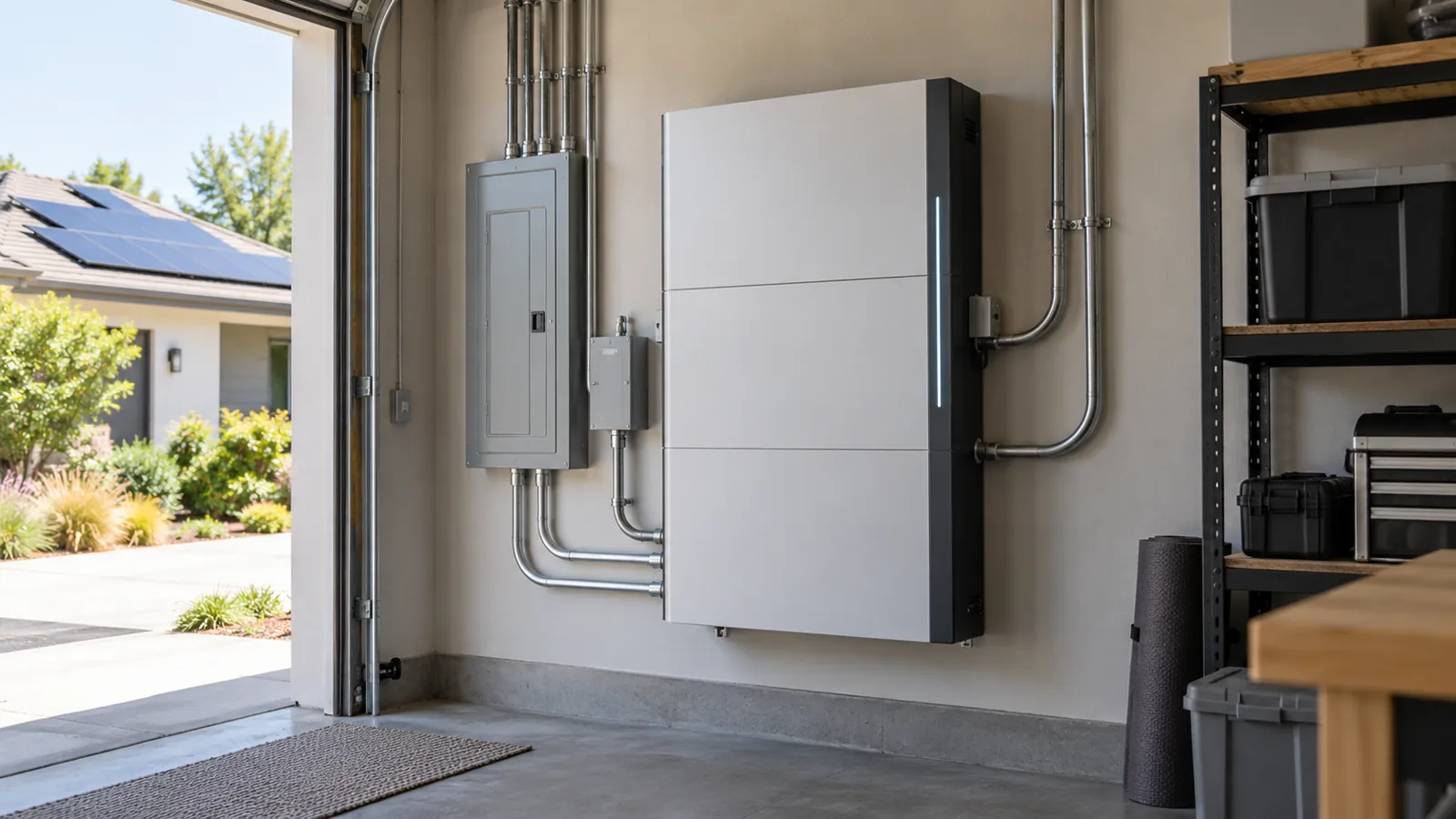
A home battery has two separate limits: energy capacity in kilowatt-hours (kWh), which determines stored energy and potential runtime, and power output in kilowatts (kW), which determines how much load the system can support at once. A larger kWh number does not automatically mean a battery can run larger appliances.
There is no universal winner. The right system depends on outage loads, desired runtime, solar architecture, electrical-panel design, expansion plans, warranty terms and the installed quote.
Home battery comparison for 2026
| System | Energy capacity | Continuous power | Architecture | Warranty / scale |
|---|---|---|---|---|
| Tesla Powerwall 3 | 13.5 kWh | 11.5 kW on-grid; 11.5 kW backup | Integrated solar inverter and system-controller architecture | 10 years; Powerwall 3 Expansion available |
| FranklinWH aPower 2 | 15 kWh usable per unit | 10 kW | AC-coupled; works with major solar-inverter architectures | 15-year limited warranty / 60 MWh throughput; up to 225 kWh per aGate |
| Enphase IQ Battery 5P | 5.0 kWh usable per unit | 3.84 kW per unit | AC-coupled; six embedded grid-forming microinverters | 15-year limited warranty, up to 6,000 cycles; modular stacking |
| EcoFlow DELTA Pro Ultra | Starts at 6 kWh; ecosystem scales to 90 kWh | Starts at 7.2 kW; ecosystem scales to 21.6 kW | Modular inverter/battery ecosystem; Smart Home Panel 2 enables integrated automatic backup | Modular expansion; verify current component-specific warranty terms |
Current manufacturer pages list these figures for Tesla Powerwall 3, FranklinWH aPower 2, Enphase IQ Battery 5P and EcoFlow DELTA Pro Ultra. Tesla's cited documents are used here without assigning a battery chemistry.
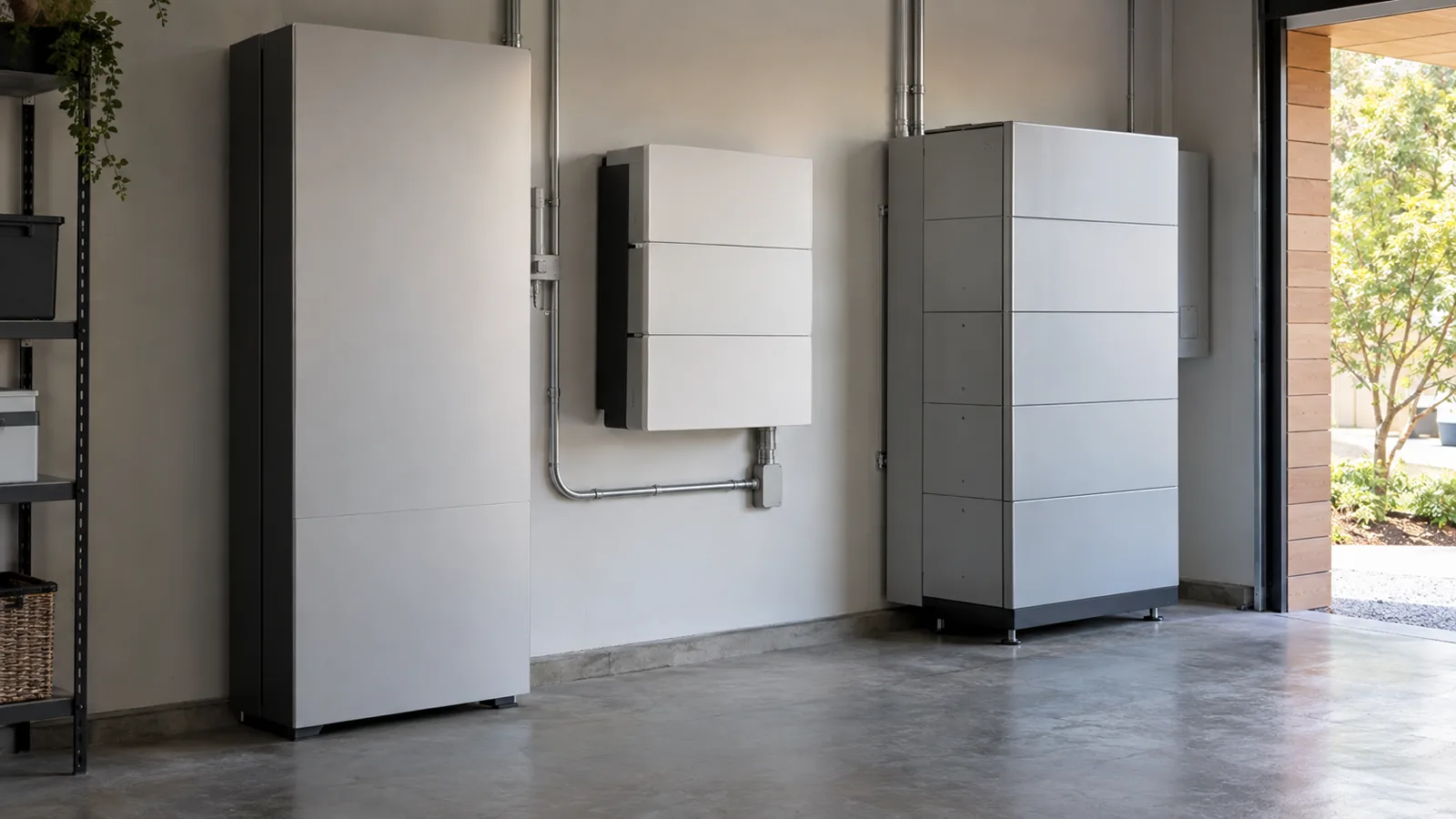
Which battery fits which buyer?
Best integrated solar + battery: Tesla Powerwall 3
Powerwall 3 is the clearest fit when solar and storage are being designed together. Tesla integrates the solar inverter into the architecture. Its 13.5 kWh capacity is the runtime side of the equation, while its 11.5 kW continuous output is the more important figure when judging whether several larger household loads can run simultaneously.
Tesla also advertises Powerwall 3 Expansion units for adding energy capacity later. More kWh can extend outage duration, but expansion should still be checked against inverter limits, backed-up circuits and motor-start requirements.
Best high-power AC-coupled retrofit: FranklinWH aPower 2
FranklinWH aPower 2 is well suited to homes that already have solar or want an AC-coupled design. Each unit provides 15 kWh of usable system energy and 10 kW continuous output. FranklinWH identifies LFP chemistry, a 15-year limited warranty tied to 60 MWh throughput, and scalability to 15 units per aGate for 225 kWh of energy capacity.
Best modular Enphase ecosystem: Enphase IQ Battery 5P
The IQ Battery 5P fits homeowners who want smaller expansion steps. One unit provides 5.0 kWh usable energy and 3.84 kW continuous power; additional units stack capacity and power. Enphase says it contains six embedded grid-forming microinverters and carries a 15-year limited warranty up to 6,000 cycles.
Backup operation requires the appropriate IQ System Controller 3/3G architecture. Homeowners already comparing Enphase can also see our IQ Battery 5P guide.
Best modular/portable-style whole-home ecosystem: EcoFlow DELTA Pro Ultra
DELTA Pro Ultra differs from a fixed wall battery. It starts at 6 kWh of energy capacity and 7.2 kW output, then can expand to a much larger ecosystem that EcoFlow advertises at up to 90 kWh and 21.6 kW.
For automatic circuit-level home backup, the critical integration hardware is Smart Home Panel 2. EcoFlow advertises 20 ms backup switching and 12-circuit control. A standalone stack should not be assumed to provide automatic whole-home transfer without the required panel or transfer hardware.
How to size a home battery correctly

Use two calculations. First calculate energy in kWh: how much electricity selected loads consume over the outage period. Then calculate power in kW: the maximum load those circuits may demand at the same time, including startup requirements.
- Choose the loads you actually want backed up.
- Multiply each load's average watts by expected operating hours, then divide by 1,000 to get kWh.
- Add reserve for losses, cycling behavior, weather and unexpected use.
- Add loads that may run simultaneously and compare that demand with continuous kW output.
- Check motor and compressor startup requirements using nameplates and installer calculations rather than generic wattage charts.
Worked example: suppose a homeowner wants 12 hours of essentials backup. A hypothetical plan uses a refrigerator averaging 120 W for 12 hours (1.44 kWh), 80 W of lights for 5 hours (0.40 kWh), 20 W of internet equipment for 12 hours (0.24 kWh), a 100 W television for 4 hours (0.40 kWh), and a 500 W furnace blower for 4 hours (2.00 kWh). Total energy is 4.48 kWh; adding 15% planning headroom brings the target to about 5.15 kWh.
That calculation estimates runtime only. It does not prove the battery can start the furnace motor while other loads are active. The separate kW and surge check decides that. This is one of the core battery-sizing mistakes to avoid.
Installation architecture changes the quote
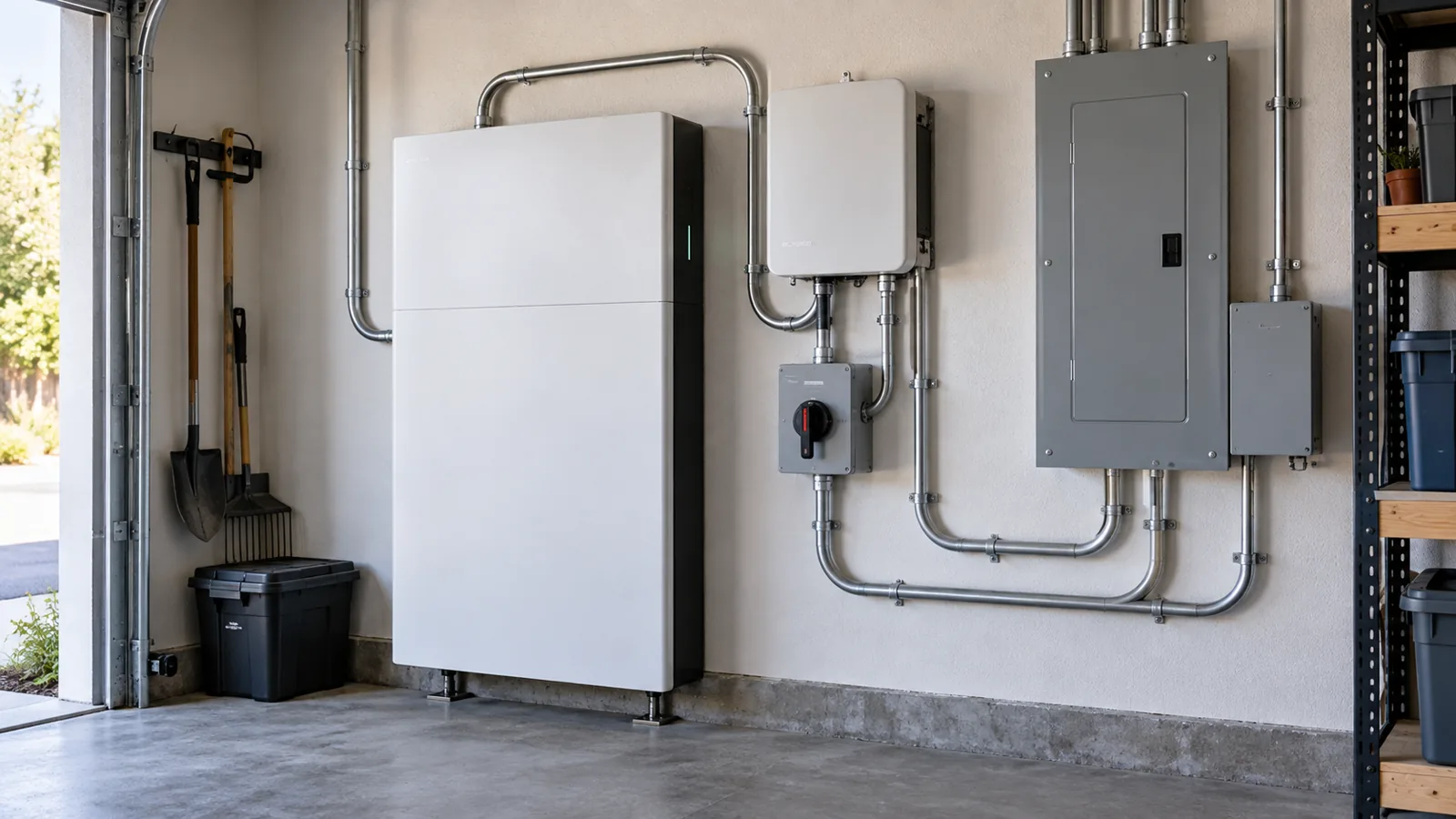
A complete backup system may require a gateway or system controller, backed-up-loads panel, automatic transfer equipment, current transformers, breakers, conduit, communications hardware and solar-inverter integration. Those details affect both performance and installed cost.
For that reason, exact national installed-price claims are rarely useful. Compare itemized local quotes that state battery count, usable kWh, continuous kW, backup circuits, transfer hardware, permitting, electrical upgrades, solar work and commissioning. If resilience is the priority, our power-outage preparation guide covers the non-battery side too.
What changed for battery incentives in 2026?
The federal tax picture changed materially. The IRS Residential Clean Energy Credit page says the credit applied to qualified property installed through December 31, 2025 and is not available for property placed in service after December 31, 2025. Battery storage was an eligible category before termination, but a new residential battery placed in service in 2026 should not be presented as qualifying for the old 30% federal credit.
State, utility and local programs may still affect project economics. The federal change is explained in our 2026 home-energy tax-credit update. Verify tax eligibility against current IRS guidance before relying on manufacturer or installer marketing.
What to compare on installer proposals
- Usable energy in kWh: enough stored energy for the backup duration you want.
- Continuous and surge power in kW: enough output for simultaneous loads and motor starts.
- Solar coupling: integrated solar-inverter architecture versus AC-coupled retrofit design.
- Expansion path: whether future modules add energy capacity, output power or both.
- Backup hardware: what controller, gateway, transfer equipment or smart panel is required.
- Warranty limits: years, cycles or throughput, retained-capacity terms and installation conditions.
- Total installed scope: equipment, electrical work, permitting, solar integration and commissioning.
Frequently asked questions
How many kWh of battery storage does a typical home need?
There is no safe universal number. Essentials-only backup may require several kWh, while HVAC, electric cooking, pumps or long outages can require far more. Size from actual loads and desired runtime, then add reserve.
Can one home battery run the whole house?
Sometimes, but capacity alone cannot answer the question. A battery may have enough kWh for several hours yet too little continuous kW or surge capability for all simultaneous loads. Whole-home backup must be checked against the home's actual load profile and backup architecture.
Is Tesla Powerwall 3 better than FranklinWH aPower 2?
They fit different projects. Powerwall 3 favors an integrated solar-plus-storage design and provides 13.5 kWh with 11.5 kW continuous output. aPower 2 is AC-coupled, provides 15 kWh and 10 kW continuous per unit, and has a longer stated warranty framework. Solar architecture, loads, expansion and installer support decide the better fit.
How many Enphase IQ Battery 5P units are needed for backup?
One unit provides 5.0 kWh usable energy and 3.84 kW continuous power. Additional units increase both. The correct count depends on runtime and simultaneous loads, and backup requires the appropriate Enphase system-controller architecture.
Can EcoFlow DELTA Pro Ultra provide automatic home backup?
Yes, when configured with the required home-integration equipment. EcoFlow positions Smart Home Panel 2 as the hub for automatic circuit-level backup and advertises 20 ms switching. A standalone stack should not be treated as automatic whole-home transfer without that integration.
Does a new home battery installed in 2026 still get the 30% federal tax credit?
No under current IRS guidance for the Residential Clean Energy Credit. The IRS says the credit is not available for property placed in service after December 31, 2025. Buyers should separately check current state, utility and local incentives.