

Bottom line: The Enphase IQ Battery 5P remains a strong 2026 choice for U.S. homeowners already building around the Enphase ecosystem, especially when modular expansion, high short-duration output and unified solar-plus-storage monitoring matter. One 5P is rated at 5.0 kWh of usable energy, but backup capability depends just as much on power output, protected loads, the IQ System Controller, PV and generator configuration, and the installer’s design.
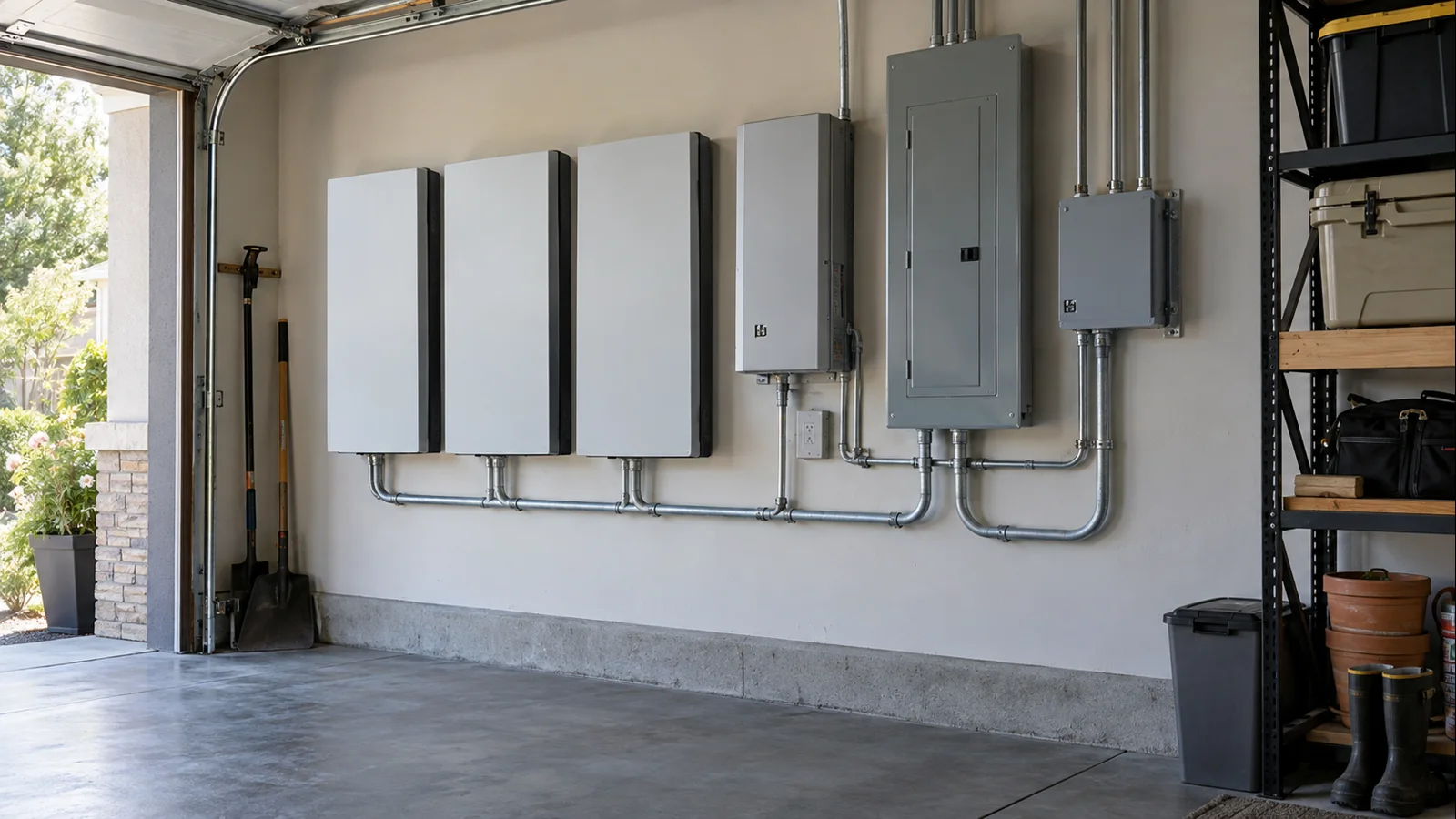
Enphase IQ Battery 5P specs that matter in 2026
Enphase’s current North America IQ Battery 5P data sheet, DSH-00010-11.0-EN-2025-05-06, is still the key reference for the U.S. model. It lists 5.0 kWh total capacity and 5.0 kWh usable capacity per battery. That is an energy number: it describes how much energy the battery can store, not how large a load it can run at one moment.
At 240 V, the same data sheet rates one unit at 3.84 kVA continuous output, with 7.68 kVA for three seconds and 6.14 kVA for 10 seconds. Enphase’s consumer page commonly presents these as kW figures; the data sheet’s kVA wording is more precise, and real-load kW depends on power factor.
| Current U.S. specification | Per IQ Battery 5P | Why it matters |
|---|---|---|
| Usable energy | 5.0 kWh | Determines stored-energy budget, not instant load capability |
| Continuous output at 240 V | 3.84 kVA | Key limit for sustained backed-up loads |
| Short-duration output | 7.68 kVA for 3 sec; 6.14 kVA for 10 sec | Helps with motor and compressor starting, but does not replace load analysis |
| Power Start | Up to 48 A LRA | Relevant to high-inrush appliances; Enphase notes capability can vary |
| Chemistry | Lithium iron phosphate (LFP) | Current Enphase chemistry for the 5P platform |
| Warranty | Earlier of 15 years or 6,000 discharged cycles | Subject to Enphase warranty terms and exclusions |
These figures are per unit and configuration-dependent. The current data sheet also lists 3.33 kVA continuous at 208 V and states that backup/off-grid operation is not supported for 208 V single-phase operation. Enphase also notes that its published 5.0 kWh usable-capacity figure includes protective and battery-sustenance reserves, so outage planning should not assume every rated watt-hour is always available to household loads.
Capacity is not the same as backup power
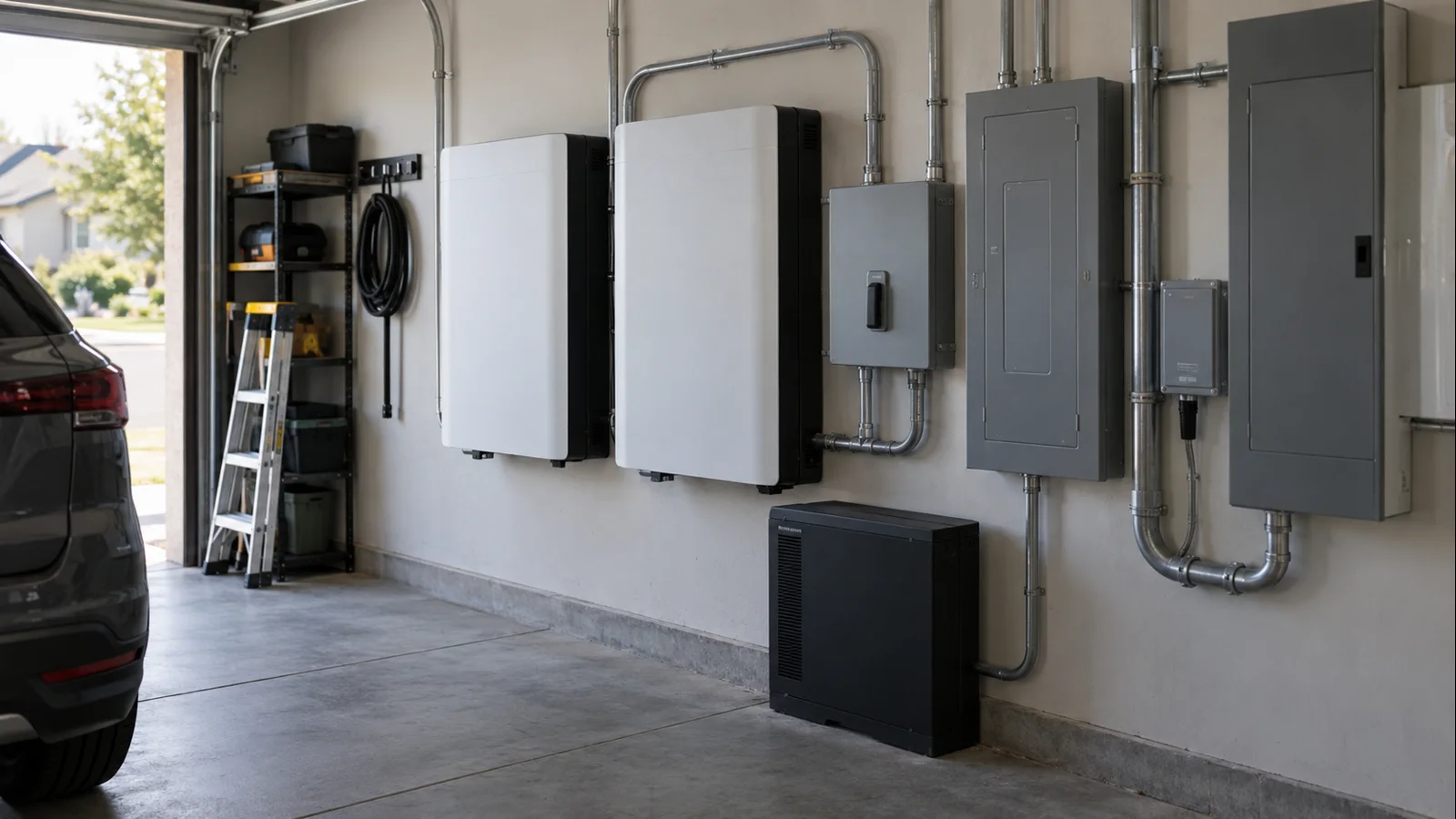
The most common mistake when sizing a home battery is to count kWh and stop there. A battery bank might have enough stored energy for a long outage but still be unable to start or sustain a large HVAC compressor, well pump, electric range or other high-demand load. The opposite can also happen: a system can have enough output power for a heavy load but not enough stored energy to run it for many hours.
For the IQ Battery 5P, backup performance depends on usable energy, continuous output, short-duration starting capability, the circuits actually backed up, System Controller architecture, solar available during the outage and load-management choices. Generator integration adds another design layer where used.
That is why “one battery for essentials” or “three batteries for whole-home backup” is not a reliable universal rule. A proper design starts with the loads you want energized during an outage, their simultaneous demand and startup current, then checks how PV, batteries, transfer equipment and load controls work together. For a broader planning checklist, see AmpedHabitat’s Power Outage Preparation guide.
How the Enphase backup architecture works
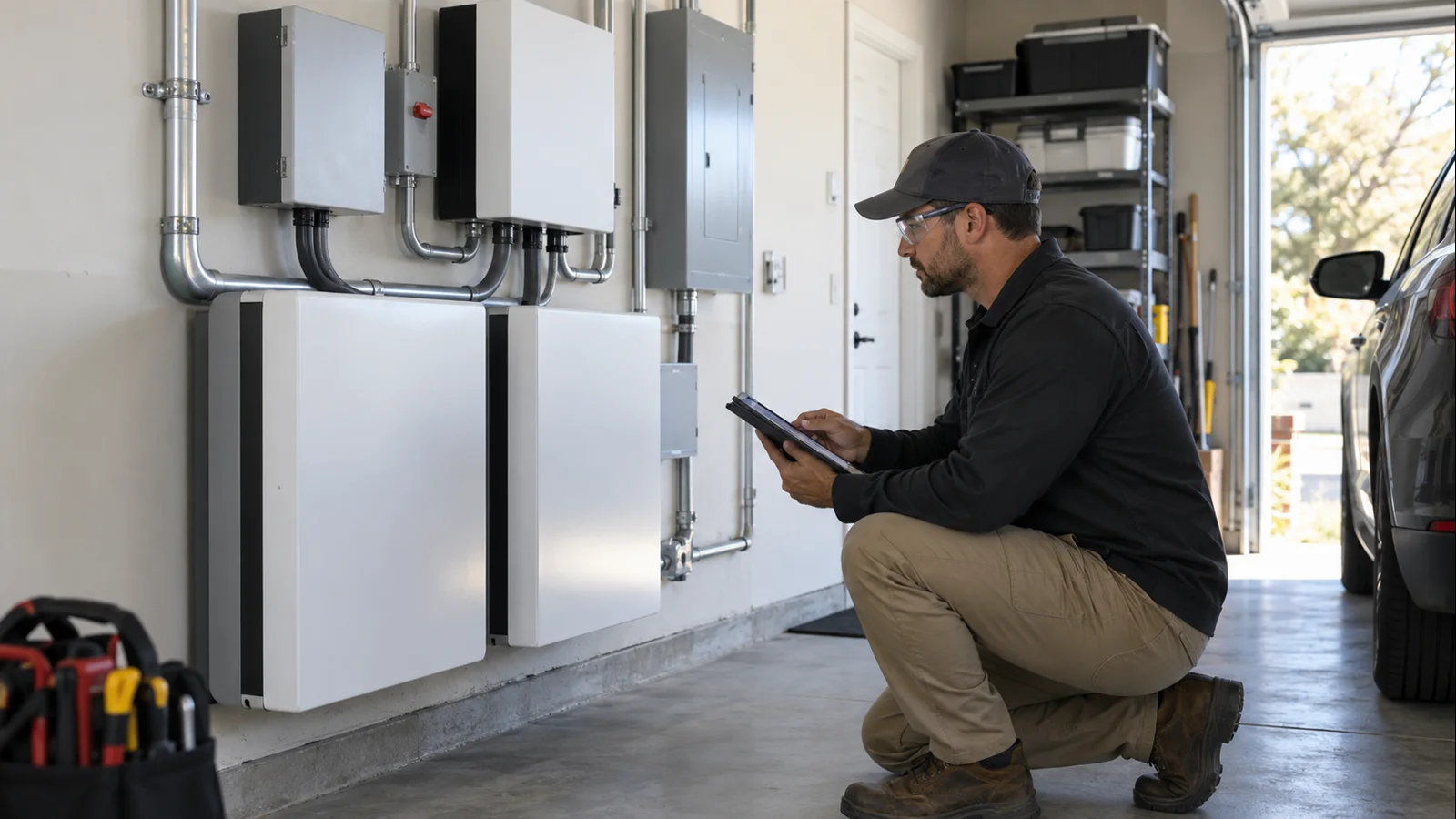
The IQ Battery 5P is an AC-coupled battery with six embedded IQ8D-BAT microinverters and wired control communication. In a grid-forming backup system, the battery is not the only major component. Enphase pairs it with the IQ System Controller 3 or 3G, which serves as the microgrid interconnect and transfer equipment that isolates the home from the utility during an outage and supports 120/240 V backup operation.
A current installation also needs an IQ Gateway for control and monitoring, commonly through an IQ Combiner 5/5C. Enphase documents certain older compatible combiners or standalone gateways with Communications Kit 2, so existing solar owners should verify gateway, combiner and microinverter compatibility before assuming a 5P is a drop-in addition.
The distinction between System Controller 3 and 3G matters. Enphase’s March 24, 2026 North America IQ Battery 5P best-practices brief specifies System Controller 3 for systems up to 80 kWh without generator support and System Controller 3G for systems up to 40 kWh with supported generator integration. Those are architecture limits, not a recommendation to install the maximum.
Generator support also is not generic. IQ System Controller 3G integrates with select supported AC standby generators, and Enphase directs installers to its generator-integration documentation. If generator backup is important, have the installer identify the exact generator model and approved configuration before equipment is ordered.
Modularity and expansion: one of the 5P’s real strengths
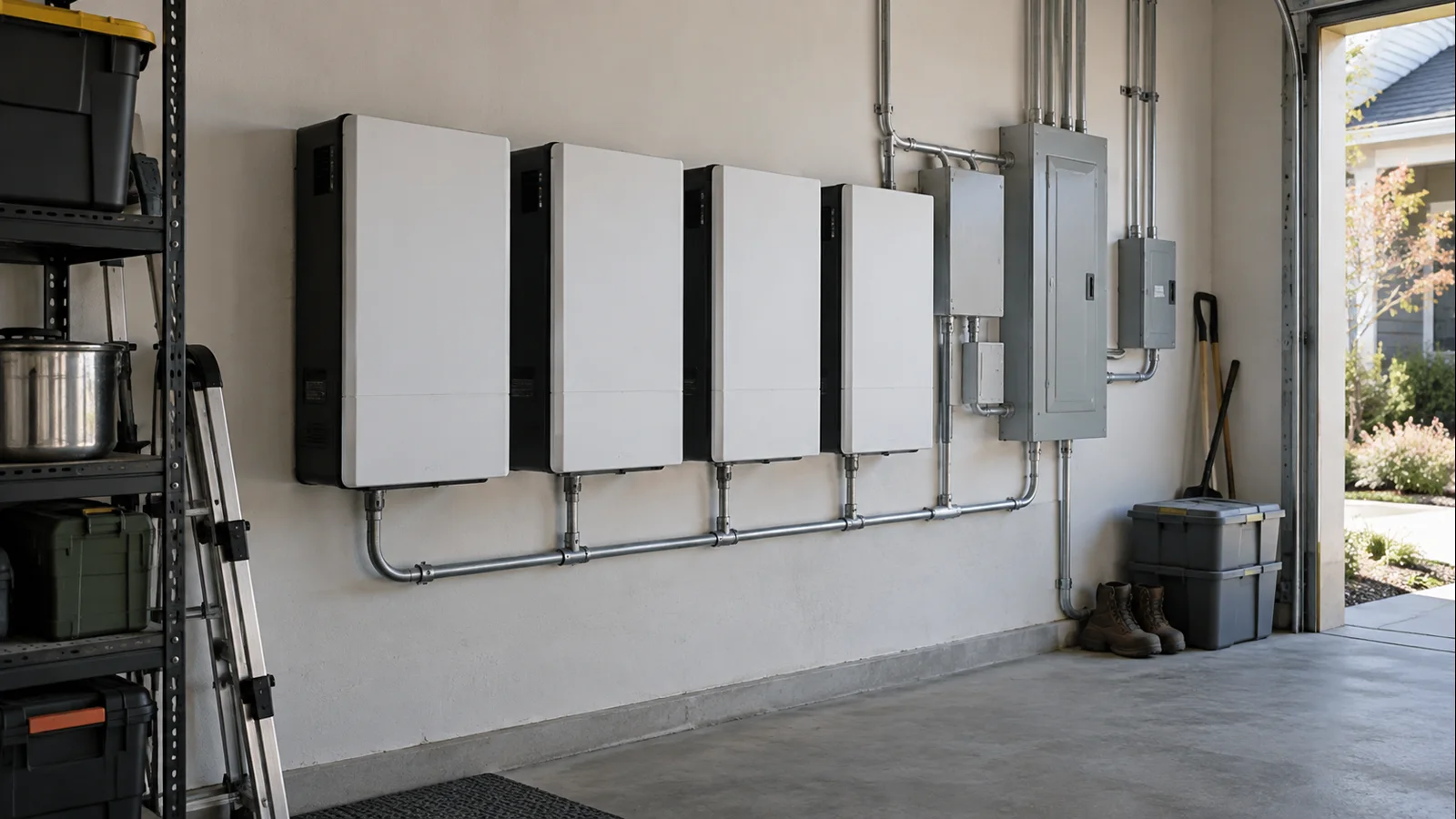
Each 5P adds another 5.0 kWh of listed usable energy and another power-producing battery module, which makes the platform easier to scale than a single large fixed-capacity cabinet. Enphase also supports Power Control System features that can help installers design larger storage systems within electrical interconnection limits.
Expansion is not unlimited plug-and-play. Controller choice can cap supported battery capacity, electrical rules still apply, and an existing gateway/combiner may need compatible communications hardware. Enphase’s current guidance also says IQ Battery 5P with System Controller 3/3G cannot be mixed with prior IQ Battery 3T/10T products in the same third-generation architecture.
Monitoring, profiles and ecosystem integration
The Enphase App is a major reason to consider the 5P if the home already uses Enphase solar. Current Enphase documentation describes solar production, home consumption, battery state and power flow in the same platform, along with battery operating profiles such as Self-Consumption, Savings and Full Backup where supported. Backup Reserve can preserve part of the battery for outages, while Storm Guard can respond to qualifying National Weather Service alerts by preparing the battery for severe weather.
The value is keeping PV, storage, load control and system status in one ecosystem. Monitoring, alerts, remote updates and support depend on a correctly commissioned IQ Gateway and reliable connectivity; Enphase’s 2026 guidance favors wired Ethernet where practical.
Warranty, service and long-term ownership
Enphase’s current warranty documentation lists the IQ Battery 5P limited-warranty period as ending at the earlier of 15 years from activation or 6,000 discharged cycles. The current data sheet states a capacity threshold above 60%, with restrictions applying. The full warranty controls, including eligibility, activation, exclusions and claim requirements, so buyers should read it rather than relying on the headline term alone.
Installer quality is especially important. Enphase requires training for commissioning, while control cabling, CT configuration, gateway commissioning and System Controller settings affect system behavior. Ask the installer to document backed-up loads, continuous and startup-load calculations, battery count, controller model, load-control strategy and future-expansion plan.
Also ask who handles service labor. A long equipment warranty does not automatically mean future site visits or electrical work are covered on identical terms.
What about federal tax credits in late 2026?
Do not use older battery articles that still assume a 30% federal Residential Clean Energy Credit for a new 2026 purchase. The IRS says Section 25D is not available for expenditures made after December 31, 2025. State, utility and virtual-power-plant incentives may still exist, but they are location- and program-specific. AmpedHabitat tracks the federal change in Federal Home Energy Tax Credits Ended: 2026 Status, Deadlines & What Still Qualifies.
Who should consider the IQ Battery 5P?
The 5P is especially compelling for an Enphase-solar homeowner who wants a tightly integrated AC-coupled battery, granular modular expansion, strong short-duration output per 5 kWh module and one monitoring ecosystem. It is also worth considering when the design benefits from selective load backup or Enphase’s supported generator path through System Controller 3G.
It deserves more scrutiny if the home has an older Enphase battery generation, needs a generator-backed bank beyond the documented 3G limit, has uncertain solar compatibility, or is being quoted without a load study. Compare it with our Best Home Batteries for 2026 and Enphase IQ Battery 5P vs. sonnen ecoLinx.
Verdict: excellent ecosystem battery, but design determines the result
The IQ Battery 5P’s strongest 2026 case is not simply “5 kWh of storage.” It is the combination of 5.0 kWh modular energy blocks, relatively high power per module, LFP chemistry, wired third-generation communications, mature Enphase monitoring and a backup architecture that can scale from protected essentials to larger systems when engineered correctly.
Its biggest caveat is the same one that applies to every serious home battery: the spec sheet cannot tell you whether a specific house will achieve the backup experience you expect. Get the installer to size energy and power separately, identify every backed-up circuit, verify startup loads, choose the correct System Controller, confirm PV and generator compatibility, and show how future expansion would be wired and commissioned. With that work done, the IQ Battery 5P remains one of the more coherent choices for homeowners who want storage inside the Enphase ecosystem.
Primary sources checked for this 2026 review
- Enphase IQ Battery 5P North America data sheet — current specifications and per-unit ratings.
- Enphase Energy System with IQ Battery 5P best-practices brief — controller, generator and system-design constraints.
- Enphase IQ Battery 5P product page — current product positioning, output figures and commissioning note.
- IRS home-energy credit termination FAQ — current Section 25D termination date.