

Short answer: The BLUETTI EP900 remains a serious late-2026 option for U.S. homeowners who want permanently installed split-phase storage with solar input, grid interaction and modular batteries. One EP900 supports two to four B500 modules: 9.92–19.84 kWh nominal energy and 8.928–17.856 kWh of published usable battery energy. Backup output is 7.6 kW with two B500s or 9 kW with three or four. Final price and backup capability depend on installation design.
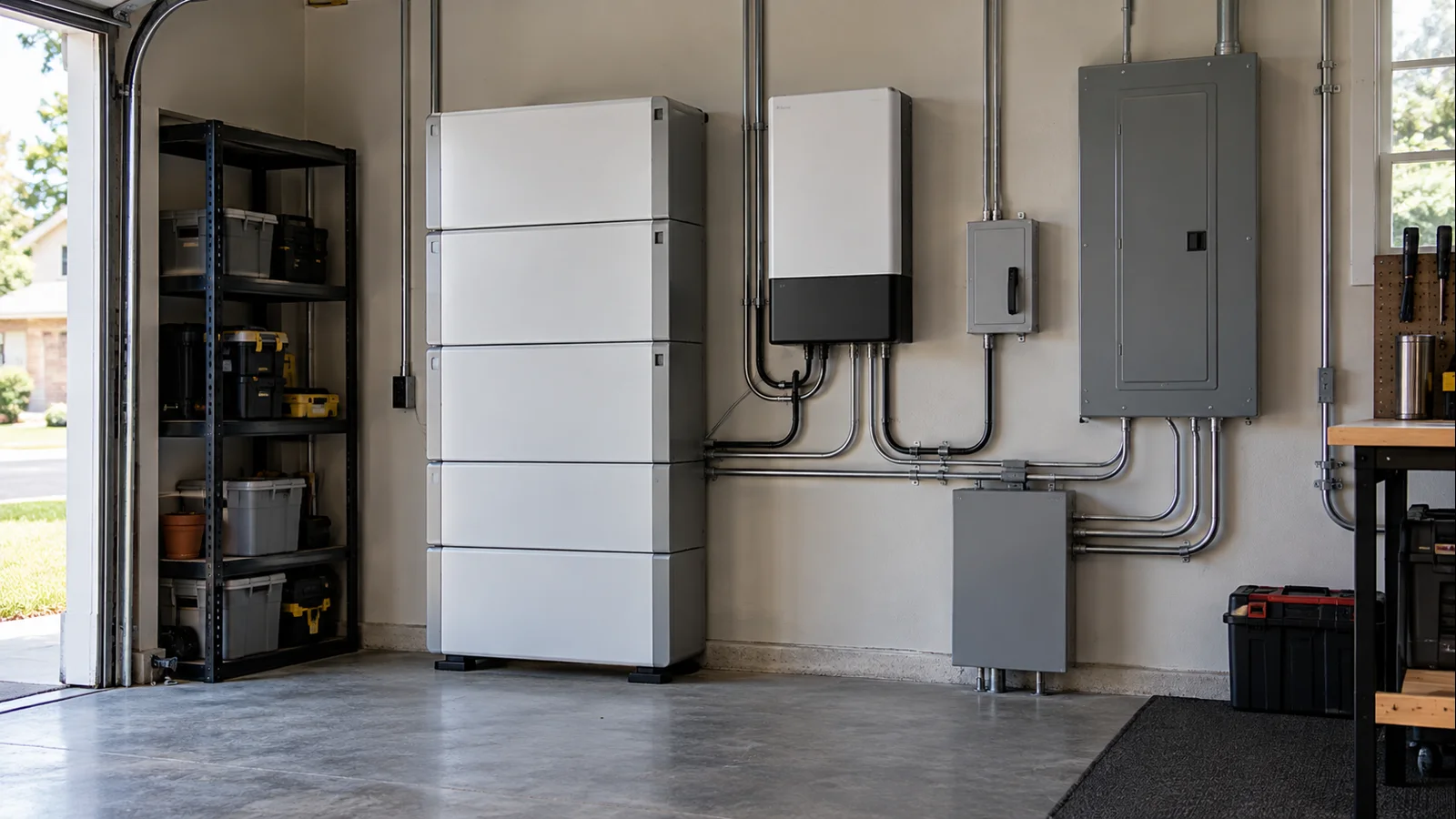
BLUETTI EP900 verdict for 2026
The EP900 is best viewed as a hybrid residential energy-storage platform, not a portable power station scaled up for a house. Its strengths are meaningful: 120/240V split-phase output, up to 9 kW of backup power from one inverter, up to 9 kW of direct PV input, LiFePO4 battery chemistry, NEMA 4X/IP65 protection and a 10-year warranty.
The main caveat is system design. Battery energy in kilowatt-hours tells you how much energy is stored; inverter power in kilowatts tells you how much load the system can support at once. Neither figure alone guarantees that every circuit in a home will run during an outage. Protected loads, motor-starting demand, HVAC, EV charging, transfer equipment, solar configuration and installer design all matter.
For broader comparisons, see AmpedHabitat’s Best Home Batteries 2026 guide and Enphase IQ Battery 5P review.
BLUETTI EP900 specs: verified U.S. configuration
BLUETTI’s current U.S. documentation identifies the EP900 as an on-grid/off-grid hybrid inverter paired with B500 battery modules. Each B500 has 4,960 Wh of rated energy and 4,464 Wh of usable energy, corresponding to a published 90% depth of discharge. A single EP900 requires two to four B500 modules.
| Specification | Verified EP900 value | Why it matters |
|---|---|---|
| Battery chemistry | LiFePO4 / LFP | Residential-storage chemistry with strong thermal stability. |
| B500 rated energy | 4.96 kWh per module | Nominal stored energy, not output power. |
| B500 usable energy | 4.464 kWh per module | Published usable battery energy at 90% depth of discharge. |
| Single-EP900 battery count | 2–4 B500 modules | 9.92, 14.88 or 19.84 kWh nominal. |
| Single-EP900 usable energy | 8.928–17.856 kWh | Calculated from BLUETTI’s published usable energy per B500. |
| Backup output | 7.6 kW with 2 B500; 9 kW with 3–4 B500 | Sets the approximate continuous load ceiling in backup mode. |
| Surge rating | Not separately published in the current U.S. datasheet | Do not call the 18 kW dual-inverter figure a surge rating. |
| Output voltage | 120/240V split phase, 60 Hz | Supports typical U.S. 120V and properly designed 240V loads. |
| Direct PV input | 9 kW max.; two MPPT channels, 3 kW + 6 kW | Allows DC-coupled solar charging through the EP900. |
| Transfer time | <10 ms | BLUETTI’s published switch-over specification. |
| Environmental rating | NEMA 4X / IP65 | Supports qualified indoor or outdoor installation. |
| Warranty | 10 years | EP900/B500 is listed under BLUETTI’s 120-month ESS warranty. |
BLUETTI also documents two EP900 inverters in parallel. Depending on battery count, published backup output is 15.2 kW or 18 kW and total nominal storage can reach 39.6 kWh. That is a larger system architecture, not a short-duration surge mode for one EP900.
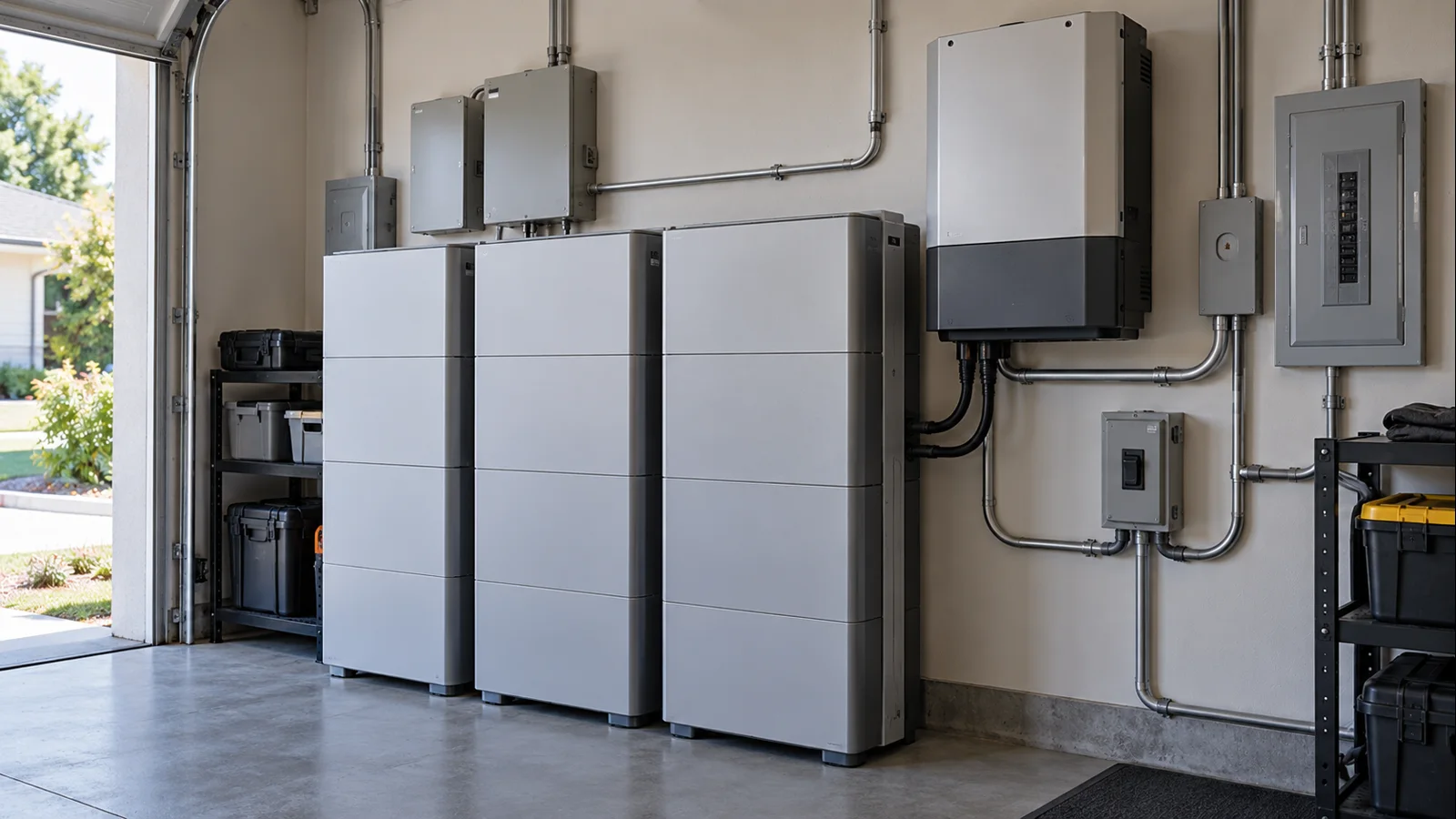
Energy capacity versus output power
A 19.84 kWh four-B500 stack stores roughly twice the nominal energy of a 9.92 kWh two-B500 stack, so it can support a given average load for longer. But the four-module system does not remove the single-inverter power ceiling: backup output remains 9 kW.
Runtime therefore has no honest universal answer. A useful estimate starts with usable kWh divided by the home’s average supported load in kW, then accounts for inverter losses, reserve settings, temperature and any solar production during the outage. Homes with electric resistance heat, central air conditioning, well pumps or EV charging can behave very differently from homes backing up refrigeration, lighting, networking and selected outlets.
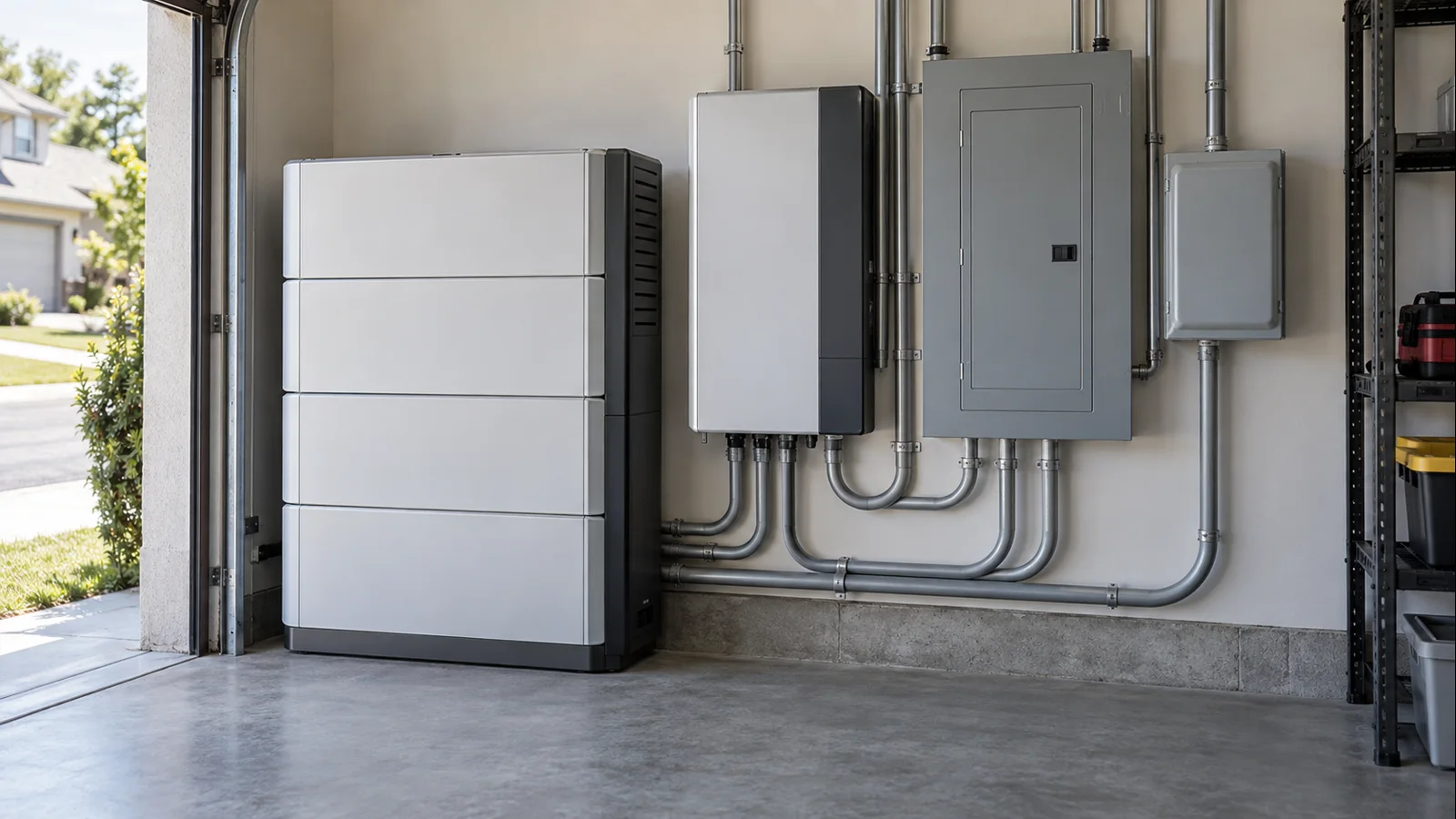
Solar coupling and retrofit use
The EP900 has high-voltage solar inputs, so a new array can be designed as a DC-coupled system feeding the EP900 directly. BLUETTI specifies up to 9 kW of PV input per inverter with two MPPT channels.
Existing solar is more nuanced. BLUETTI publishes an AC-coupled retrofit architecture and sells an EP900 PV Inverter Energy Meter for integrating an existing PV inverter. Its U.S. EP900 flyer specifically references Enphase IQ7 microinverters and advises contacting BLUETTI for details. That is not blanket compatibility with every string inverter or microinverter. Retrofit owners should have the installer verify inverter compatibility, metering, anti-islanding behavior and whether solar remains available during an outage.
Backup hardware and installation requirements
A permanently installed EP900 is not simply connected to a spare breaker. BLUETTI’s Home Integration Kit is intended to connect EP900/EP800 systems to the home electrical system, and its U.S. diagrams show a transfer arrangement and backup subpanel for essential loads. The final installation must still satisfy local code, utility requirements and permitting.
For dual-EP900 parallel systems, BLUETTI’s published architecture shows an EMS controller and 200A automatic transfer switch. Generator-assisted designs are also documented. These are installer-engineered configurations, so “whole-home backup” should never be assumed from battery capacity alone.
Before accepting a proposal, define which circuits must stay live, their steady load, startup peaks, whether 240V loads are included and whether solar should recharge the batteries during an outage. AmpedHabitat’s Home Battery Storage Mistakes guide explains why load planning matters, while the Power Outage Preparation guide covers batteries, generators and resilience planning together.
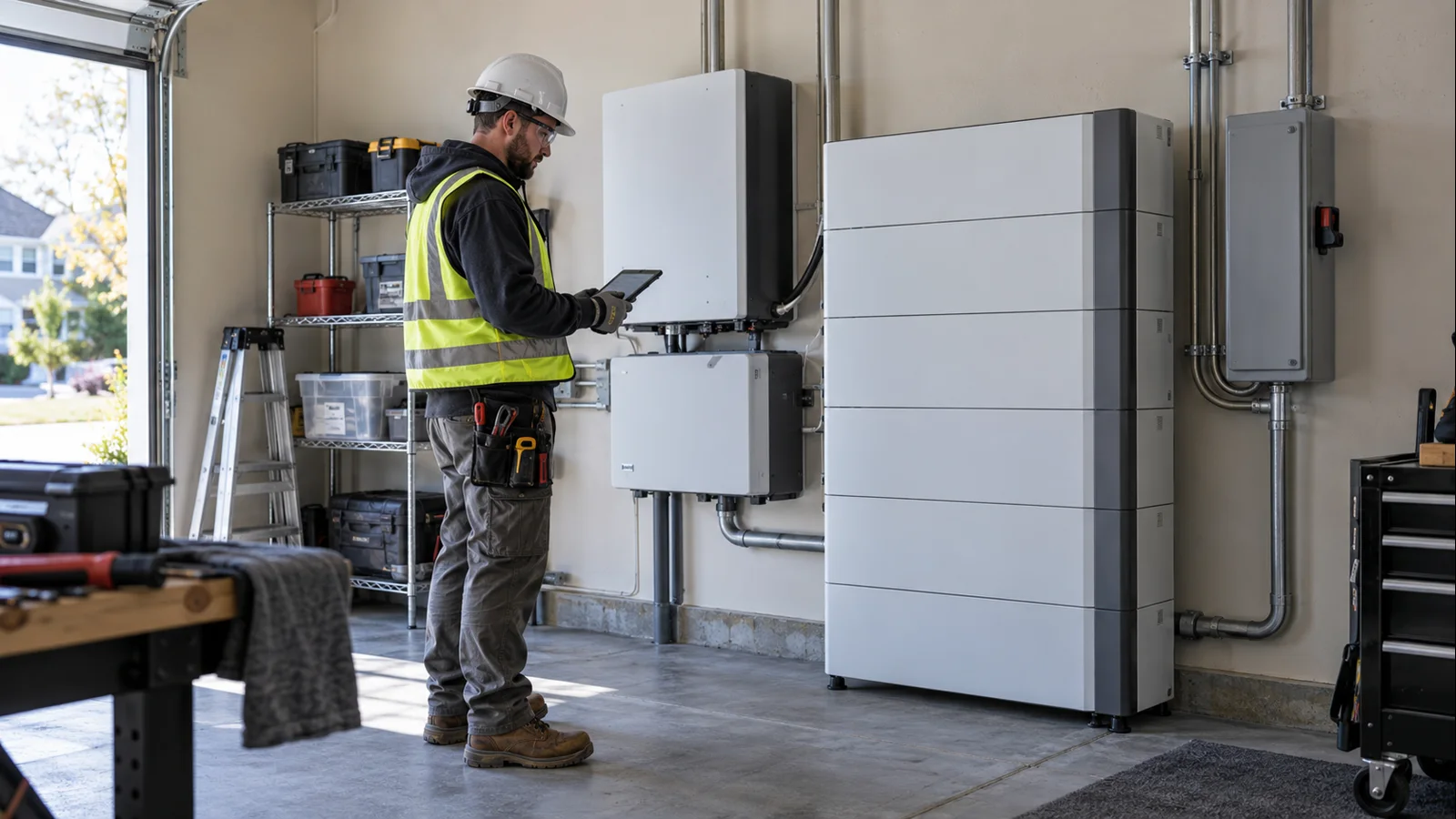
BLUETTI EP900 pricing in late 2026
There is no defensible single installed price for the EP900. BLUETTI’s U.S. ESS configurator currently treats the system as a configurable purchase and does not expose a reliable universal package price. The B500 battery is currently listed separately at $3,999, and the EP900/EP800 Home Integration Kit is also sold separately, but those component prices are not an installed-system quote.
A real project can include the EP900 inverter, two to four B500 modules, transfer/subpanel equipment, disconnects, metering, conduit, wiring, permits, labor, utility work, solar modifications and possibly panel upgrades. Parallel systems add more hardware. Compare written proposals on identical scope rather than comparing battery-module prices alone.
Installation and ownership considerations
Siting
NEMA 4X/IP65 protection is useful for garages and qualified outdoor locations, but it does not replace clearance, temperature, flood-risk or impact-protection requirements. BLUETTI specifies operating-temperature limits and forced-air cooling, so placement should follow the manual and local code.
Monitoring and service
BLUETTI provides Wi-Fi/Bluetooth app control. Ask the installer what works locally if internet service is unavailable and how firmware updates are handled. The 10-year warranty is competitive on paper, but long-term ownership also depends on commissioning records, installer support and parts availability.
Who the EP900 fits
- Homes needing meaningful split-phase backup power: 7.6–9 kW from one inverter can support a carefully designed protected-load system.
- Solar households: up to 9 kW of direct PV input gives the EP900 a clear DC-coupled path.
- Owners who want modular storage: one EP900 scales from two to four B500 modules.
- Projects that may expand: BLUETTI supports a two-inverter architecture up to 39.6 kWh nominal and 18 kW published backup output.
Who should skip it
- DIY buyers: this is a permanently integrated residential ESS requiring professional electrical work.
- Owners who need guaranteed compatibility with any existing solar inverter: retrofit support must be verified case by case.
- Shoppers choosing by kWh alone: inverter output, transfer design and load priorities matter just as much.
- Buyers who require a simple all-in online price: EP900 pricing is configuration and installation dependent.
Frequently asked questions
How much energy does a BLUETTI EP900 store?
One EP900 uses two to four B500 batteries. Each B500 is rated at 4.96 kWh nominal and 4.464 kWh usable, so a single-inverter system provides 9.92–19.84 kWh nominal and 8.928–17.856 kWh of calculated usable battery energy.
How much power can the EP900 deliver during an outage?
BLUETTI publishes 7.6 kW of backup output with two B500 batteries and 9 kW with three or four. The current U.S. primary datasheet does not publish a separate short-duration surge rating.
Can the EP900 run a whole house?
It can support substantial residential loads, but whole-home operation depends on simultaneous demand, startup loads, protected circuits, transfer equipment, solar or generator support and installer design.
Can EP900 work with existing rooftop solar?
Potentially. BLUETTI supports direct DC PV input and documents an AC-coupled retrofit path. Existing-inverter compatibility should be confirmed before purchase; its U.S. material specifically references Enphase IQ7 in one documented configuration.
Is the EP900 still worth considering in 2026?
Yes, especially for homeowners who value high split-phase output, modular LFP storage and direct solar input. The decision should be based on a complete installer proposal showing protected loads, transfer equipment, solar integration, permitting scope and final installed cost.
Final verdict
The BLUETTI EP900 is technically compelling when designed as a complete home-energy system. Its verified strengths are 9.92–19.84 kWh nominal storage per inverter, published usable energy, 7.6–9 kW single-inverter backup output, 120/240V split phase, up to 9 kW of direct PV input, LFP chemistry, NEMA 4X/IP65 protection and a 10-year warranty.
The caution points are pricing opacity and installation complexity. For the right home, a properly designed EP900 can be a strong backup and solar self-consumption platform. Oversizing kWh while ignoring inverter power, transfer architecture and load priorities can still produce a system that misses outage expectations.
Primary references: BLUETTI EP900/B500 U.S. product page, BLUETTI warranty-period table, BLUETTI B500 product page, and BLUETTI EP900/EP800 Home Integration Kit.