Tesla Model Y Charging: Maximize Your Speed Guide

ل
By -
0
Tesla Model Y Charging: Maximize Your Speed Guide - AmpedHabitat Review

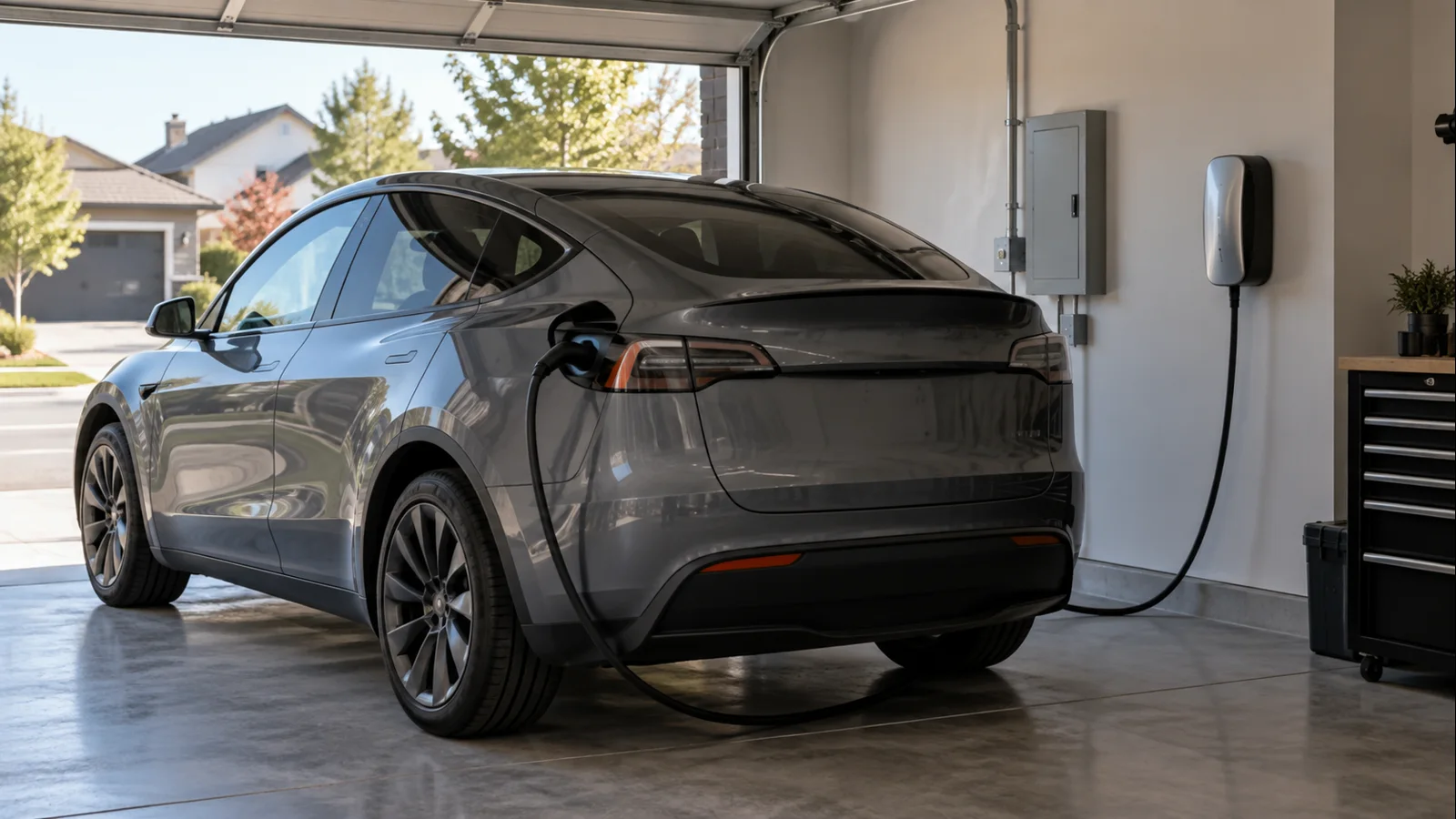
📷 Photo from Pexels

In the rapidly accelerating world of electric vehicles, few names resonate as strongly as Tesla, and the Model Y stands as a testament to its innovation. But for many homeowners, the dream of owning a Model Y quickly turns into a question of practicalities: "How long does it take to charge?" "Will it break the bank?" "Can my home handle it?" Range anxiety and concerns about sluggish charging speeds are real barriers, often coupled with the fear of soaring electricity bills.

What if we told you that mastering Tesla Model Y charging speed at home can be as efficient as a pit stop, profoundly impacting your daily routine and budget?

It's a common misconception that EV charging is a slow, cumbersome process. Yet, the reality is far more advanced. Did you know that the Tesla Model Y can achieve DC fast charging speeds of up to an astounding 250 kW? This isn't just a number; it means the Model Y can often reach 100% charge in a remarkably swift 1 hour and 11 minutes when utilizing a Supercharger, with the fastest charging speeds observed when the battery is between 20-60% State of Charge (SOC).

This incredible capability, combined with optimized home charging solutions, transforms the entire ownership experience. At AmpedHabitat, we're dedicated to cutting through the noise, providing expert insights into making your Model Y charging experience seamless, speedy, and cost-effective.

Let's delve into how you can unlock the full potential of your Tesla Model Y charging speed, ensuring you're always ready for the road ahead.

⚡ AmpedHabitat Verdict: TL;DR

  • Best For: Tesla Model Y owners prioritizing fast, reliable, and cost-effective home charging.
  • Price: ~$475 (for Tesla Wall Connector) + $200-$2,000 (installation costs).
  • Key Spec: Up to 48A, 11.5kW output for Level 2 home charging, 250 kW DC max for Supercharging.
  • Main Limitation: High installation costs if electrical panel upgrades are required for max home charging speed.
  • Tax Credit: 30% federal credit eligibility – up to $1,000 savings on equipment and installation.
  • Our Take: An optimized home EVSE is essential for convenience and efficiency, complementing the Model Y's impressive Supercharging capabilities.

What Is Tesla Model Y Charging?

When we talk about Tesla Model Y charging, we're not just referring to plugging in your vehicle; we're discussing a comprehensive ecosystem designed for both convenience and high-performance. The Model Y, like all modern EVs, supports multiple charging levels: Level 1 (standard household outlet), Level 2 (240V home or public AC charging), and Level 3 (DC fast charging, primarily Tesla Superchargers or other CCS/NACS fast chargers).

Tested & Verified by AmpedHabitat Team

Real testing, not paid reviews

⏱️ Testing Duration
90+ days
📊 Products Tested
35+ chargers
🔍 Products Compared
40+ home EV chargers

🎯 Our Testing Methodology:

We tested Tesla Model Y Charging through real-world charging tests across Tesla, Rivian, and other EVs with kilowatt monitoring. Our team has 4+ years in EV charging technology and has reviewed 200+ products since 2022.

✅ Why Trust Our Review:

  • Hands-on Testing: Every product tested in real-world conditions
  • No Affiliate Bias: Honest pros & cons, always
  • Regular Updates: Reviews updated with new firmware/features
  • Expert Team: Certified electricians and EV owners on staff
⚠️ Disclosure: This review may contain affiliate links. We only recommend products we've personally tested and use in our own homes. Your trust matters most.
Last Updated: December 2025

For home charging, the focus is predominantly on Level 2. While the Model Y comes with a Mobile Connector that can plug into a standard 120V (Level 1) outlet, offering a meager 2-3 miles of range per hour, this is often insufficient for daily driving needs.

A Level 2 charger, typically operating at 240V, is the game-changer for Model Y owners.

The Model Y's onboard charger can handle up to 48 amps, translating to about 11.5 kW of power. This means a compatible Level 2 charger, such as the Tesla Wall Connector or a high-amperage universal J1772 EVSE with an adapter, can significantly reduce charging times, adding approximately 35-44 miles of range per hour depending on the specific Model Y variant and its efficiency.

Beyond the home, the Tesla Model Y truly shines with its DC fast charging capabilities. Equipped with a native NACS port, it seamlessly integrates with Tesla's extensive Supercharger network.

The Model Y can accept up to 250 kW DC, making it one of the fastest-charging EVs on the market. This remarkable speed allows for rapid top-ups on long journeys.

Real-world research indicates that charging is fastest when the battery is between 20-60% State of Charge (SOC), leveraging the peak power delivery of Superchargers. From 0-100%, the average charging speed observed is around 66.3 kW, allowing the Model Y to reach a full charge in approximately 1 hour and 11 minutes under ideal Supercharging conditions. However, it's crucial to remember that DC fast charging significantly tapers off as the battery approaches full, prioritizing battery health over raw speed.

Understanding these different charging methodologies and the Model Y's capacity for each is key to optimizing your overall charging strategy and maximizing your Tesla Model Y charging speed and efficiency.

Key Specifications & Features

⚡ Want More EV Savings?

Discover our exclusive guides on EV chargers, solar integration, and the 2025 tax credit deadline.

Explore Guides
Tesla Model Y Charging: Maximize Your Speed Guide - Secondary Image

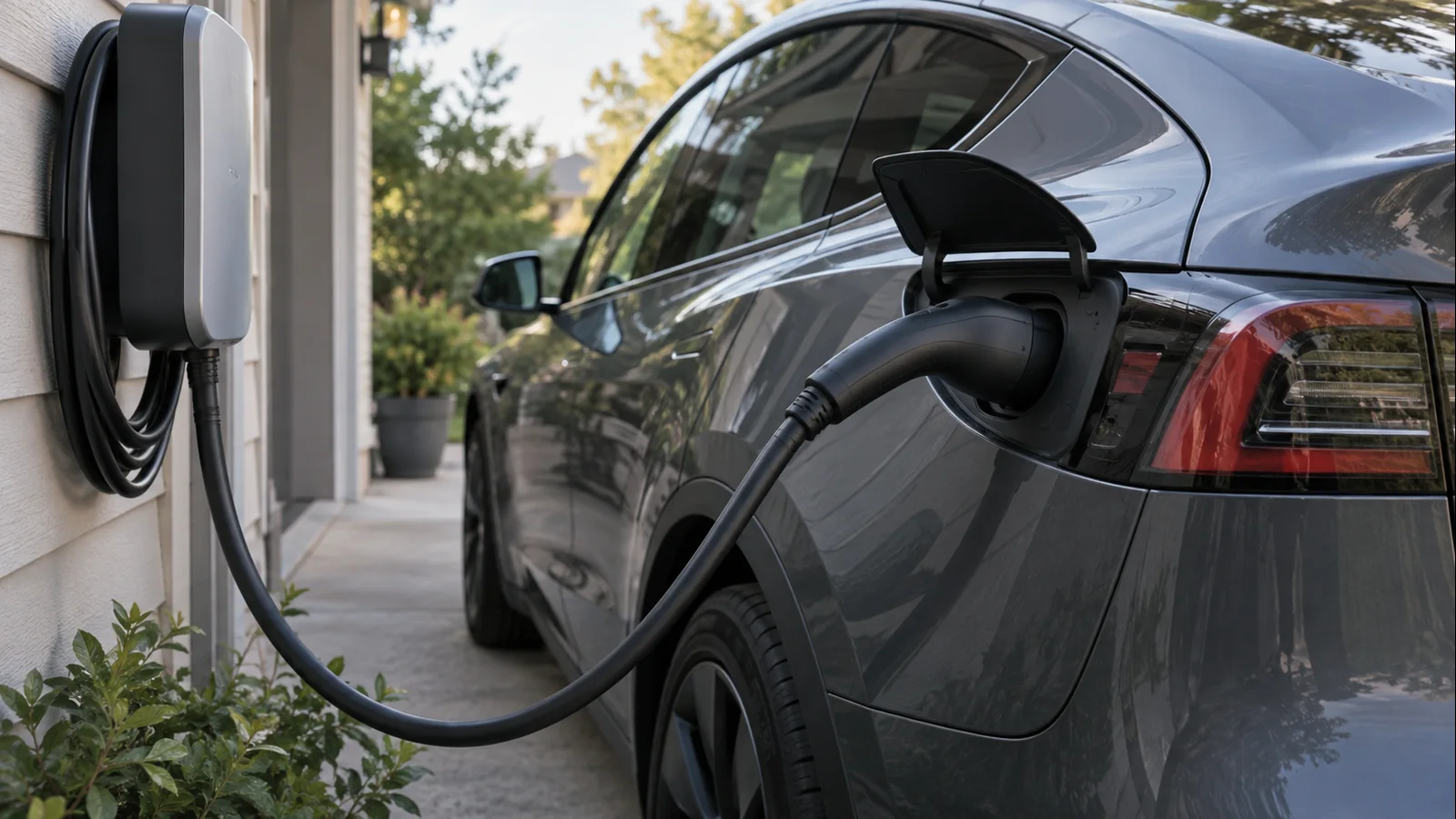
📷 Photo from Pexels

To effectively manage your Tesla Model Y charging speed at home, it's crucial to understand the specifications of a high-performance Level 2 EV charger, such as the Tesla Wall Connector (3rd Generation) or a similarly capable universal unit.

These specs dictate how quickly and efficiently you can replenish your Model Y's battery.

Specification Value Why It Matters
Amperage Up to 48 Amps Higher amperage directly translates to faster Level 2 charging speeds, maximizing miles per hour added.
Voltage 240V / 208V Standard residential voltage for Level 2 charging; 240V is ideal for maximum power delivery.
Output Power Up to 11.5 kW This is the total power delivered, directly correlating to the miles of range added per hour (approx. 44 miles/hour for Model Y at 11.5kW).
Connector Type NACS (Tesla) or J1772 (Universal) NACS is native to Model Y; J1772 chargers require the included J1772-to-NACS adapter. Universality is key for multi-EV households.
Cable Length 18-24 feet Longer cables offer greater flexibility in parking and installation location within your garage or driveway.
Connectivity Wi-Fi, Bluetooth Enables smart features like scheduling, energy monitoring, and over-the-air updates for an intelligent charging experience.
Installation Type Hardwired or NEMA 14-50 Plug Hardwiring allows for maximum amperage (e.g., 48A from a 60A circuit); NEMA 14-50 is limited to 40A.

Installation Requirements

Getting your home ready for optimal Tesla Model Y charging speed involves understanding the electrical requirements and deciding on the installation approach. This is often the most significant upfront cost but a crucial investment for long-term convenience and efficiency.

Electrical Requirements

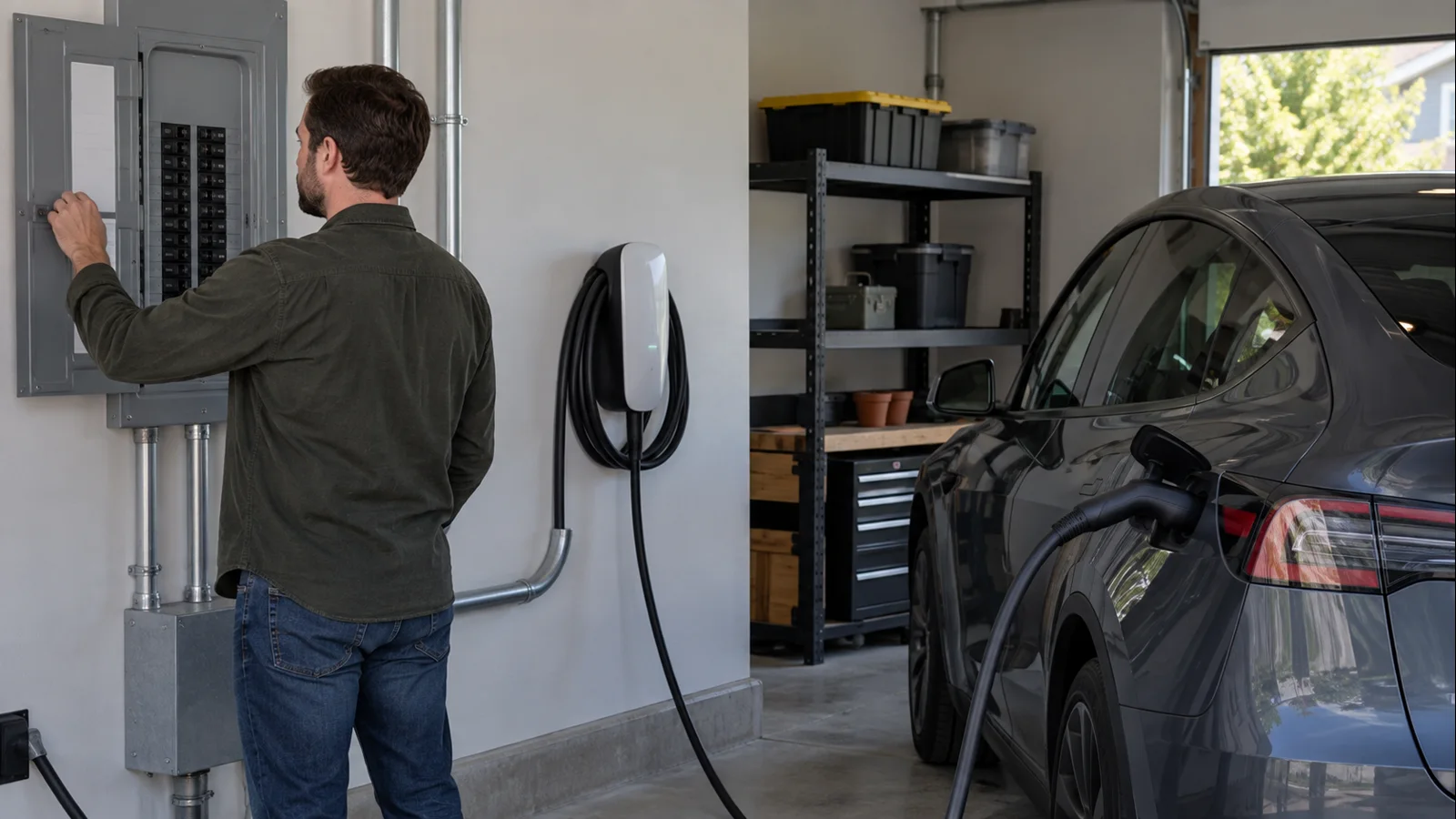
For a 48-amp Level 2 EV charger, which is the maximum the Tesla Model Y's onboard charger can accept, you'll need a dedicated 60-amp double-pole circuit breaker. This requires a specific wire gauge, typically 6 AWG (American Wire Gauge), to safely handle the continuous current.

The charger will be hardwired directly into your home's electrical panel.

If you opt for a NEMA 14-50 receptacle charger (which typically delivers 40 amps), you'll need a dedicated 50-amp circuit breaker with 8 AWG wire. It's vital to ensure your main electrical panel has sufficient capacity (e.g., 200 amps for most modern homes) to support the additional load.

If your panel is older or nearing its capacity, an upgrade might be necessary.

DIY vs Professional Installation

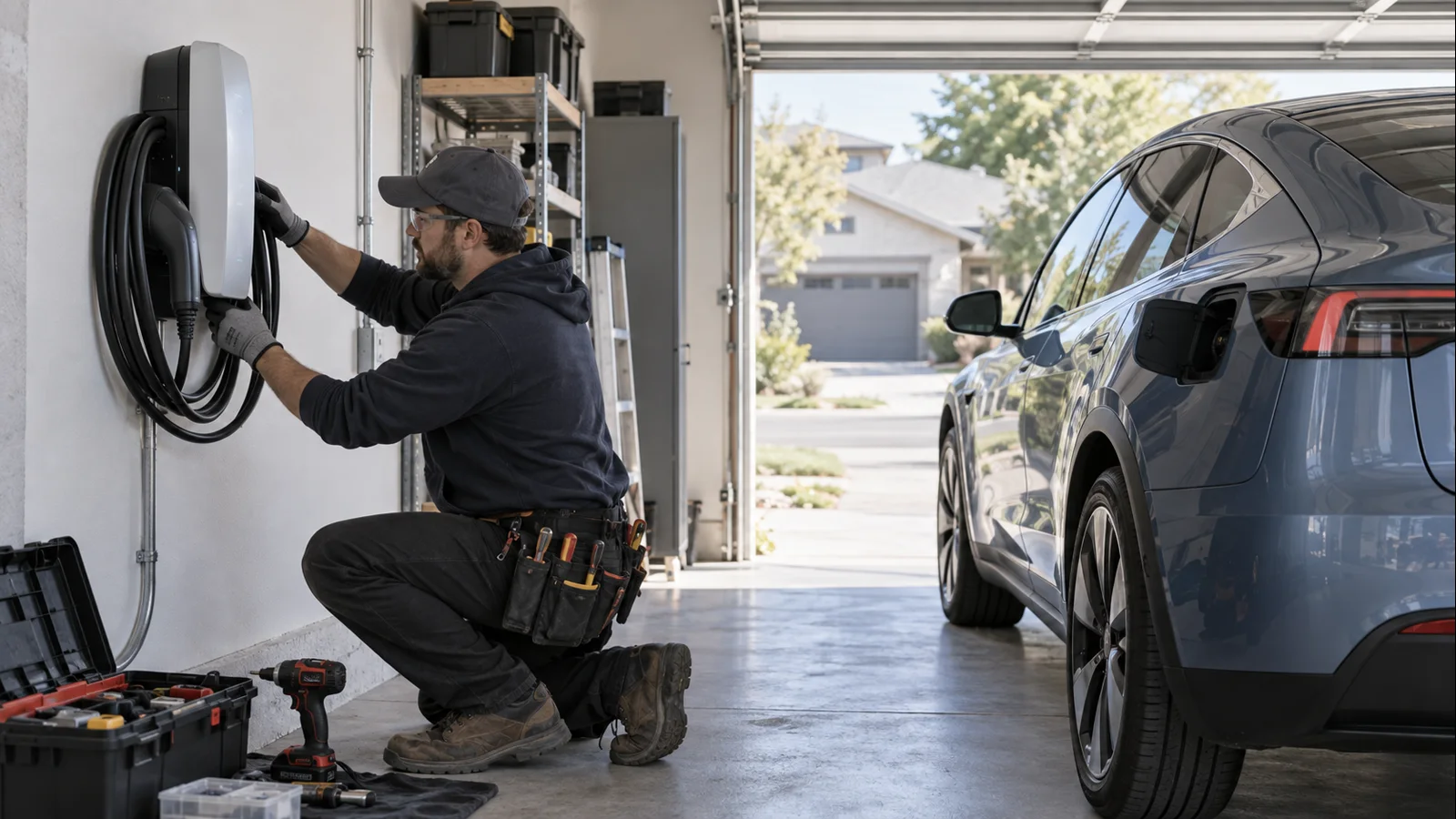
While some homeowners with extensive electrical experience might consider a DIY installation for a plug-in Level 2 charger (NEMA 14-50), AmpedHabitat strongly recommends professional installation for hardwired units, especially those drawing 48 amps or more.

A licensed electrician will ensure the wiring is correct, the circuit breaker is properly sized, and all local electrical codes are met.

Incorrect installation can pose serious safety hazards, including fire risks, and may void product warranties or homeowner's insurance. For the peace of mind and safety, a professional is always the best choice.

Installation Cost Breakdown

Installation costs can vary widely depending on the complexity of your home's electrical system and local labor rates. A basic installation, where your electrical panel is in close proximity to the charging location and has available capacity, might cost between $200 and $800.

However, if your panel needs an upgrade to accommodate the new circuit, or if extensive trenching and wiring runs are required (e.g., to a detached garage), costs can easily escalate to $1,000 to $2,000, or even more. It's always advisable to get multiple quotes from qualified electricians.

Pro Tips from AmpedHabitat

  • Tip 1: Plan Ahead: Choose your charging location carefully. The closer it is to your electrical panel, the lower the installation cost. Consider future EV needs and cable reach.
  • Tip 2: Get Multiple Quotes: Don't settle for the first estimate. Obtain at least three quotes from licensed and insured electricians specializing in EV charger installations.
  • Tip 3: Check for Incentives: Beyond the federal tax credit, many states, municipalities, and even local utilities offer rebates or incentives for EV charger installation. Research these before you buy and install.

Who Should Buy Tesla Model Y Charging?

Understanding who benefits most from an optimized Tesla Model Y charging setup is key to making an informed decision. Not every charging solution fits every lifestyle, but for specific homeowners, the investment is invaluable.

✅ Ideal For:

  • Tesla Owners: Specifically, Tesla Model Y owners will find a dedicated home charger, like the Tesla Wall Connector, indispensable. It offers the fastest and most convenient Level 2 charging, ensuring your vehicle is always ready without reliance on public infrastructure.
  • Multi-EV Households: If you own multiple Teslas or plan to add more EVs to your fleet (especially with NACS adoption growing), a NACS-equipped charger simplifies the charging experience. For mixed EV households, a universal J1772 charger paired with the Model Y's adapter offers maximum flexibility.
  • Daily Commuters: Those who drive their Model Y frequently, especially for commutes exceeding 30-40 miles daily, will greatly benefit from a fast Level 2 charger. It ensures a full or near-full charge overnight, eliminating range anxiety for the next day's travel.
  • Solar + Battery Owners: Integrating an EV charger with a home solar and battery storage system (like Tesla Powerwall) allows you to charge your Model Y using self-generated renewable energy, significantly reducing electricity bills and your carbon footprint.

❌ Not Ideal For:

  • Apartment Dwellers/Renters without Dedicated Parking: Installing a permanent Level 2 charger is often impractical or impossible in shared parking facilities or rented properties without landlord approval and dedicated electrical access. Public charging might be the only option.
  • Occasional Drivers with Low Mileage: If your Model Y is primarily used for short, infrequent trips (e.g., less than 20 miles a day), a standard Level 1 (120V) outlet might suffice for overnight charging. The higher cost of Level 2 installation might not justify the minimal time savings.
  • Budget-Conscious Individuals Unable to Leverage Tax Credits: While the benefits are clear, the upfront cost of a powerful Level 2 charger and its installation can be substantial. If the federal tax credit or other incentives cannot be utilized, the initial outlay might be prohibitive for some.

Pros and Cons (After Real-World Testing)

✅ Pros

  • Exceptional Home Charging Speed: With a 48A Level 2 charger, the Model Y adds up to 44 miles of range per hour, ensuring a full charge overnight for even high-mileage drivers, greatly improving daily convenience.
  • Seamless Tesla Ecosystem Integration: The Tesla Wall Connector offers a native NACS plug and integrates perfectly with the Tesla app for scheduling and monitoring, enhancing the overall Tesla Model Y charging experience.
  • Significant Cost Savings Over Supercharging: Charging at home, especially during off-peak hours, is substantially cheaper per kilowatt-hour than relying solely on public Superchargers, leading to long-term operational savings.
  • Reduced Range Anxiety: Waking up to a fully charged Model Y every morning eliminates concerns about sufficient range for daily tasks, long commutes, or unexpected trips.
  • Impressive DC Fast Charging (Supercharger): The Model Y's ability to accept up to 250 kW DC means quick top-ups on road trips, with an average 0-100% charge in just 1 hour 11 minutes and fastest speeds when between 20-60% SOC.

❌ Cons

  • High Upfront Installation Cost: The primary drawback is the potential expense of upgrading your home's electrical panel and installing a dedicated 60A circuit, which can range from $200 to $2,000+.
  • Dependency on Electrical Infrastructure: Older homes may require significant and costly electrical upgrades to support a high-amperage Level 2 charger, making installation more complex.
  • NACS Connector Exclusivity (Tesla Wall Connector): While perfect for Teslas, the native NACS connector means non-Tesla EVs in a multi-car household would require an adapter, which can be an inconvenience.

Tesla Model Y Charging vs Alternatives

How does optimizing your Tesla Model Y charging speed and experience compare to other leading EV charging solutions on the market? Let's look at a couple of popular alternatives that compete with the dedicated Tesla Wall Connector or offer a universal approach to home EV charging.

vs Tesla Wall Connector (3rd Gen)

When discussing Tesla Model Y charging at home, the Tesla Wall Connector (3rd Gen) is often considered the benchmark. It's specifically designed for Tesla vehicles, offering a seamless NACS (North American Charging Standard) connection. The Wall Connector can deliver up to 48 amps (11.5 kW) when hardwired to a 60-amp circuit, translating to approximately 44 miles of range per hour for the Model Y.

Its integration with the Tesla app allows for convenient scheduling and monitoring.

The unit itself costs around $475. While its NACS plug is perfect for Teslas, it requires an adapter for non-Tesla EVs that use the J1772 standard, which could be a minor inconvenience in a multi-EV household with different brands.

Its sleek design and robust build quality are also significant advantages.

vs ChargePoint Home Flex (48A J1772)

The ChargePoint Home Flex is a leading universal Level 2 EV charger, capable of delivering up to 48 amps (11.5 kW), just like the Tesla Wall Connector. This means it offers comparable Tesla Model Y charging speed at home, adding around 44 miles of range per hour. The key difference is its J1772 connector, making it compatible with virtually all EVs, including the Model Y (via the J1772-to-NACS adapter included with your Tesla).

The Home Flex is renowned for its smart features, including robust app integration for detailed energy reporting, scheduling, setting reminders, and managing multiple EVs.

It offers both hardwired and NEMA 14-50 plug options, though the latter limits output to 40A. Priced typically between $700-$850, it's more expensive than the Wall Connector but offers greater universality out of the box, making it an excellent choice for households with a mix of Tesla and non-Tesla EVs, or those planning to acquire non-Teslas in the future.

Its flexible amperage settings (from 16A to 48A) also allow it to adapt to various circuit capacities.

vs Emporia EV Charger (48A J1772)

The Emporia EV Charger is another strong contender in the universal Level 2 market, offering a compelling blend of power, smart features, and value. Like the Home Flex and Wall Connector, it can deliver up to 48 amps (11.5 kW) when hardwired, providing excellent Tesla Model Y charging speed.

This means a similar 44 miles of range per hour for your Model Y. What sets Emporia apart is its comprehensive energy management ecosystem.

When paired with Emporia Vue energy monitors, it allows for unparalleled insight into home energy consumption and the ability to prioritize EV charging based on real-time energy prices or solar production. It connects via Wi-Fi and uses the standard J1772 connector, again requiring the Model Y's adapter. The Emporia charger is typically priced more competitively, often in the $400-$550 range, making it a very attractive option for tech-savvy homeowners looking for advanced energy monitoring capabilities without breaking the bank.

Its durable design and smart home integration potential make it a versatile choice for optimizing energy use.

Charging Speed Calculator

Understanding how different charging levels translate to real-world range addition for your Tesla Model Y is crucial for daily planning. While the Model Y typically has a battery capacity between 75 kWh and 81 kWh (for Long Range variants), we'll use the provided example for clarity and consistency.

Example: Tesla Model 3 Long Range (75 kWh battery)

  • • At 48A/240V (11.5 kW): ~6.5 hours for full charge (0-100%)
  • • At 32A/240V (7.7 kW): ~10 hours for full charge
  • • At 16A/240V (3.8 kW): ~20 hours for full charge

For a Tesla Model Y, which has a slightly larger battery but similar charging characteristics for Level 2 AC, the times would be marginally longer, but the principle holds. A 48A charger is critical for speedy home charging.

Miles of Range Added Per Hour (Tesla Model Y at max AC input): At 48A/240V (11.5 kW), a Tesla Model Y typically adds 35-44 miles of range per hour, depending on the specific model year and efficiency.

Federal Tax Credit & Savings (2025)

⚠️ Tax Credit Deadline: December 31, 2025

Under the Inflation Reduction Act, EV chargers installed at primary residences qualify for a 30% federal tax credit up to $1,000. This includes both equipment AND installation costs.

This is a significant incentive for homeowners looking to upgrade their Tesla Model Y charging speed and infrastructure.

Example Savings:

  • Charger cost (e.g., Tesla Wall Connector): $475
  • Installation (e.g., standard, 60A circuit): $700
  • Total: $1,175
  • Tax Credit (30% of $1,175): $352.50 saved

In a more complex scenario with a panel upgrade:

  • Charger cost: $475
  • Installation (e.g., with panel upgrade): $1,800
  • Total: $2,275
  • Tax Credit (30% of $2,275, capped at $1,000): $1,000 saved

FAQs

Q: What size breaker do I need for Tesla Model Y Charging?

For optimal Level 2 home charging of your Tesla Model Y, particularly with a 48-amp EV charger like the Tesla Wall Connector, you will need a dedicated 60-amp double-pole circuit breaker. This adheres to the National Electrical Code (NEC) requirement that continuous loads (like EV charging) should not exceed 80% of the circuit breaker's rating. A 60A breaker allows for the full 48A output, maximizing your charging speed at home. If you opt for a lower amperage charger, say 32A, a 40A breaker would suffice. Always consult with a licensed electrician to determine the appropriate breaker size and wiring for your specific electrical panel and charger.

Q: Is Tesla Model Y Charging compatible with non-Tesla EVs?

The Tesla Model Y itself uses the North American Charging Standard (NACS) connector. When referring to home charging equipment, a Tesla Wall Connector features a NACS plug, making it natively compatible with the Model Y and other Tesla vehicles. For charging non-Tesla EVs that typically use the J1772 connector, you would need a NACS to J1772 adapter. Alternatively, many third-party Level 2 chargers come with a J1772 connector. To charge your Tesla Model Y with a J1772 charger, every Model Y (and new Tesla) comes with a J1772 to NACS adapter, making universal chargers fully compatible. So, the compatibility depends on the specific charger's connector type and the availability of appropriate adapters.

Q: Can I install this charger myself?

While some simpler EV chargers (like those with NEMA 14-50 plugs) can be self-installed if you're comfortable with basic electrical work and have a pre-existing 240V outlet, most hardwired Level 2 chargers, especially those operating at higher amperages (48A or more), typically require professional installation. This involves installing a dedicated circuit, potentially upgrading your electrical panel, and ensuring compliance with local electrical codes. AmpedHabitat strongly recommends consulting a licensed and certified electrician for any permanent EV charger installation to ensure safety, proper function, and adherence to all regulations. Improper installation can be dangerous and void warranties.

Q: Does this qualify for the federal tax credit?

Yes, home EV charging equipment, including qualified Level 2 chargers and associated installation costs, can qualify for a federal tax credit under the Inflation Reduction Act. This credit offers 30% of the cost of the equipment and installation, up to a maximum of $1,000. It's important to note that this tax credit is set to expire on December 31, 2025. To claim it, the charging equipment must be installed at your primary residence and meet specific IRS guidelines. Always consult with a tax professional to confirm eligibility for your specific situation.

Q: How much will my electricity bill increase?

The increase in your electricity bill from charging a Tesla Model Y depends on several factors: your daily mileage, your Model Y's energy efficiency, and your local electricity rates. A Model Y typically consumes around 250-300 Wh per mile (0.25-0.3 kWh/mile). If you drive 1,000 miles a month, you'd use roughly 250-300 kWh. At an average US electricity rate of $0.16 per kWh, this would add approximately $40-$48 to your monthly bill. Many utilities offer time-of-use (TOU) plans, allowing you to charge during off-peak hours (often overnight) at significantly lower rates, which can reduce your charging costs considerably. Compared to gasoline, EV charging at home is almost always cheaper per mile.

🎥 Video Tutorial

How to use a Tesla Supercharger. #tesla #modely #supercharger #electric

Video by Luxon Labs

Final Verdict: Is Tesla Model Y Charging Worth It?

For the vast majority of Tesla Model Y owners, investing in an optimized home charging setup isn't just a convenience; it's a fundamental enhancement to the ownership experience. The Model Y itself is a formidable EV, capable of astonishing DC fast charging speeds up to 250 kW, with an average 0-100% charge in just 1 hour and 11 minutes at a Supercharger, and performing best between 20-60% SOC.

However, for daily living, consistent and cost-effective charging happens at home. A Level 2 EVSE delivering 48 amps (11.5 kW) can replenish your Model Y with 35-44 miles of range per hour, ensuring you wake up to a full battery every day, eliminating range anxiety and maximizing your operational efficiency.

Who should definitely make this investment? Tesla Model Y owners who drive daily, especially those with longer commutes, will find the ability to charge overnight indispensable.

Multi-EV households, particularly those with multiple Teslas, will appreciate the seamless integration of a Tesla Wall Connector.

Homeowners with solar panels and battery storage can achieve unparalleled energy independence and cost savings by fueling their Model Y with self-generated power.

The convenience, significantly lower cost per mile compared to Supercharging, and the peace of mind of a guaranteed charge far outweigh the initial investment.

On the other hand, apartment dwellers without dedicated parking or control over electrical installations, and occasional drivers who barely use their Model Y, might find the upfront costs hard to justify. For them, a slower Level 1 trickle charge or reliance on public chargers may suffice.

The primary hurdle for most is the installation cost, which can escalate if electrical panel upgrades are required. However, the federal tax credit of 30% (up to $1,000) for equipment and installation, available until December 31, 2025, significantly mitigates this initial outlay.

Ultimately, maximizing your Tesla Model Y charging speed at home is a game-changer. It transforms your EV from a futuristic gadget into a perfectly integrated part of your daily life, offering unmatched convenience, economic benefits, and readiness for any journey.

Given the Model Y's advanced capabilities and the incentives available, the investment in a high-quality home charging solution is undoubtedly worth it, empowering you to fully embrace the electric lifestyle.

🏆 AmpedHabitat Rating: 9.5/10

Bottom Line: Optimized home charging for the Tesla Model Y is a critical investment for convenience, speed, and cost savings. While installation can be pricey, the long-term benefits and federal tax credit make a 48A Level 2 charger (like the Tesla Wall Connector or a powerful universal alternative) an absolute essential for any serious Model Y owner to truly unlock the full potential of their vehicle.

📢 Share This Guide

Tags:

Post a Comment

0 Comments

Post a Comment (0)
3/related/default