

Short answer: a working JuiceBox 40 can still be useful in 2026, especially for an existing owner, but it is a harder new or used purchase to justify. The 40A hardware can deliver about 9.6 kW at 240V, while cloud features, account migration, support and warranty continuity now depend on the post-Enel transition. Existing owners do not need to replace a normally operating unit solely because Enel X Way exited North America.
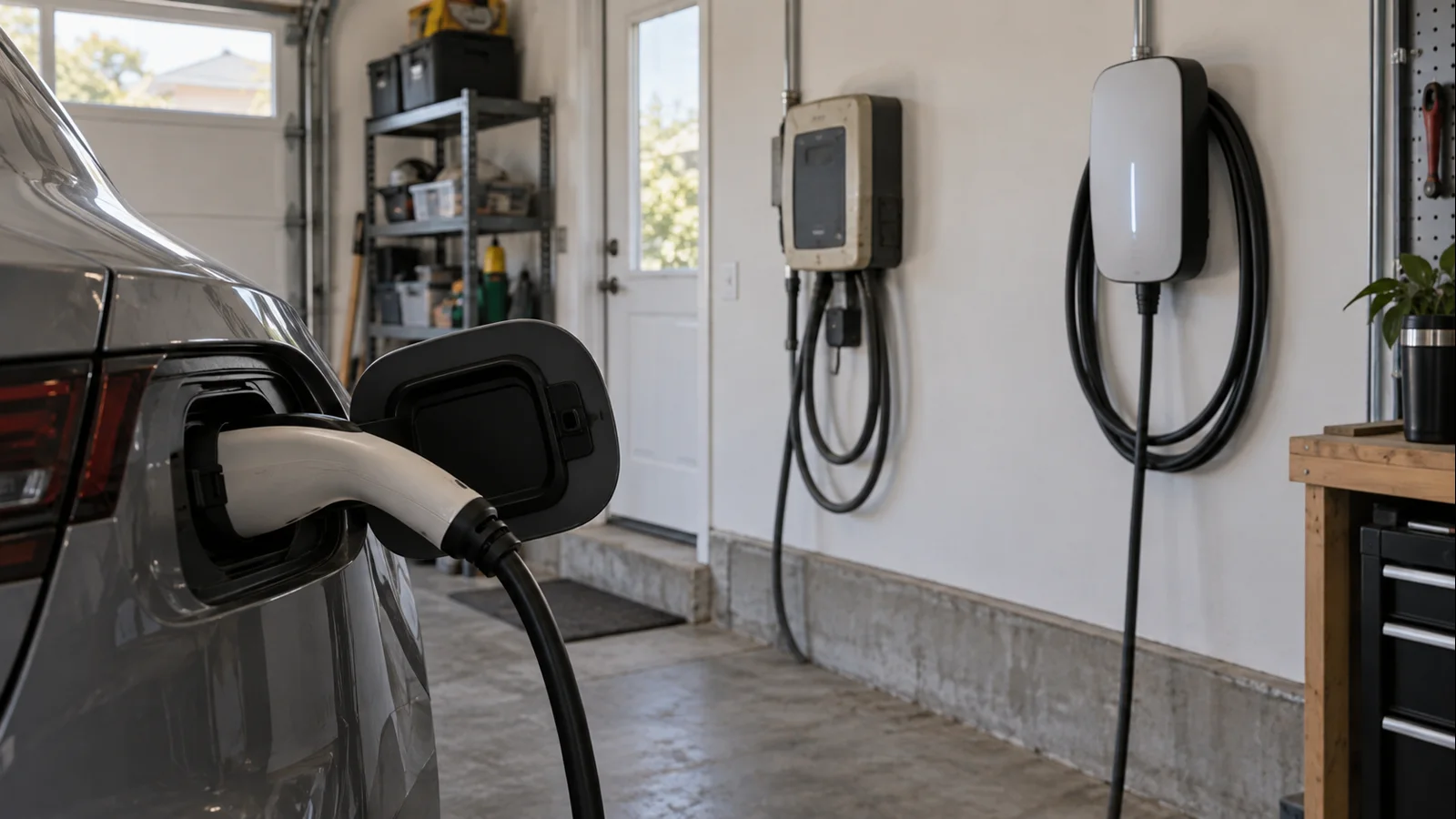
JuiceBox 40 in 2026: the status that matters
Enel X Way USA closed its U.S. and Canadian e-mobility business effective October 11, 2024. The first shutdown communications created understandable concern because Enel support and its software ecosystem were being discontinued, even though residential JuiceBox hardware was expected to retain basic physical charging capability.
The story did not end there. A November 2024 JuiceBox North America update said VoltiE Group had assumed operational responsibilities and would maintain software connectivity during an interim transition while customers were migrated. By November 2025, VoltiE said it had acquired JuiceBox-related hardware inventory, customer connectivity and device information, and described a free residential onboarding path to its PowerUp platform.
That means two extreme claims are both misleading in late 2026: it is not accurate to say every JuiceBox is now a “dumb brick,” and it is equally risky to promise that every legacy app, schedule, account or cloud function will work indefinitely. VoltiE currently publishes a PowerUp mobile app and support channels, but its own site has also posted temporary network-upgrade disruption notices. For a specific charger, verify account access, scheduling, remote control and support before treating any smart feature as dependable.
What the JuiceBox 40 hardware actually is
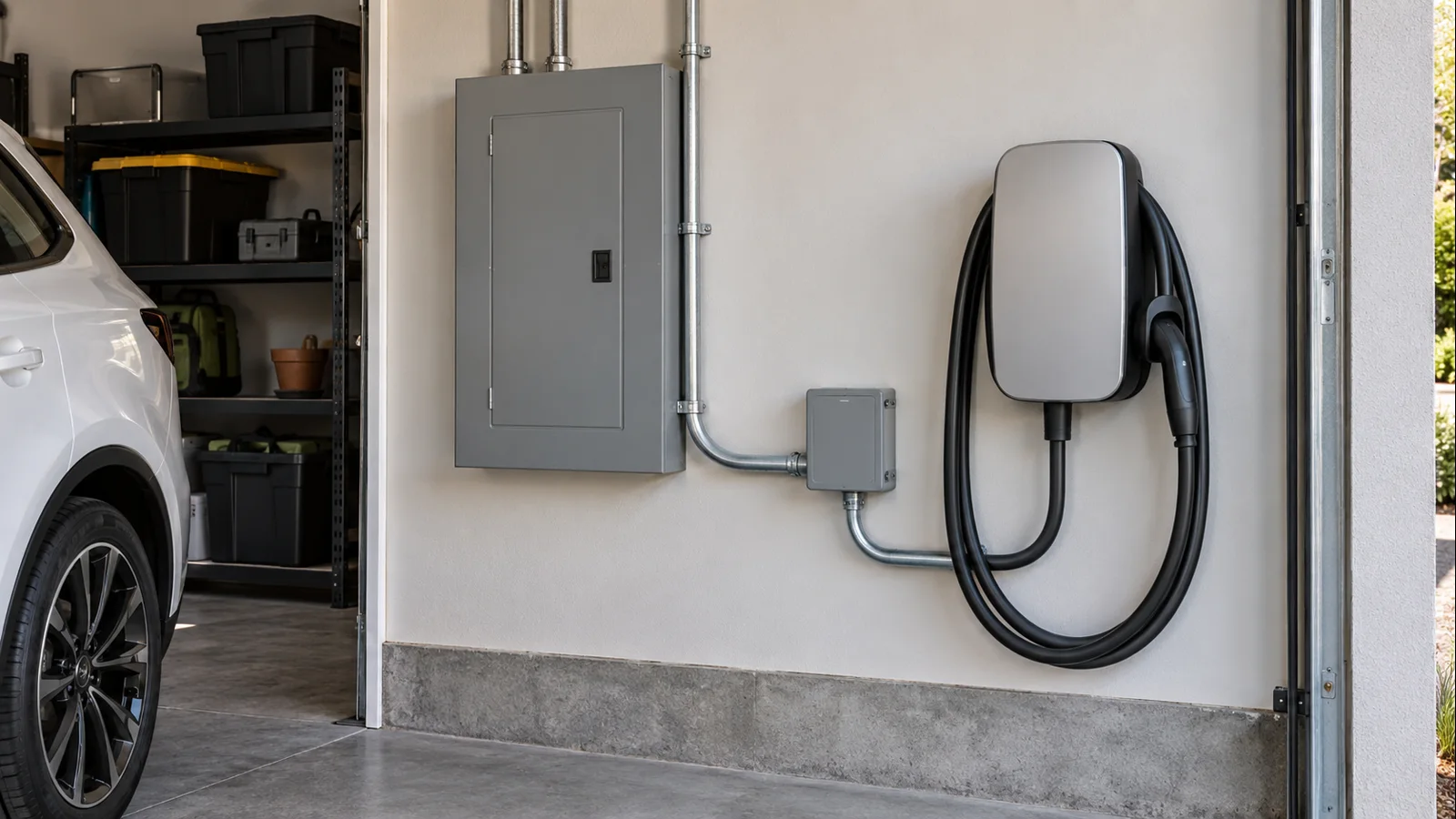
The legacy JuiceBox 40 is a Level 2 AC EVSE rated for up to 40 amps. Its 2023 datasheet lists 9.6 kW at 240V, a 25-foot J1772 output cable, Wi-Fi connectivity, indoor/outdoor weather resistance, plug-in and hardwired variants, and UL/cUL listing. Those are hardware-era specifications, not a guarantee that every connected service attached to the product remains unchanged today.
| Item | JuiceBox 40 reference specification | What it means in 2026 |
|---|---|---|
| Maximum output | 40A Level 2 AC | About 9.6 kW at 240V at maximum output |
| Vehicle connector | SAE J1772 | NACS-only vehicles need an appropriate compatible adapter |
| Output cable | 25 ft | Still a useful reach advantage if cable and connector are undamaged |
| Connectivity | 2.4 GHz Wi-Fi; originally Enel app/cloud | Verify the exact unit’s current VoltiE/PowerUp migration and account behavior |
| Installation types | Plug-in or hardwired variants | Electrical condition and correct circuit sizing matter more than used-market price |
Charging power is the EVSE ceiling, not a promise of what the car will take. At 240V, 40A is approximately 9.6 kW, but actual charging can be lower because the JuiceBox may be configured below 40A, supply voltage may be lower, load management may intervene, or the vehicle’s onboard AC charger may accept less. AmpedHabitat’s Level 2 charging diagnostic guide explains how to identify the true bottleneck.
Do not confuse a breaker rating with charging current
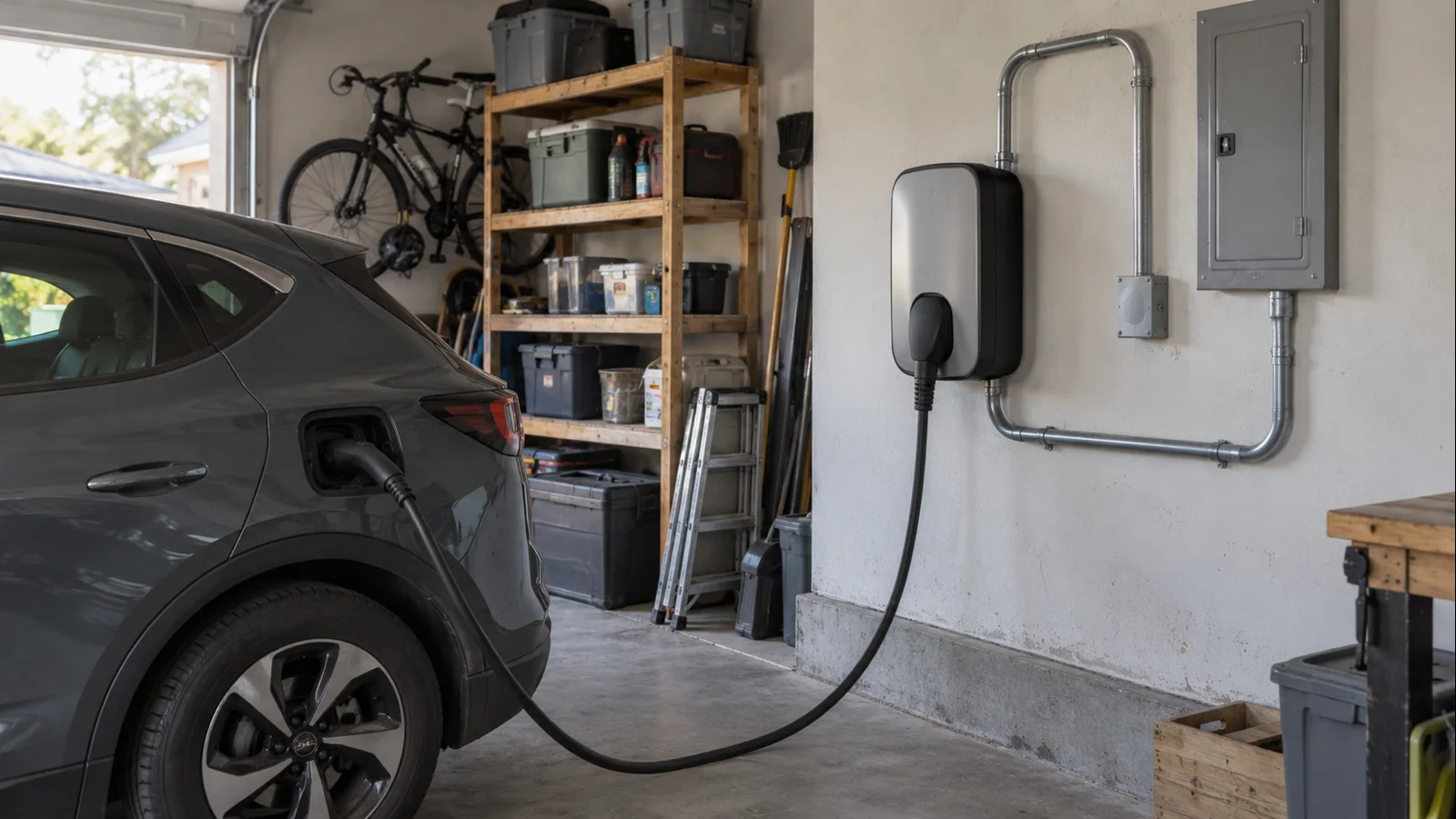
A 50A breaker does not mean “50A charging.” EV charging is a continuous load, so branch-circuit sizing, conductor ampacity, receptacle or hardwire terminations, EVSE configuration and applicable electrical code must all align. A JuiceBox 40’s maximum charging output is 40A; the breaker protects the circuit and is not a charging-speed setting.
If a used unit is plug-in, the receptacle and plug deserve particular attention because they carry high current for hours at a time. Do not assume an existing 240V outlet is automatically suitable simply because the plug fits. See AmpedHabitat’s guide to 240V EV-charging outlet requirements and hidden installation costs. Also avoid solving a reach problem casually with an extension; EV-charger extension-cord safety needs separate scrutiny.
What happened with the NHTSA safety investigation?
NHTSA’s Office of Defects Investigation opened Preliminary Evaluation PE24028 on October 3, 2024 after six complaints alleging electrical malfunctions, arcing and thermal events involving JuiceBox residential Level 2 chargers. NHTSA’s October 17 information request described six reports, including two involving residential fires, while the opening resume summarized one alleged garage/home fire, one alleged vehicle fire and four complaints involving electrical malfunctions and breaker trips.
The important 2026 update is that PE24028 is no longer open. NHTSA closed the preliminary evaluation on June 5, 2025 without manufacturer action. The closing resume said ODI found no clear trend in the cause of failures described in complaints and warranty reports, noted no recent reports alleging safety issues, and concluded the available information did not warrant further action at that time. NHTSA also explicitly said closing the investigation was not a finding that a safety-related defect does not exist and that the agency could act again if future circumstances warranted it.
So the correct takeaway is neither “NHTSA proved JuiceBox unsafe” nor “NHTSA proved there is no problem.” An investigation opening is not a recall or defect finding; this one was later closed without manufacturer action, with continued monitoring reserved.
When an existing owner should keep it—and when to stop using it
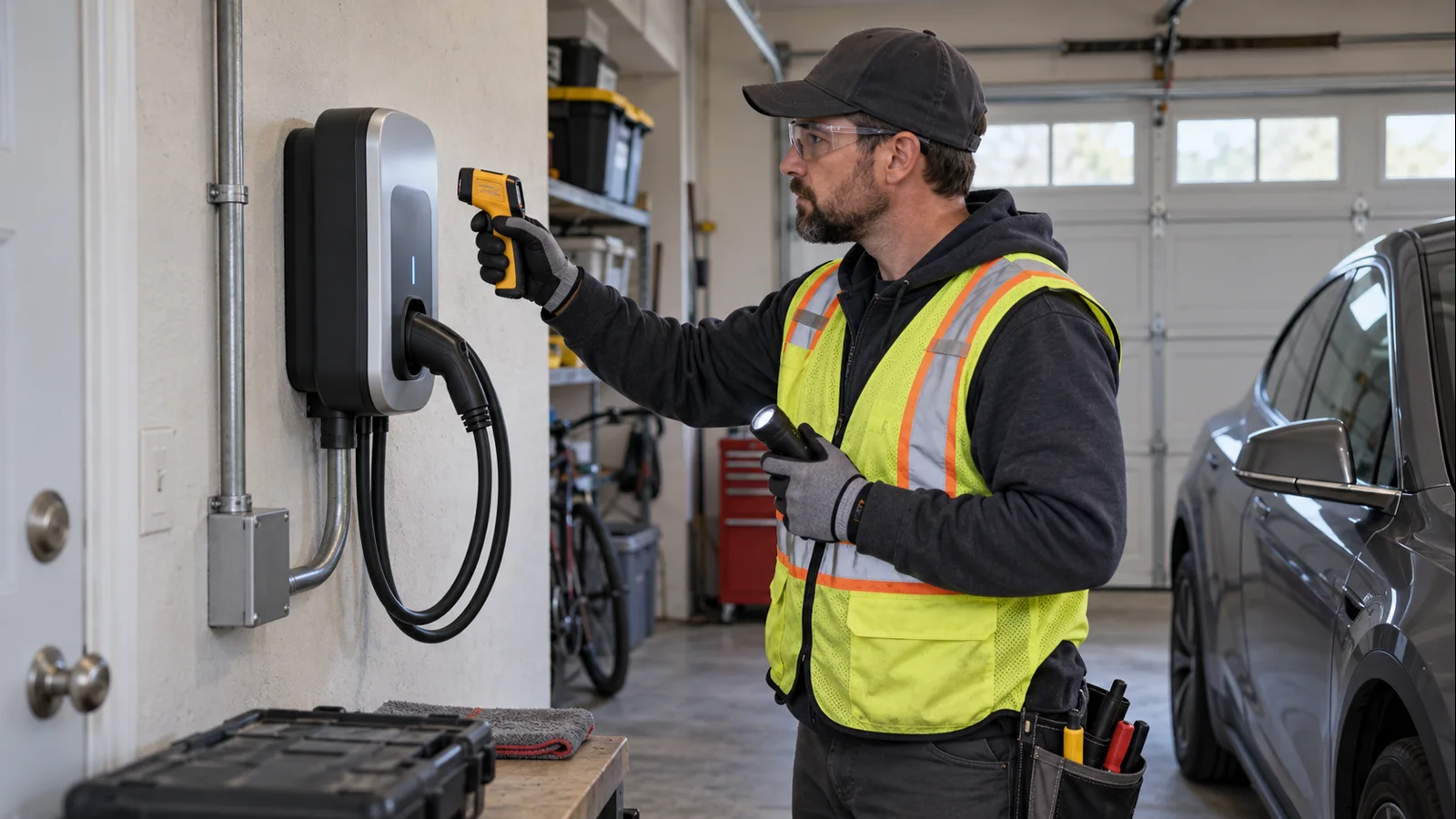
If your JuiceBox 40 charges normally, the cable and connector are in good condition, the circuit has been properly installed, and the smart features you actually use still work, Enel’s exit alone is not a reason to replace it. A stable 40A Level 2 station remains plenty of home-charging capability for many EVs.
Stop charging and arrange qualified inspection if you see repeated breaker trips, abnormal heat, discoloration, melting, damaged receptacle contacts, arcing sounds, a burning odor, damaged cable insulation or a connector that no longer seats correctly. Do not normalize repeated breaker resets or raise amperage settings to “test” a suspected fault. If the issue is clearly EVSE-specific, also document the unit model, serial number, fault indication and current support/account status before contacting VoltiE or an electrician.
Should you buy a used or leftover JuiceBox 40 now?
Only at a price that reflects transition risk. A used JuiceBox can still be rational if the hardware is demonstrably healthy and the buyer is comfortable with less predictable cloud, support and warranty continuity than a currently marketed charger. VoltiE says it supports residential migration, but it also states that it did not assume Enel X Way’s legal liabilities or warranties. That distinction matters when comparing a cheap leftover unit with a product sold today under an active manufacturer warranty and support program.
Before buying, confirm the exact model and plug/hardwire version, serial number, cable and connector condition, mounting hardware, whether the seller has removed it from any prior account, whether the unit can be added to the current platform, and which smart functions actually work now. If scheduled charging is critical for a time-of-use electricity rate, verify it rather than assuming an old product listing is still accurate.
Decision table: keep, buy used, or replace?
| Situation | Best 2026 approach | Main reason |
|---|---|---|
| Existing owner; unit works normally | Usually keep using it, while verifying app/support features you rely on | No automatic replacement need solely because Enel exited |
| Existing owner; repeated trips, heat or visible damage | Stop using it and get qualified inspection | Electrical symptoms should not be treated as a software problem or reset loop |
| Used or leftover buyer | Buy only with a meaningful discount and verification | Hardware can remain useful, but cloud, transfer, support and warranty risk are higher |
| Replacement shopper who wants dependable smart features | Favor a currently supported EVSE | Active warranty, app roadmap and support accountability reduce transition risk |
If you are replacing rather than preserving an existing installation, compare a current platform such as the ChargePoint Home Flex against your vehicle’s AC charging limit, circuit capacity, connector needs and desired smart controls. Paying more for current support can be worthwhile when schedules, utility programs or remote management are important.
FAQ
Does a JuiceBox 40 still charge an EV without cloud features?
Basic physical charging was expected to remain possible after Enel’s shutdown, and many units can function as Level 2 EVSE hardware. However, exact behavior can depend on firmware, configuration and migration state. Verify the specific unit rather than assuming every legacy charger behaves identically.
Is the JuiceBox 40 a 9.6 kW charger?
Its maximum is about 9.6 kW at 240V and 40A. Actual power can be lower because of EVSE settings, supply voltage, electrical constraints, load management and the vehicle’s onboard AC charger.
Was the JuiceBox recalled by NHTSA?
PE24028 was a defect investigation, not itself a recall. It opened in October 2024 and closed June 5, 2025 without manufacturer action. NHTSA said the available information did not warrant further action at that time, while also stating that closure was not a finding that no safety-related defect exists.
Who supports JuiceBox owners now?
VoltiE Group says it took over JuiceBox-related network operations and offers residential onboarding to its PowerUp platform. Because account and device migration can vary, confirm your exact unit’s eligibility, app access, support path and any warranty question directly with current VoltiE support.
Freshness and source note
Updated for late 2026. Hardware specifications are based on the legacy JuiceBox 40 datasheet. Shutdown and transition history is based on the November 2024 JuiceBox North America notice and VoltiE’s current transition statement; current app availability is also documented on VoltiE’s downloads page. Safety history is based on NHTSA’s PE24028 opening resume, information request, and NHTSA’s June 2025 closing resume (agency document mirror). Because connected services can change, re-check current app, account migration and support status before buying a used JuiceBox or depending on smart scheduling.